

Smoke Over a Lumber Town
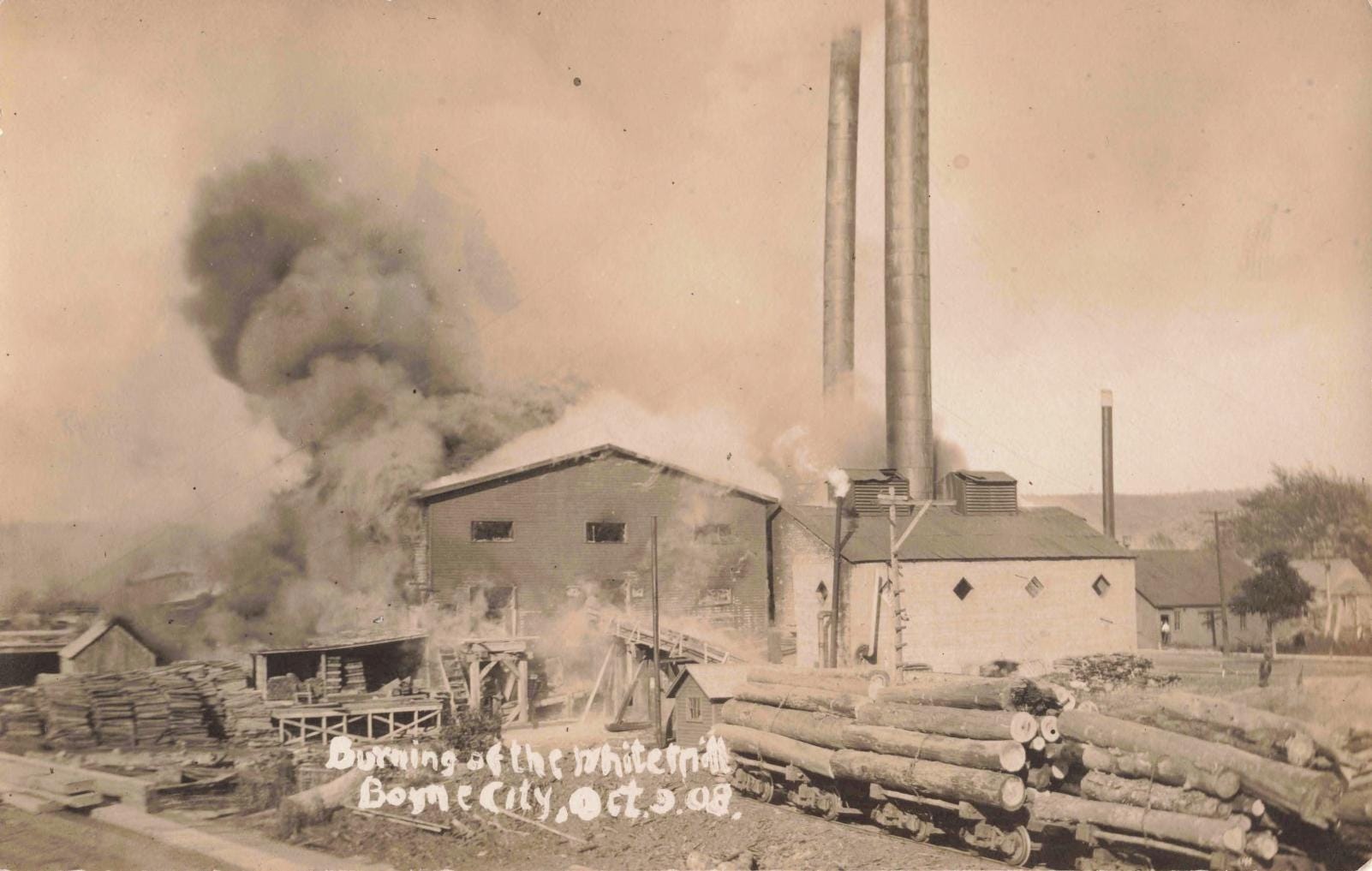
On an October afternoon in 1908, smoke rose over Boyne City, visible for miles. At the center was W.H. White Company’s Mill No. 1, the largest lumber-cutting operation in town and one of the biggest in northern Michigan. For a community built on pine, the mill was an anchor. When it caught fire, the impact was immediate.
Five Minutes to Total Loss
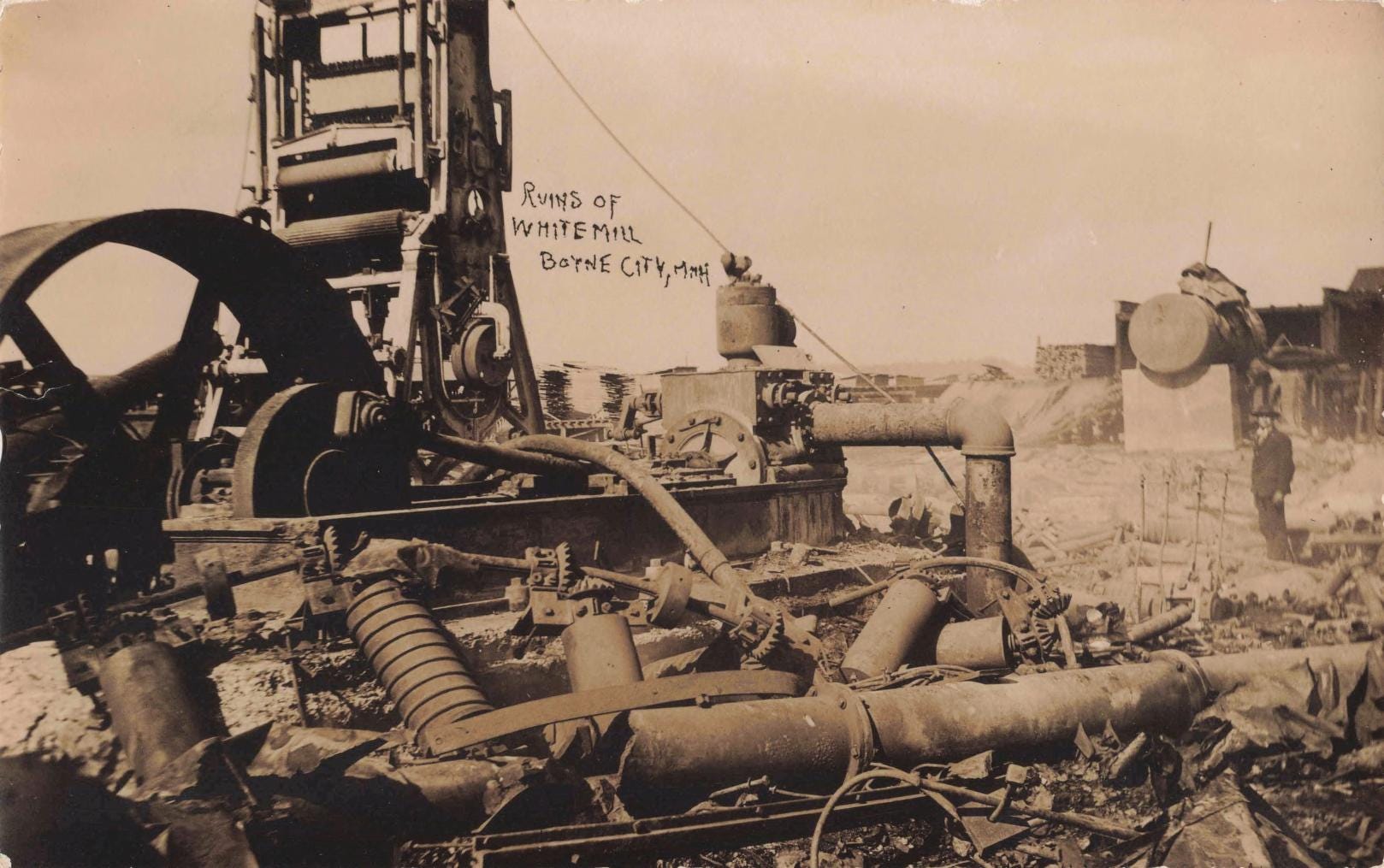
Fire broke out shortly after 2 p.m. Alarms sounded, but within five minutes the entire mill was burning. Built mostly of wood and packed with dry pine, the structure never stood a chance. Flames tore through the operation, destroying newly installed machinery, three large engines, and months of recent upgrades.
Workers could only watch. What had taken years to build was gone in an afternoon.
A $100,000 Blow
Newspapers estimated losses at more than $100,000, a staggering figure in 1908. The mill employed many local workers and supplied raw material to Boyne City’s flooring factory and stock sheds. When it burned, production stopped cold. Jobs were disrupted. The economic hit landed fast in a town where lumber paid the bills.
Fighting to Save What Mattered
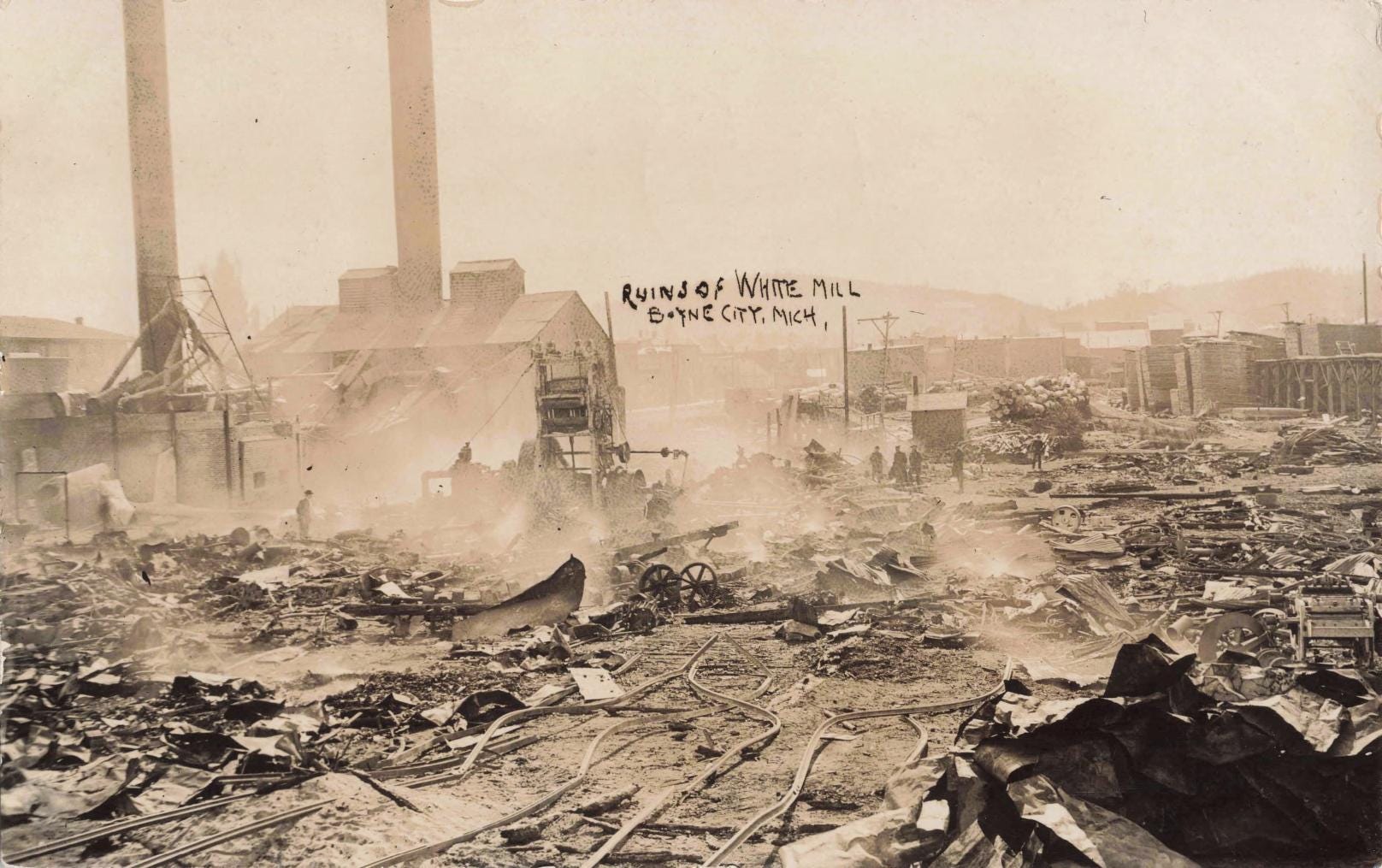
Firefighters and mill crews made a calculated decision. Rather than attempt to save the doomed sawmill, they focused on protecting what could still be spared. The brick dry kilns and the nearby flooring factory became the priority.
Every available stream of water was aimed at the kilns. Bucket brigades worked through smoke and heat as embers drifted across the yard. Crews even pulled down smaller buildings in the fire’s path to create breaks and slow the spread.
Wind, Luck, and Containment
Conditions helped. The wind shifted just enough to keep flames moving away from the rest of the complex. By late afternoon, the fire was finally under control. The sawmill was a total loss, but the worst-case scenario had been avoided.
Rebuild—or Move On?
The mill was insured for about $50,000, and early reports suggested it would probably be rebuilt. But the fire exposed a deeper issue facing Boyne City and much of northern Michigan. By 1908, the white pine forests that fueled the lumber boom were already heavily cut over.
Mills across the region were consolidating, scaling back, or closing altogether. Rebuilding was possible. Long-term certainty was not.
The End of Easy Pine
Boyne City had grown quickly on logging. The White Company alone operated several mills, running day and night to meet demand. Losing one did not end the industry overnight, but it marked a shift. The era of endless pine was fading, replaced by tougher decisions about what came next.
A Turning Point
The White Mill fire did more than destroy a building. It marked a turning point. Boyne City would continue, but like much of northern Michigan, it would have to shape a future that no longer depended entirely on the sawmill.


