

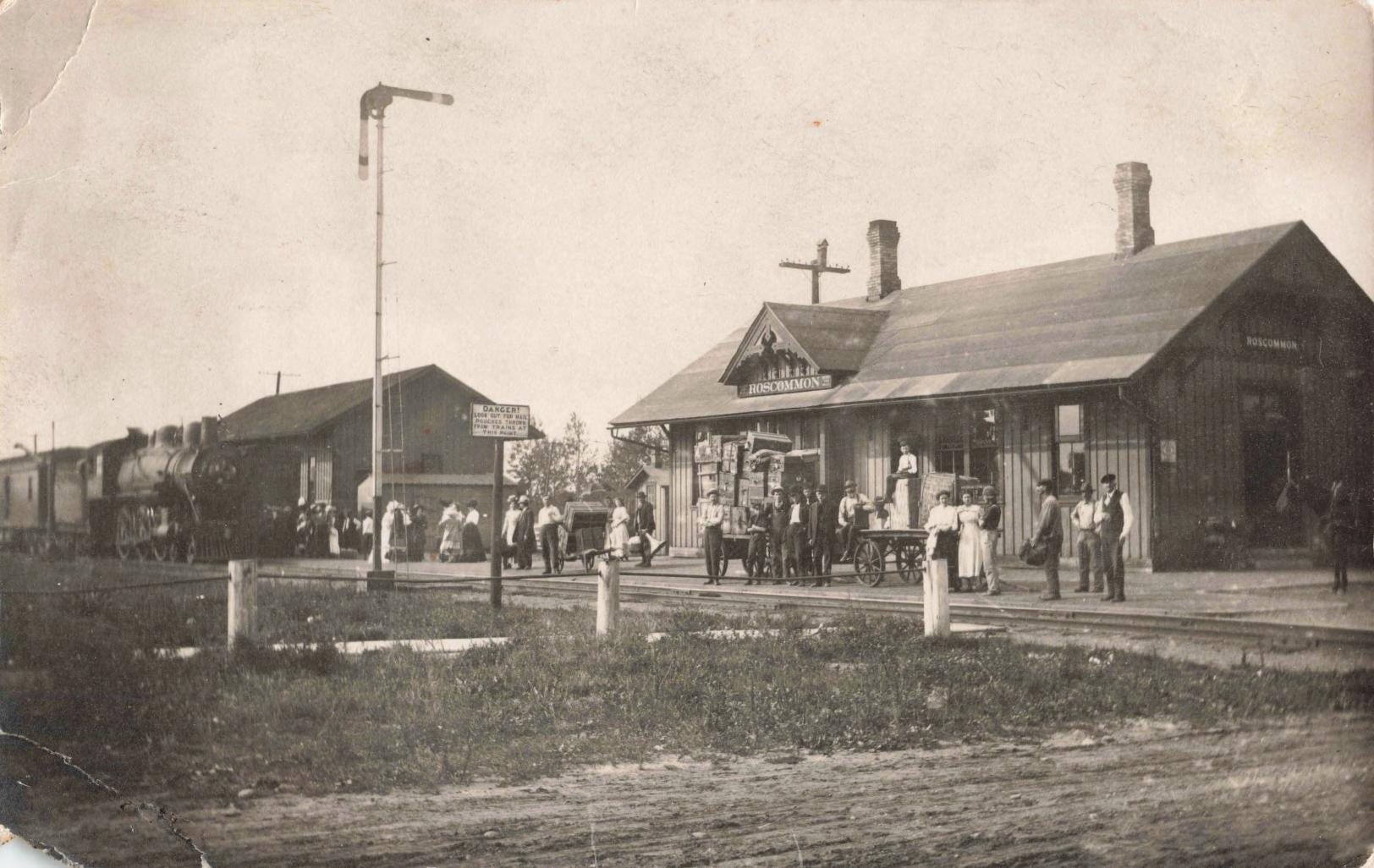
Roscommon, Michigan, 1895. A small wooden train station sits among tall pines, but the platform is crowded. What drew so much activity to this frontier village? Lumberjacks with sawed pine and hunters with their deer answered the question. In December 1879 alone, Roscommon shipped 317 deer by train. The rails had come through in 1873, and suddenly, this clearing by the Au Sable River was on Michigan’s map.
History of Roscommon Michigan: Early Growth
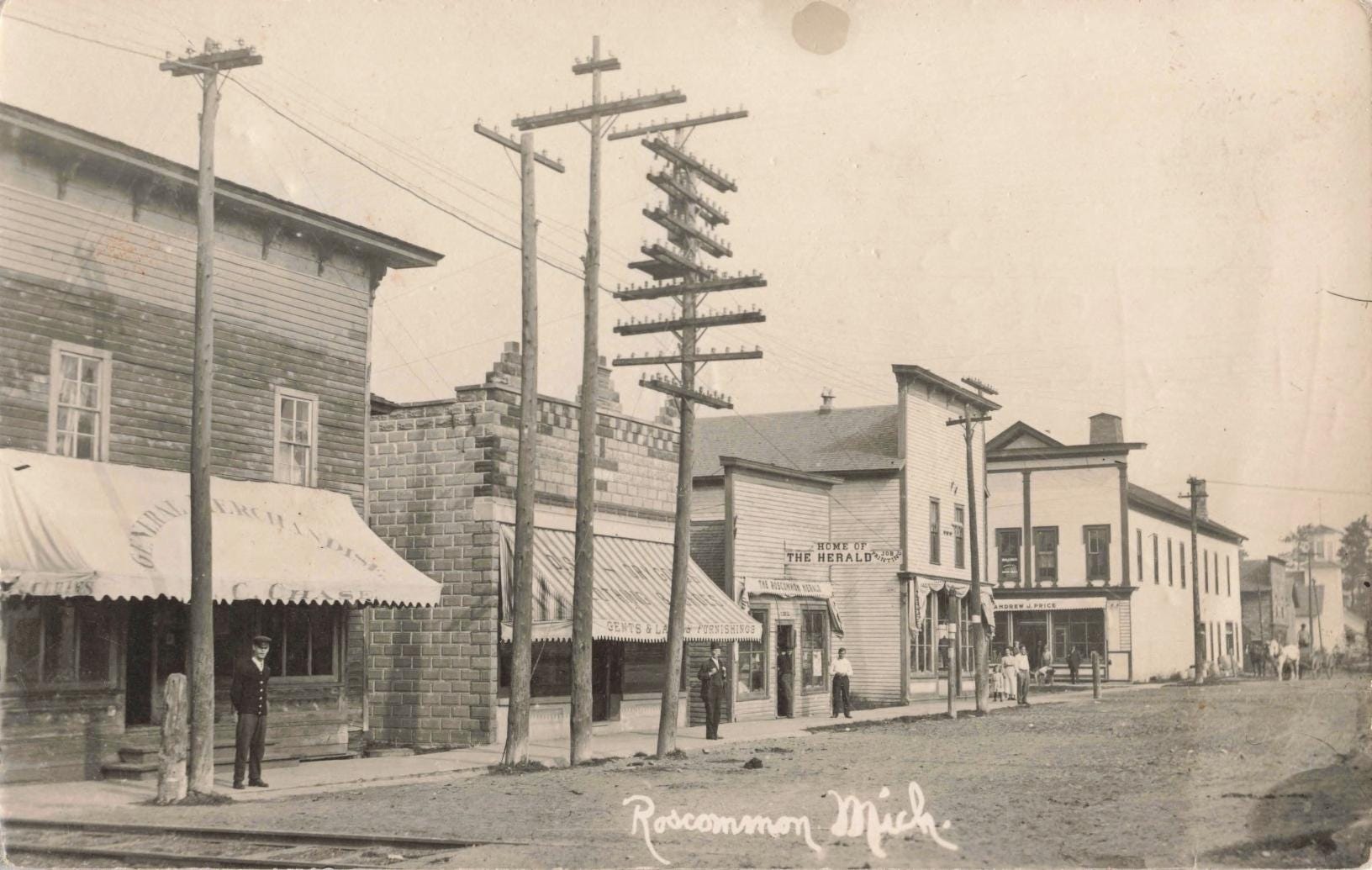
Roscommon was first settled in 1845 and became the county seat in 1875. It was named after County Roscommon in Ireland. Logging boomed as pine forests fell. By 1900, the town had a post office, two general stores, and a hotel. A 1908 Sanborn map shows shops and a big wooden school near the rail spur.
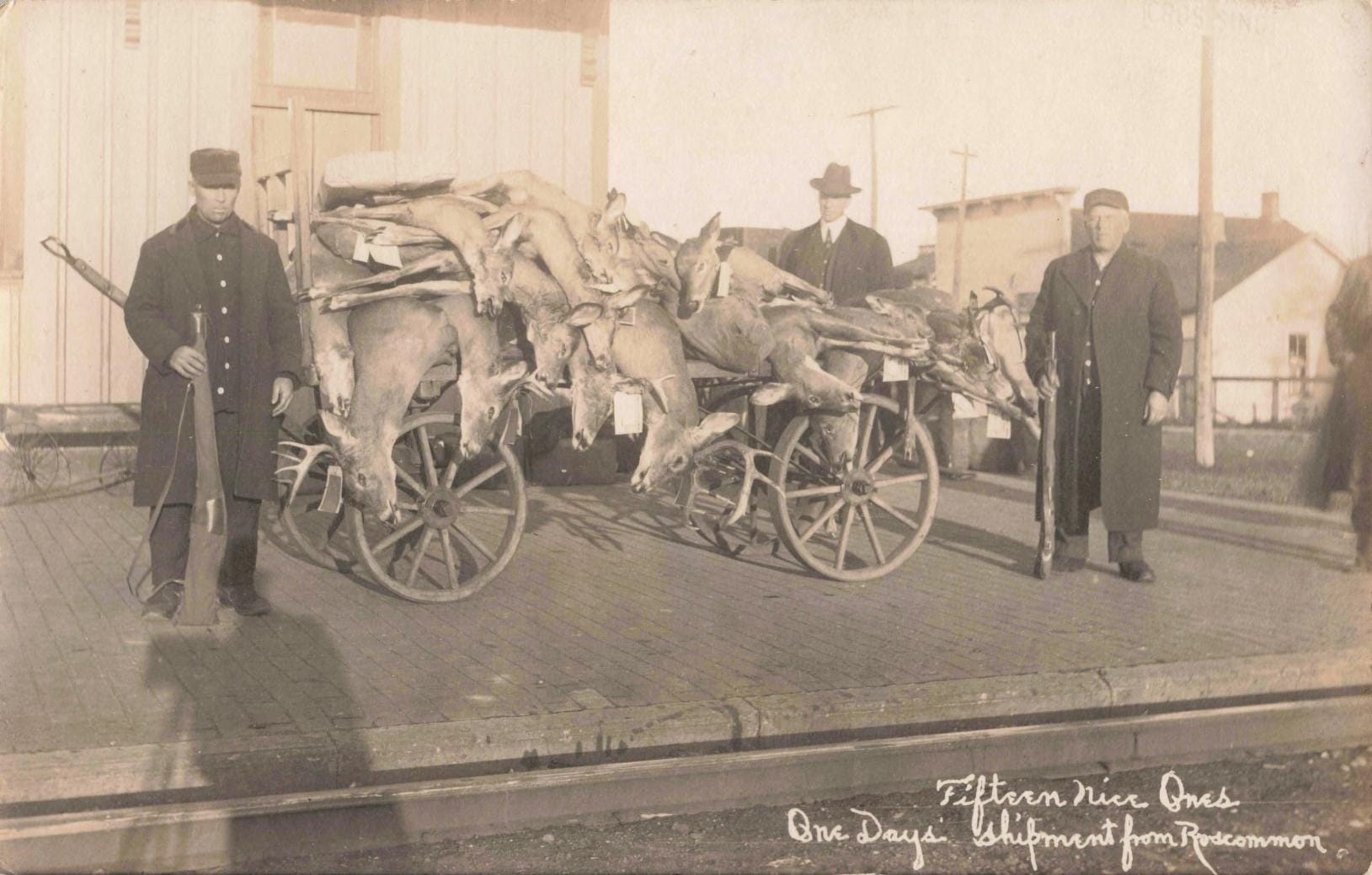
Surprising fact: hunters once treated Roscommon like a market town, shipping venison along with lumber. This chapter of history is evident in the photo above: deer and logs on the same platforms.
Main Street & Resorts
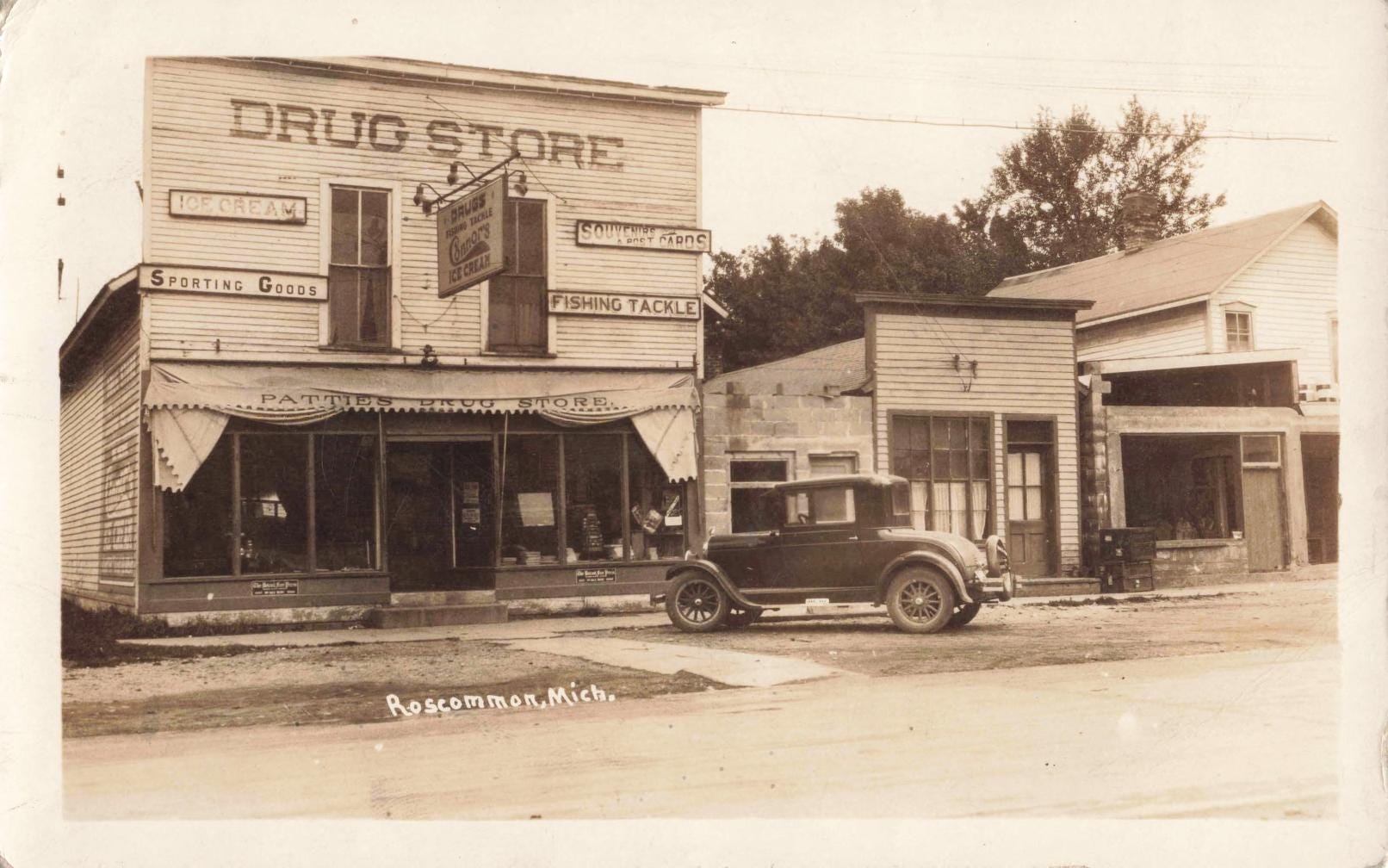
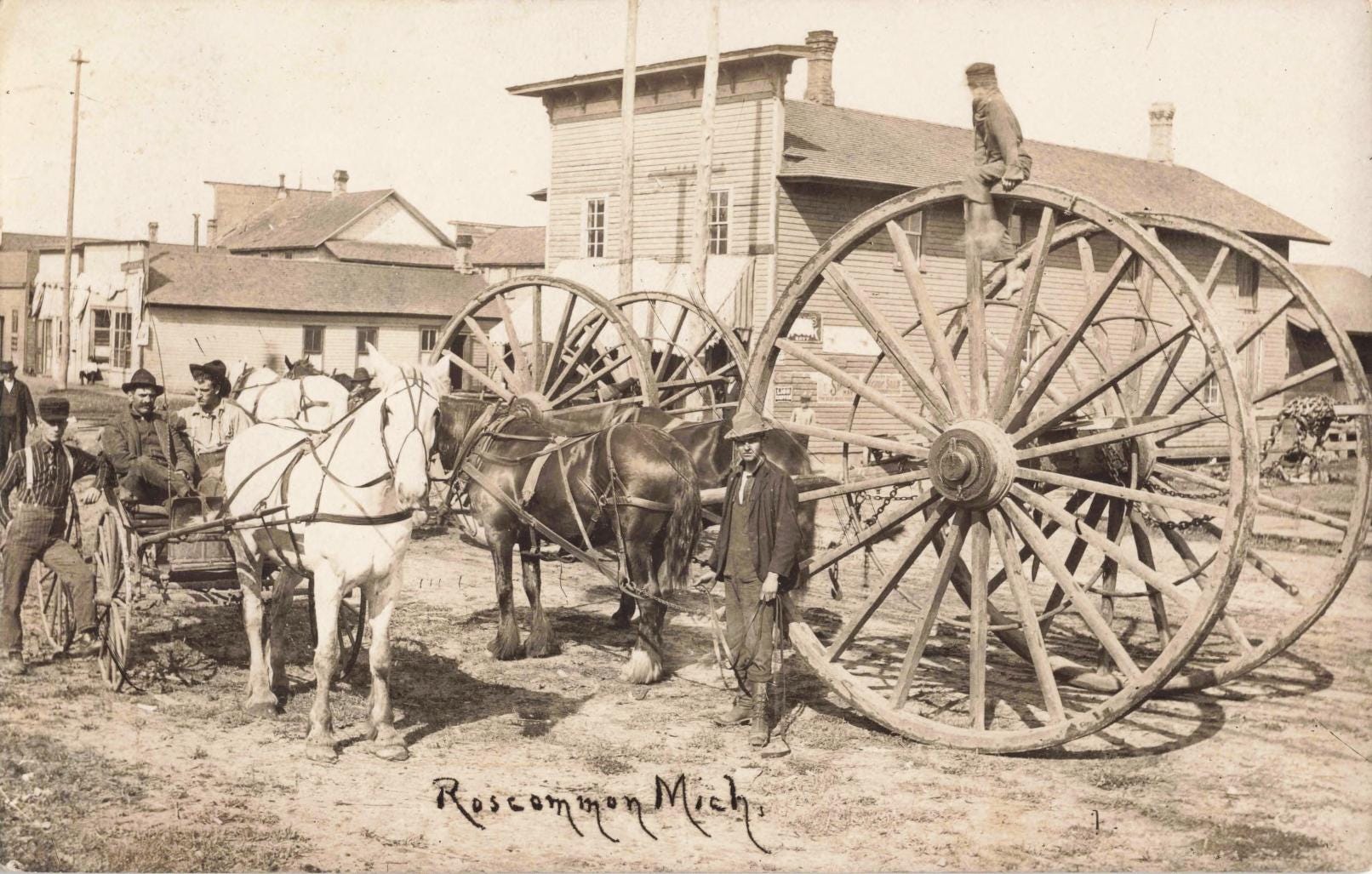
By the 1920s, Roscommon’s Main Street looked modern. A new drugstore and garage stood beside the tracks (see photo of Main St.), and Model-T cars replaced horses.
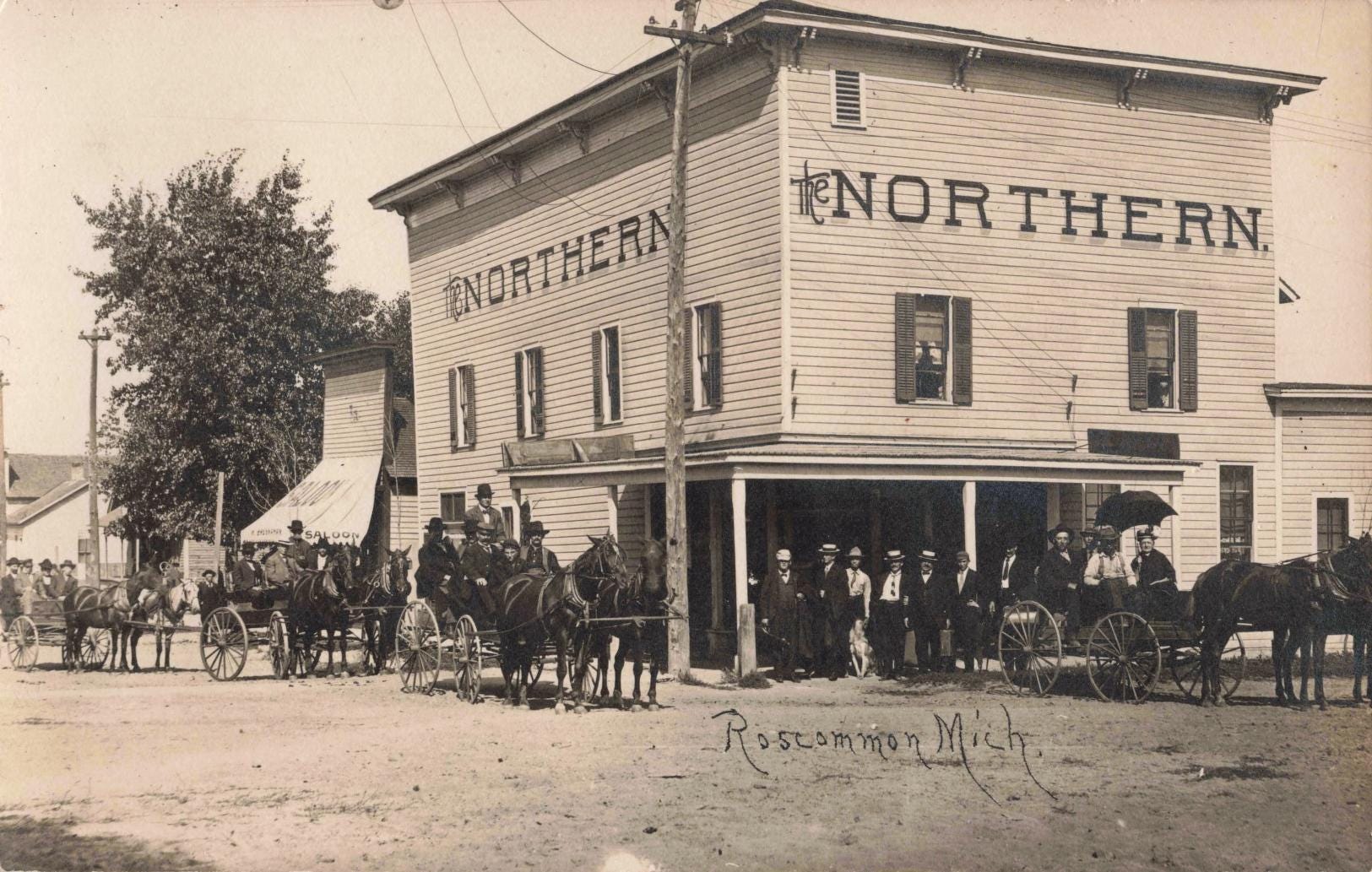
The Roscommon Northern Hotel (1910s photo) opened on Lake Street to host travelers and lumber buyers. But by the 1930s, Roscommon’s economy shifted to lakeside tourism and recreation. On Round Lake, the Whispering Pines Rendezvous resort (pictured below) welcomed vacationers.
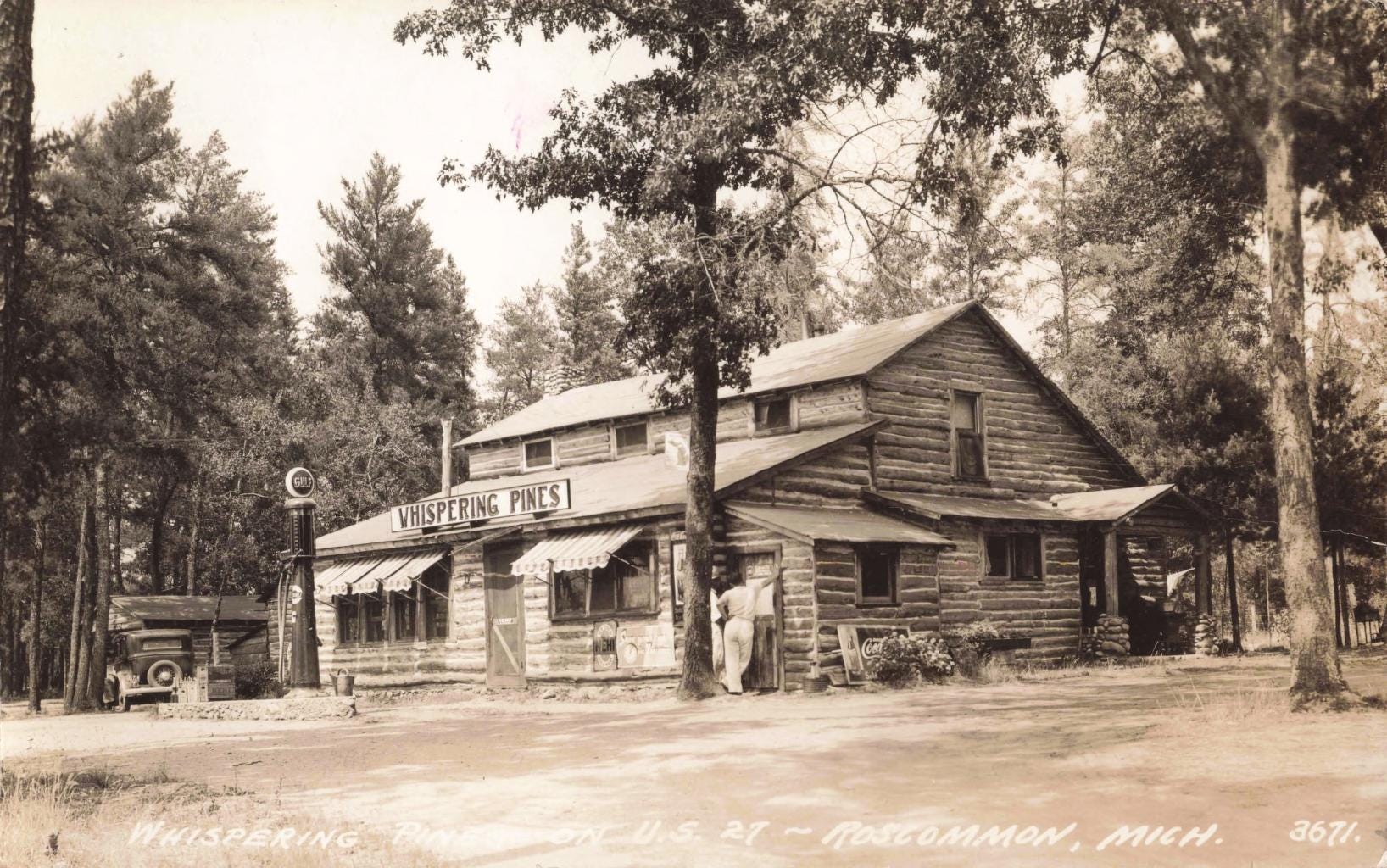
Cottages and inns multiplied on Houghton and Higgins Lakes nearby. Families rented boats and danced at Roscommon’s lodges.
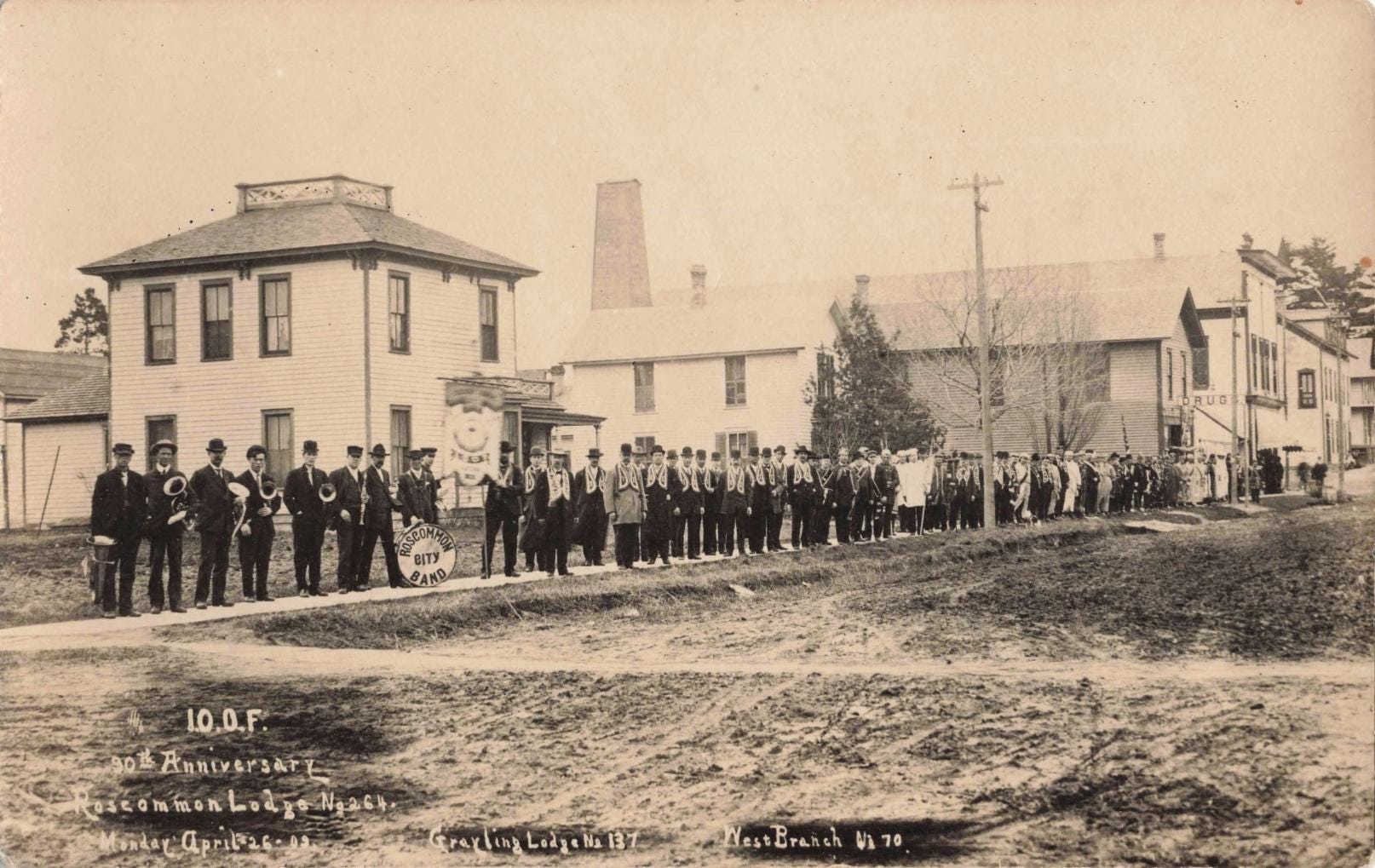
Even the Odd Fellows hall hosted summer socials. Roscommon was rebranding from a logging hub to a holiday stop, a shift common in Upper Michigan by the mid-20th century.
Industry: Oil, Gravel & Power
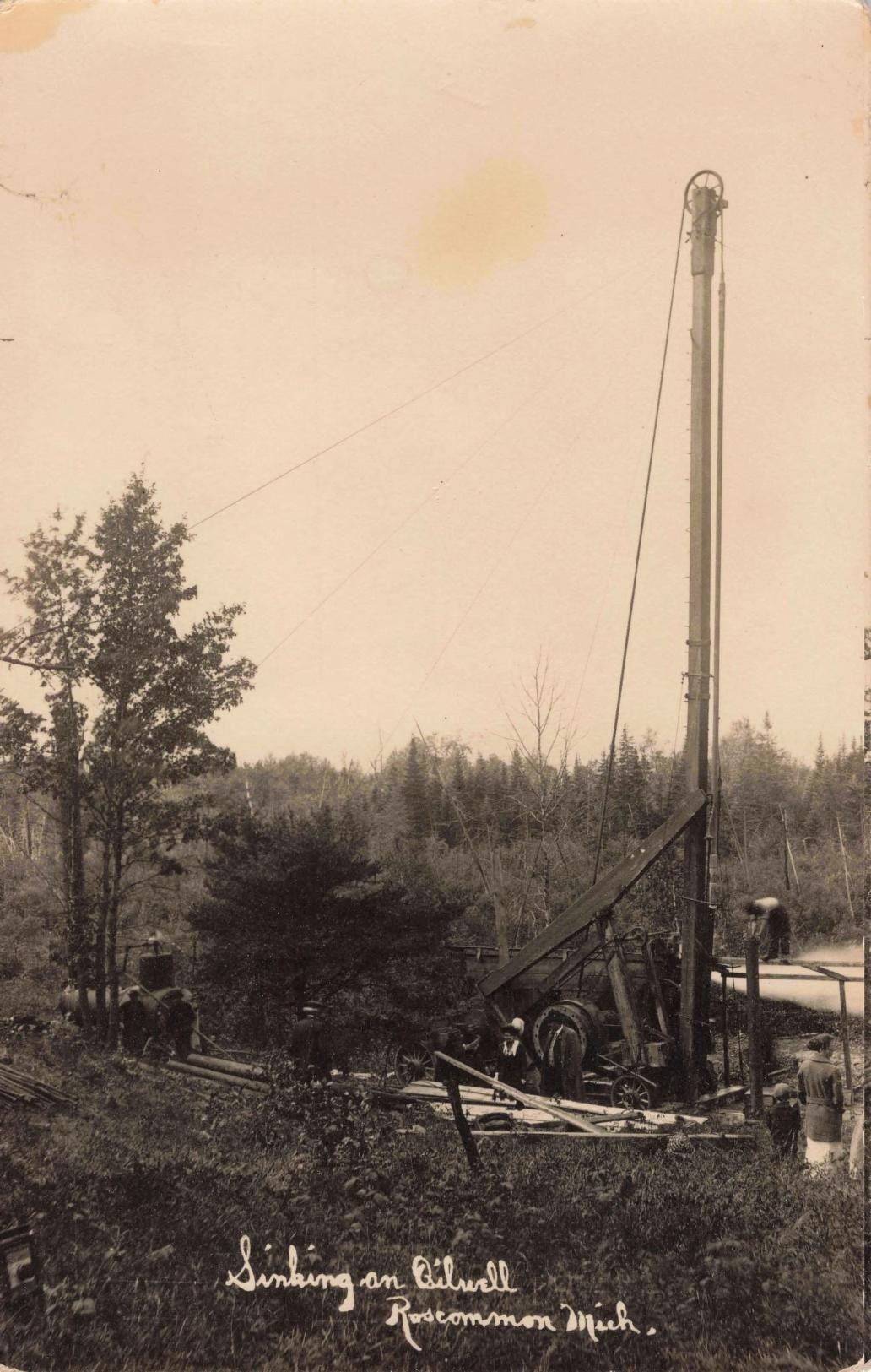
Other changes came quietly. In the late 1930s, a small oil well was drilled east of town (see oil-rig photo below). Although Michigan never rivaled Texas, this “wildcat” drilling made headlines locally.
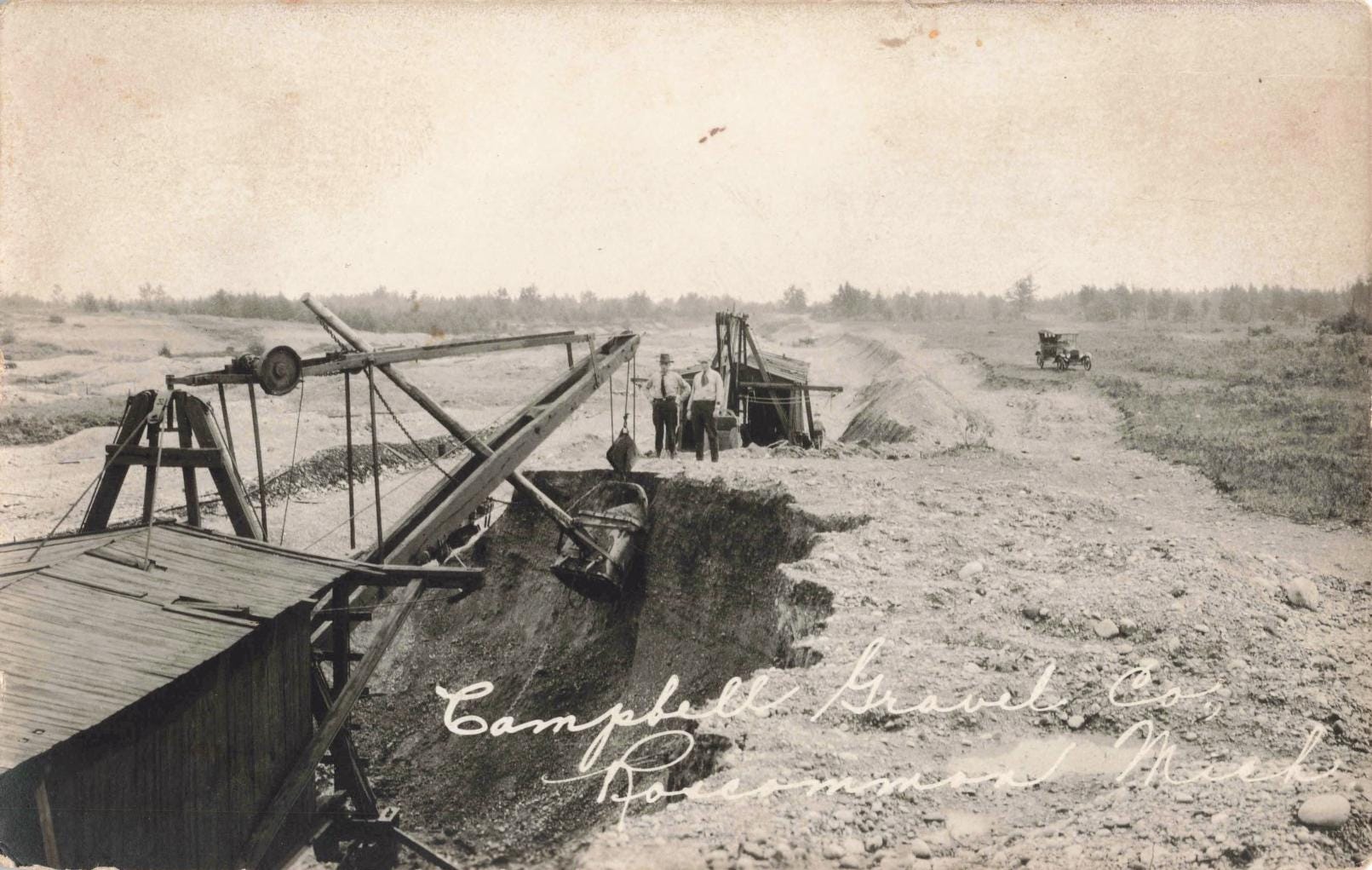
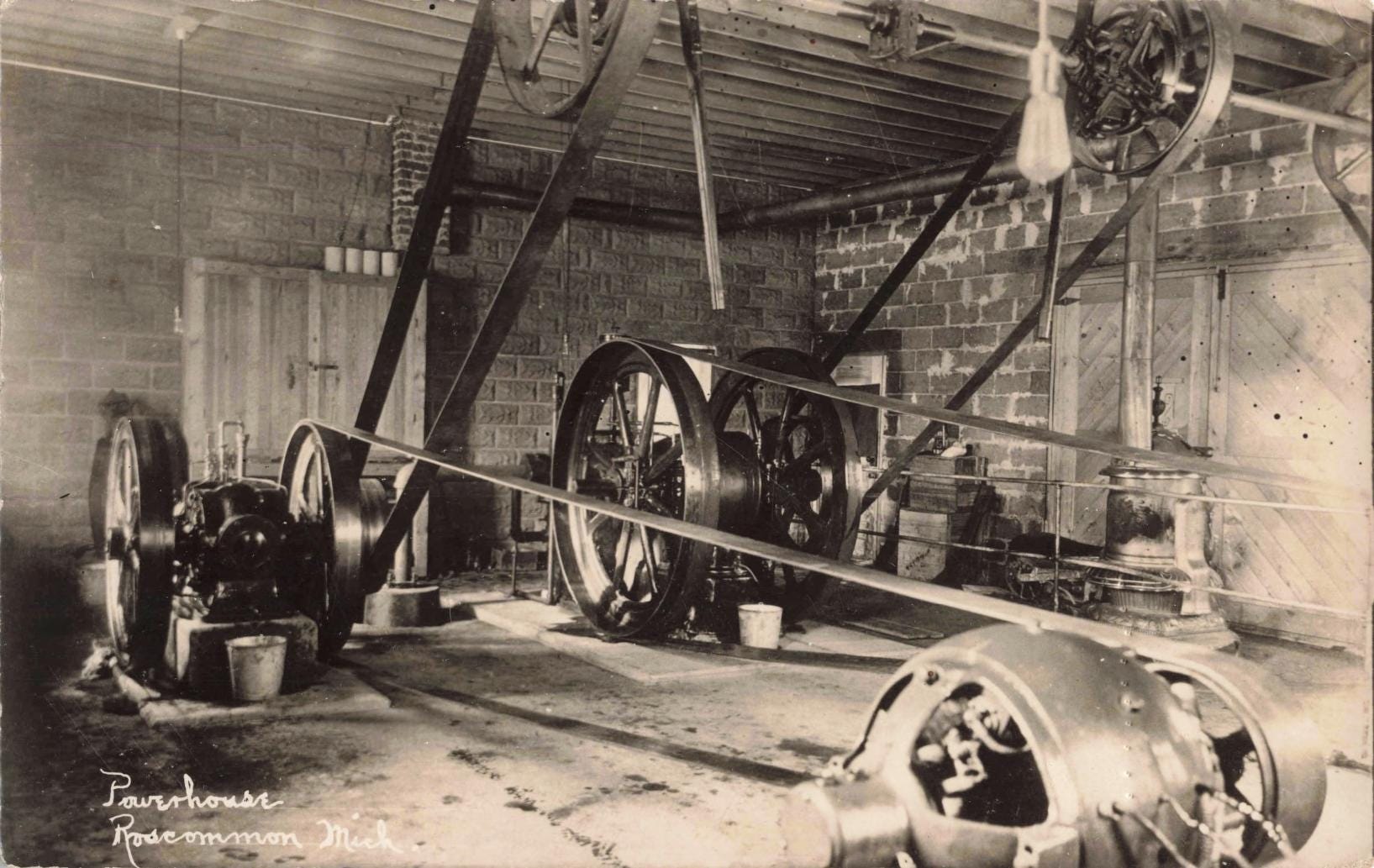
Sand and gravel also became important – the Campbell pit on US-127 (1950s photo) dug material for roads. And Roscommon even built its own power plant.
Inside the powerhouse (1930s photo), turbines hummed to light streetlamps after dark. This mix of industries – timber, tourism, oil, and electricity – kept Roscommon alive when the forests were gone.
Legacy Today
Roscommon’s history is still on display. The old railroad depot has been moved to the Pioneer House museum. Nearby, the Roscommon Red Pines Natural Area preserves a 200-year-old pine stand – a reminder of the vast forests that once stood here. The village population is under 1,000 now, but summer festivals and historic buildings (like the old county office on Lake St.) connect people to the past. Roscommon’s story – from loggers shipping deer by train to visitors fishing on Round Lake – is quietly recorded in its photos and landmarks.
Thanks for reading — follow UpperGreatLakes for more.


