

Cadillac, Michigan, grew fast in the early 20th century, shaped by timber, manufacturing, and water. The city’s location in northern Michigan placed it near forests, rail lines, and inland lakes. Those factors made Cadillac a practical place to work, build, and invest. The history of Cadillac, Michigan, during this period is visible in its buildings, factories, and public spaces.
A Downtown Built for Business

Early photographs show a compact but busy downtown. Hotels, banks, and storefronts lined Mitchell Street. The Northwood Hotel stood as one of the city’s most recognizable buildings. It served traveling salesmen, mill supervisors, and visitors arriving by rail. Shops on the ground floor sold cigars, newspapers, and everyday goods. Upstairs rooms offered a place to stay in a growing town that rarely slowed down.

City Hall reflected Cadillac’s civic ambitions. Built of stone with arched windows and strong lines, it projected authority and permanence. Local government handled permits, public works, and law enforcement from this building as the city expanded. The structure itself sent a message that Cadillac expected to last.
Manufacturing Drives the Local Economy
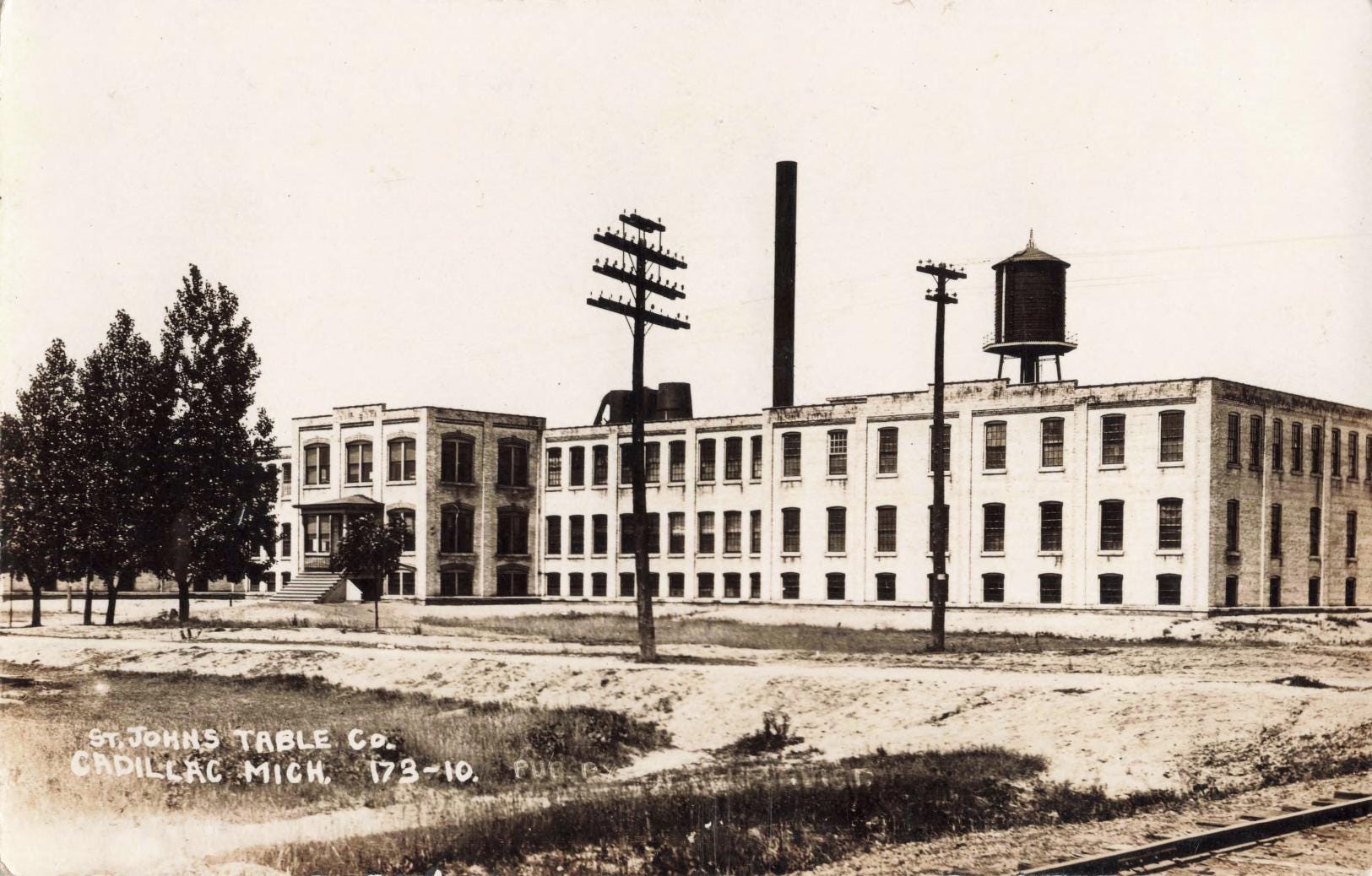
Industry defined daily life in Cadillac. The St. Johns Table Company employed large numbers of workers and shipped furniture well beyond Michigan. The factory complex, shown in period images, sat near rail lines that carried finished goods to markets across the Midwest. Steady wages supported families and helped downtown businesses grow.
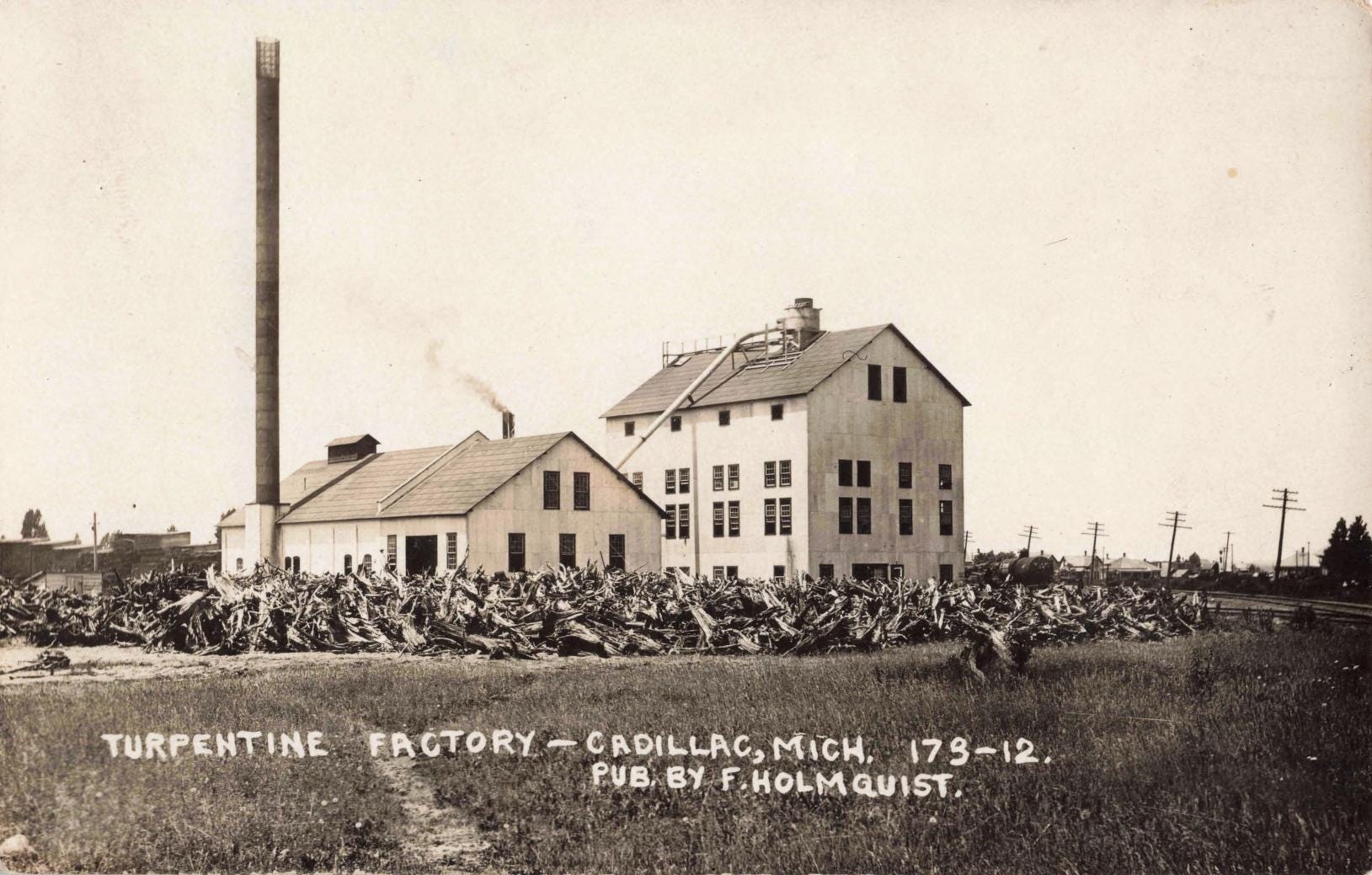
Another key operation was the turpentine factory. It processed byproducts from lumber milling, turning pine waste into usable materials.
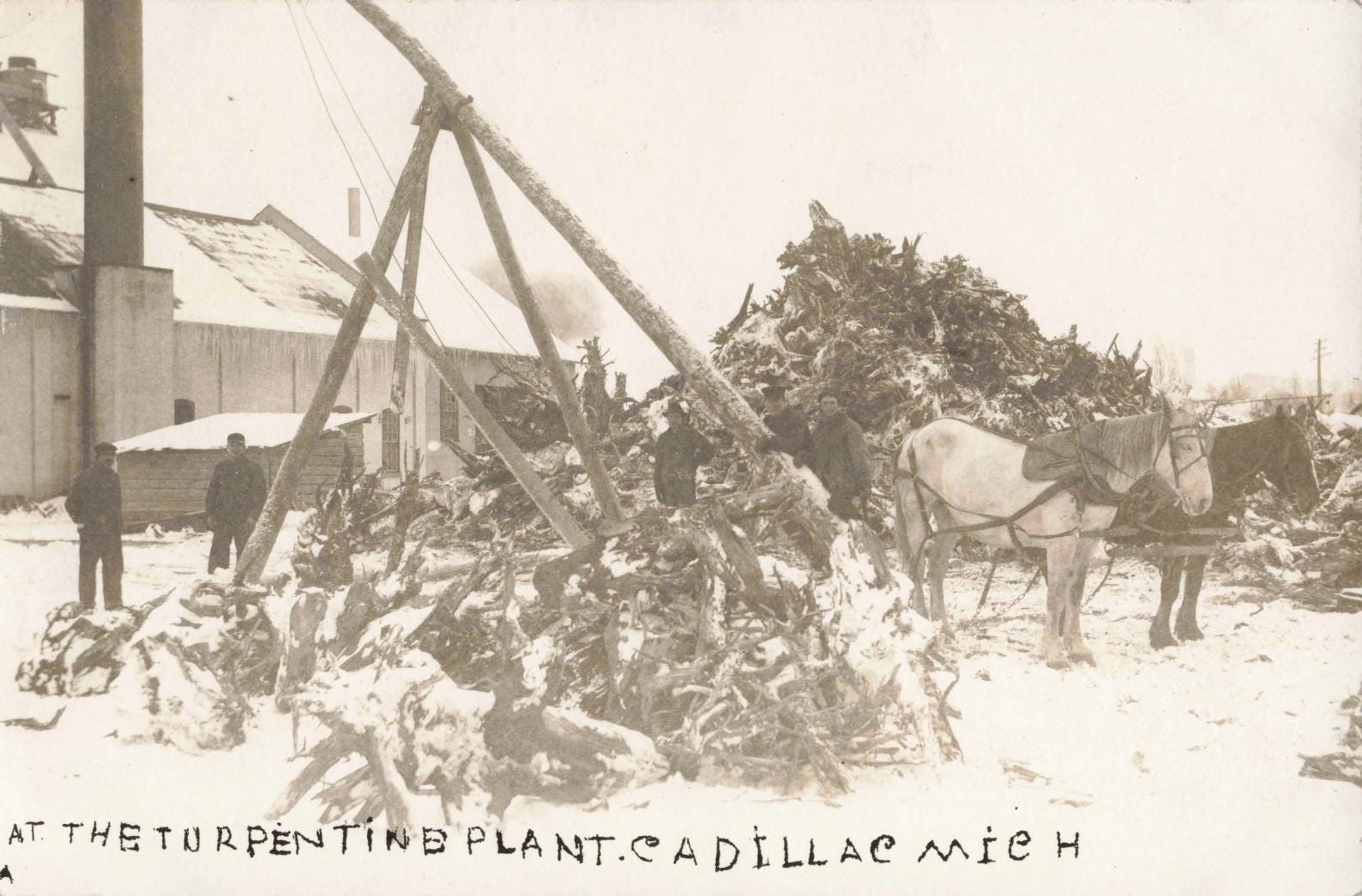
This operation reduced waste and added value to timber that had already been harvested. The plant’s tall smokestack and storage yards were common sights on the edge of town. Together, these industries formed the backbone of the local economy and shaped the history of Cadillac, Michigan.
Water Shapes Leisure and Identity
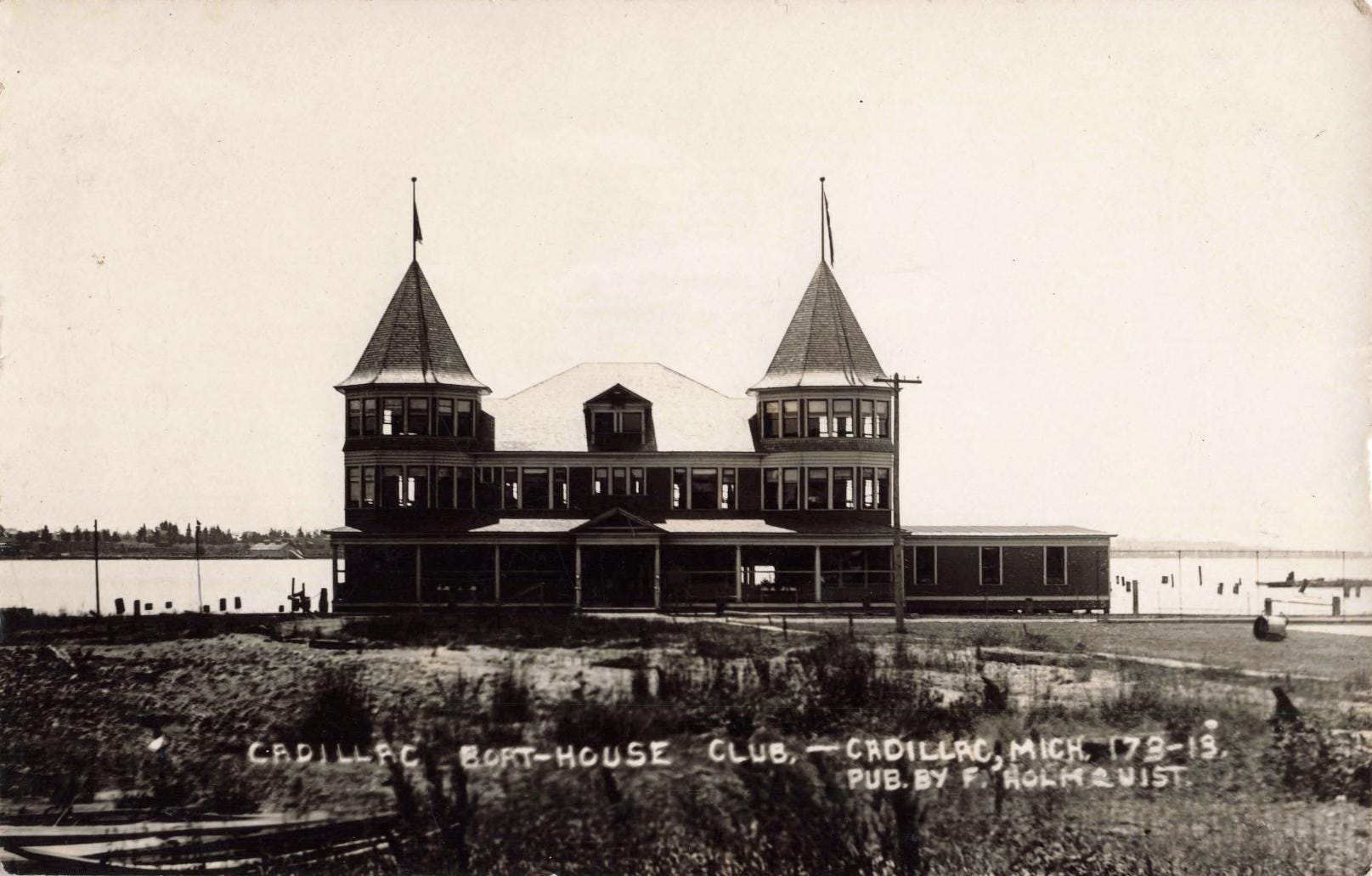
Cadillac’s lakes were more than scenery. Lake Cadillac and Lake Mitchell became social centers as well as economic assets. The Cadillac Boat-House Club sat along the shoreline and hosted dances, dinners, and summer gatherings. Its twin towers and broad porch made it a landmark for residents and visitors alike.
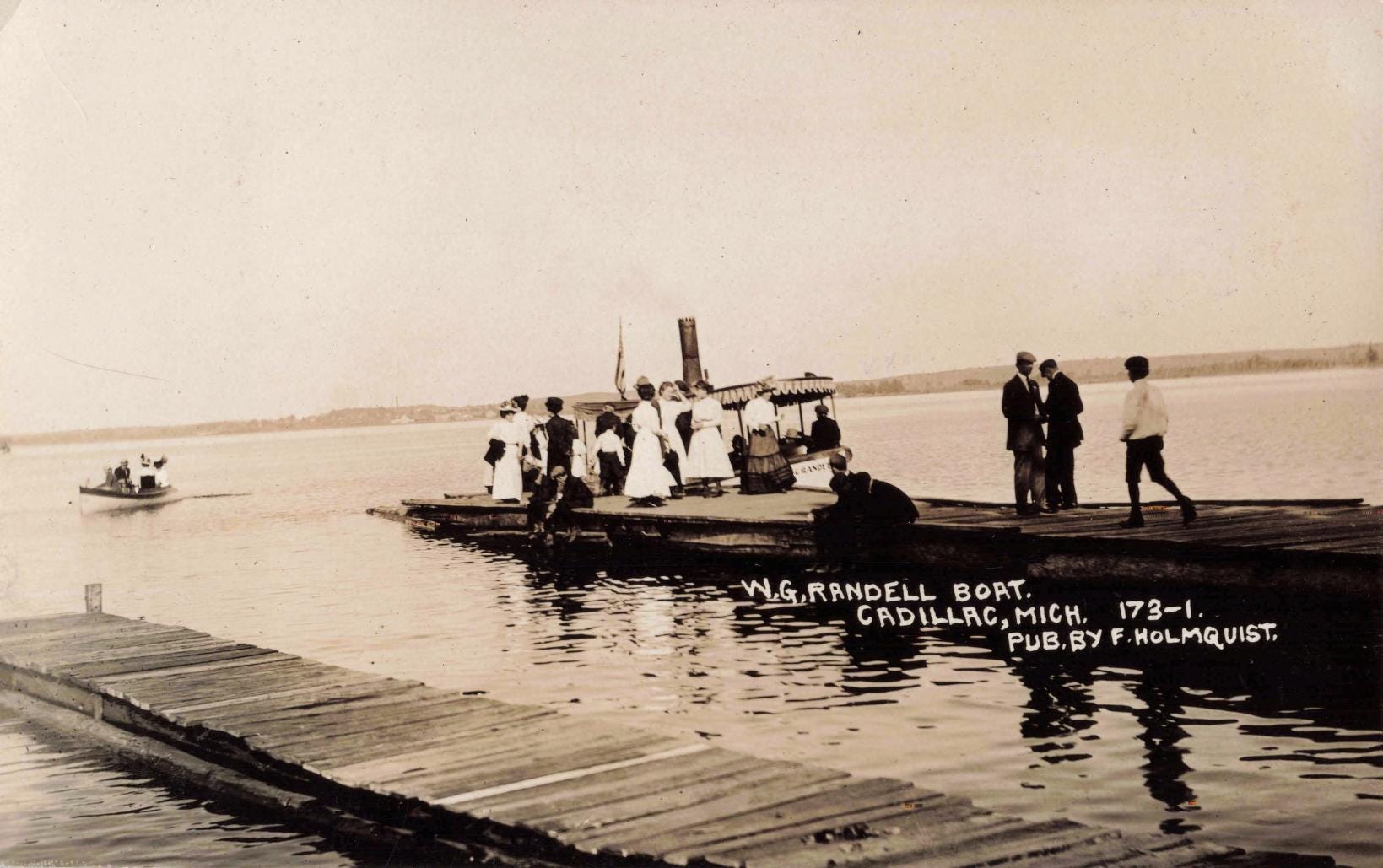
Passenger boats carried people across the water on warm days. These excursions offered a break from factory schedules and office routines. Tourists arrived to fish, boat, and relax, bringing outside money into the city. The lakes helped Cadillac balance work with recreation, an important part of community life.
Sports and Public Attention
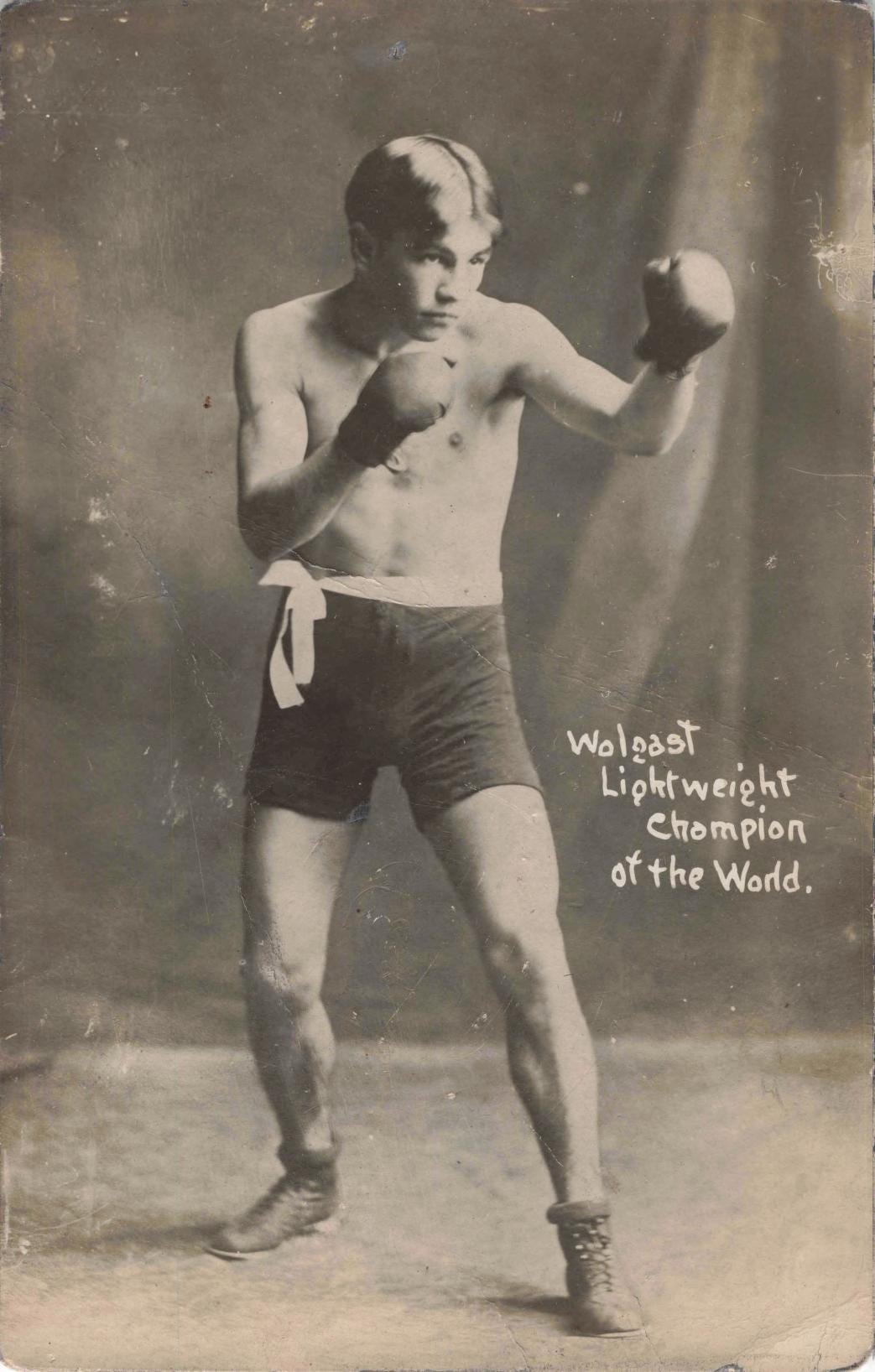
Cadillac gained national attention through boxing. Ad Wolgast, raised in the area, became a world lightweight champion. Studio portraits and arena photos document his rise.
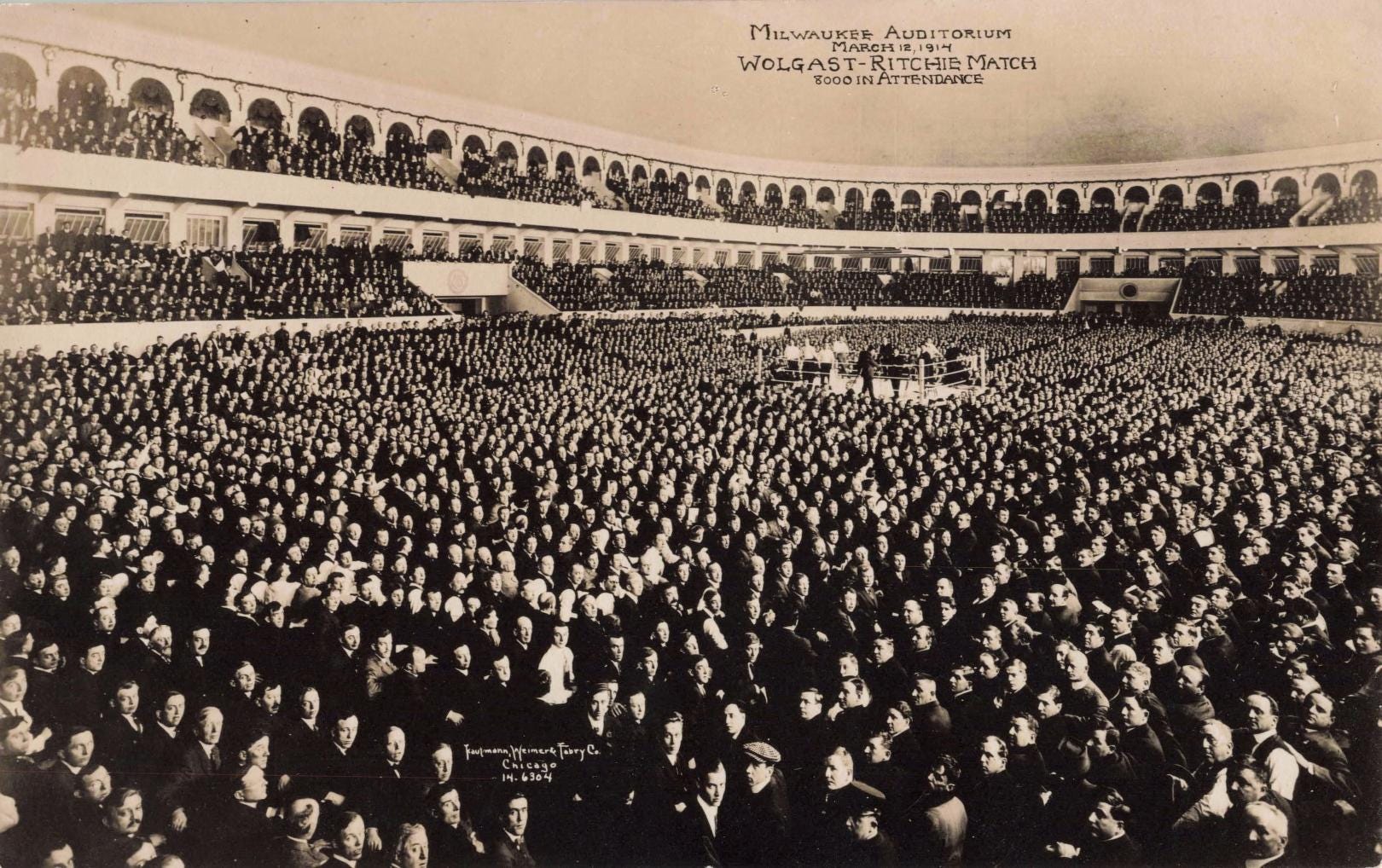
One famous match in 1914 drew thousands of spectators, showing how widely followed the sport had become. Wolgast’s success placed Cadillac on the national map and gave local residents a figure to rally around.
Railroads and Movement
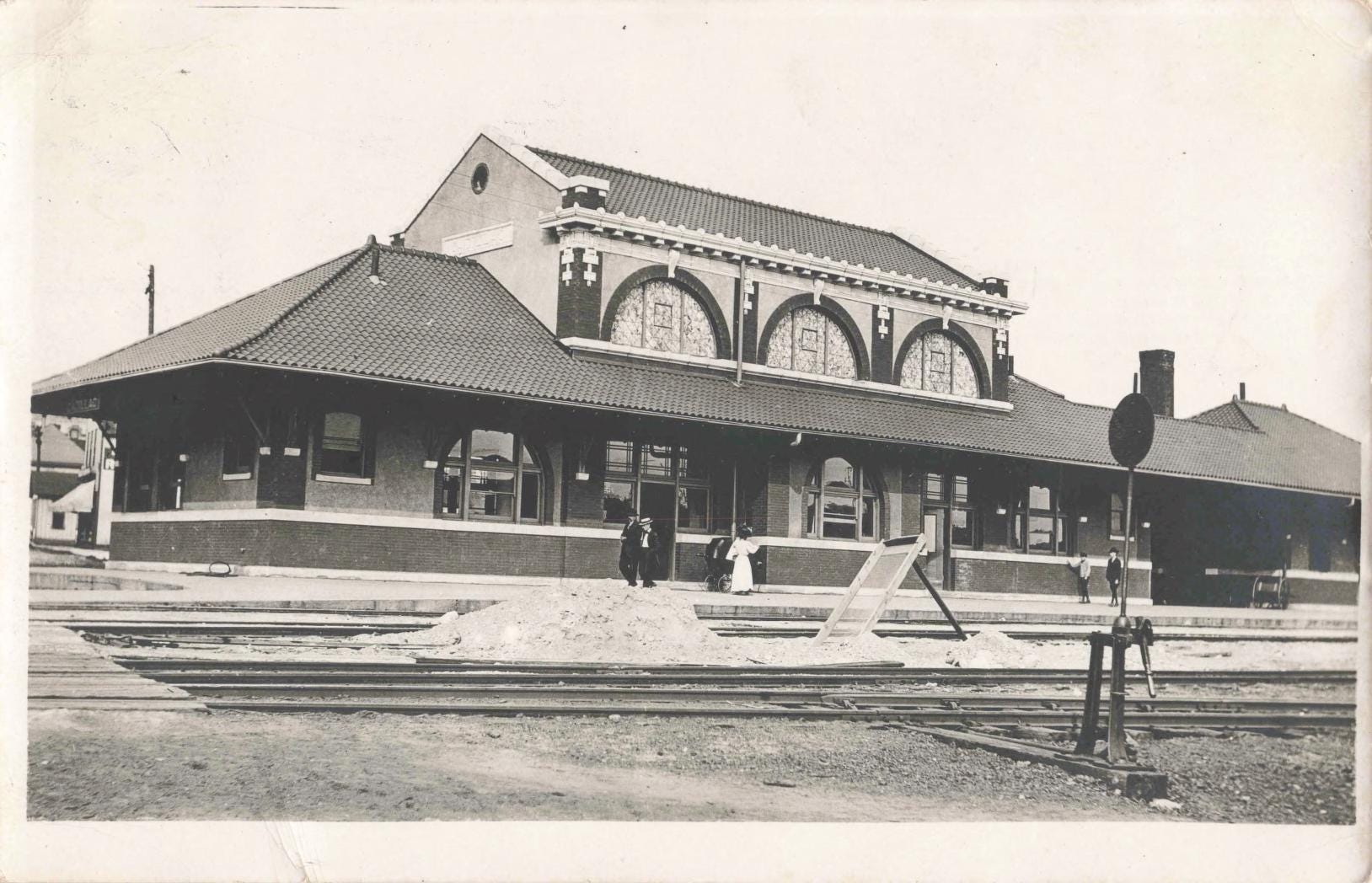
Rail service connected Cadillac to Detroit, Grand Rapids, and Chicago. The passenger depot was a point of arrival and departure for workers, tourists, and freight. Rail lines also allowed manufacturers to compete in larger markets. Without rail access, the city’s growth would have been far more limited. Transportation was a constant theme in the history of Cadillac, Michigan.
A City Taking Shape
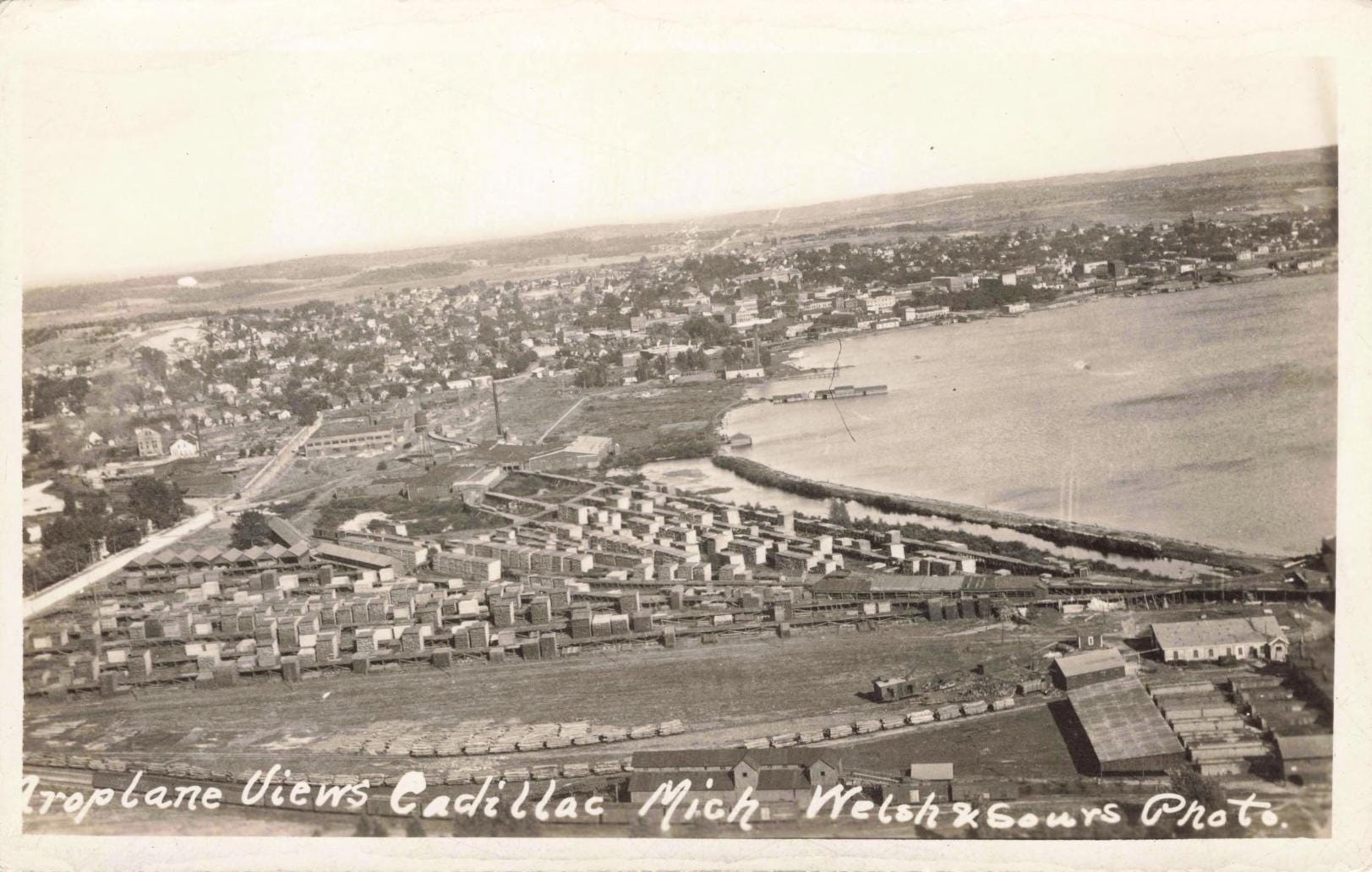
By the 1920s and 1930s, Cadillac had developed a clear identity. It was a working city with cultural outlets, strong public institutions, and steady employment. Streets were busy, factories operated on schedule, and social clubs filled evenings and weekends. These photographs capture a city in motion, confident in its direction.
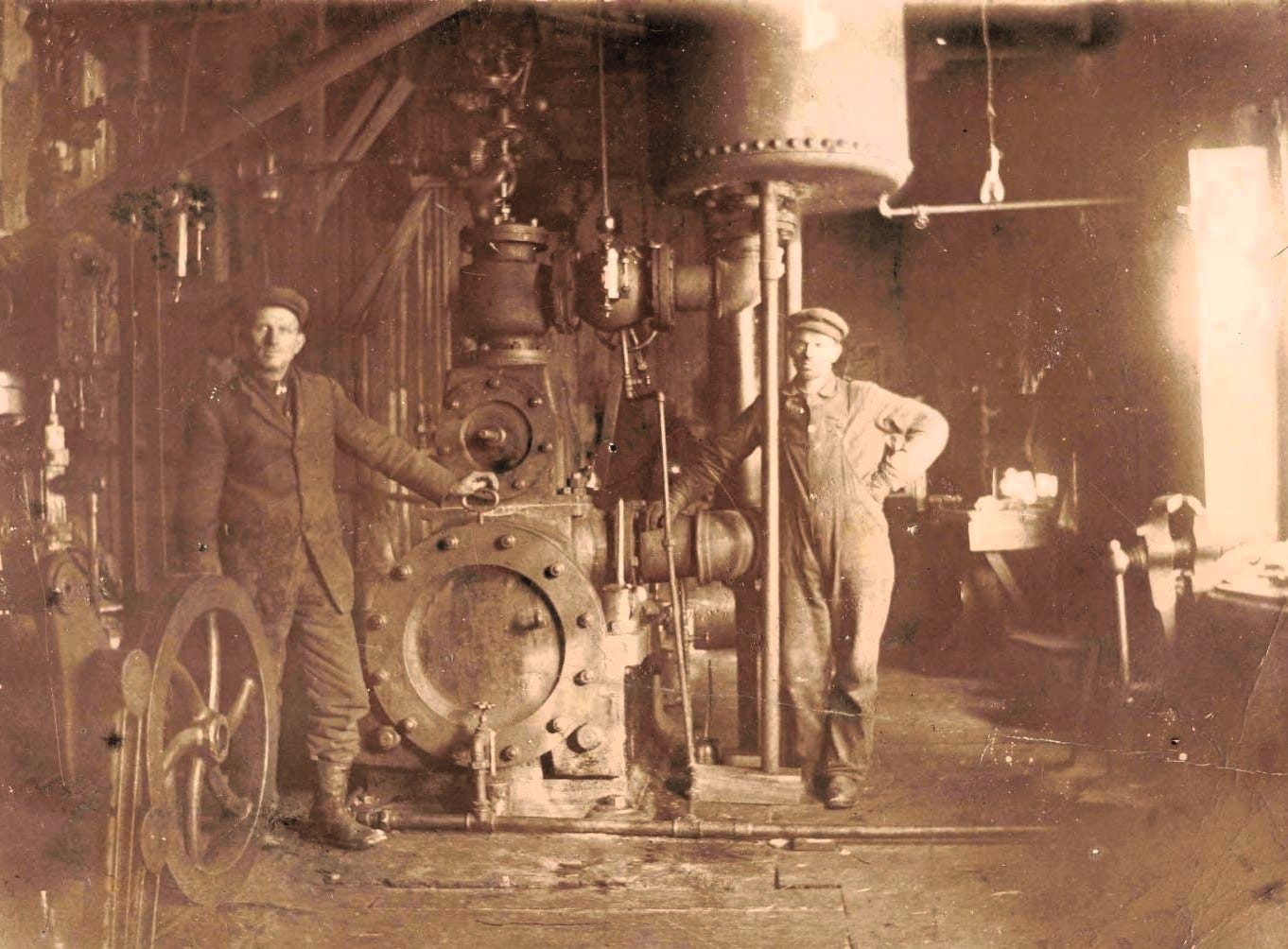
Today, the buildings and waterfront still reflect those early choices. The history of Cadillac, Michigan, is not abstract. It is visible in brick, stone, and shoreline, shaped by people who built a town meant to endure.


