

Kalkaska - A Town on Fire
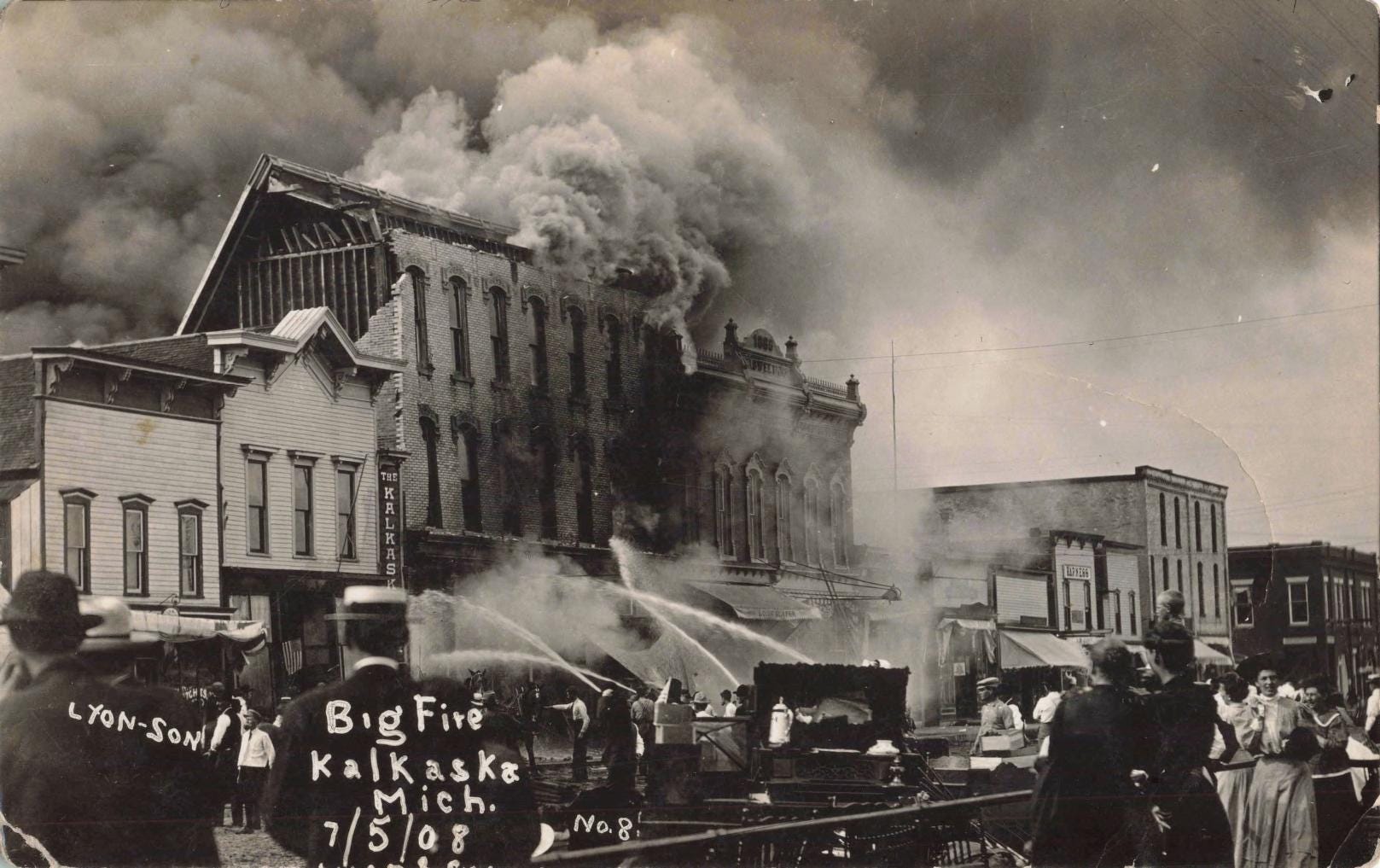
The history of Kalkaska, Michigan includes sawmills, railroads, and one of the most destructive fires ever recorded in a small northern Michigan town. On July 5, 1908, a blaze tore through the village’s downtown, leveling 14 major buildings and forcing a quick decision: rebuild, or let the town fade.
The fire started in the Palmer & Cole Brothers building, a three-story brick structure on Cedar Street. Dry goods stored in the basement ignited, likely from spontaneous combustion. Within minutes, smoke billowed up through the walls.
A Rapid Spread
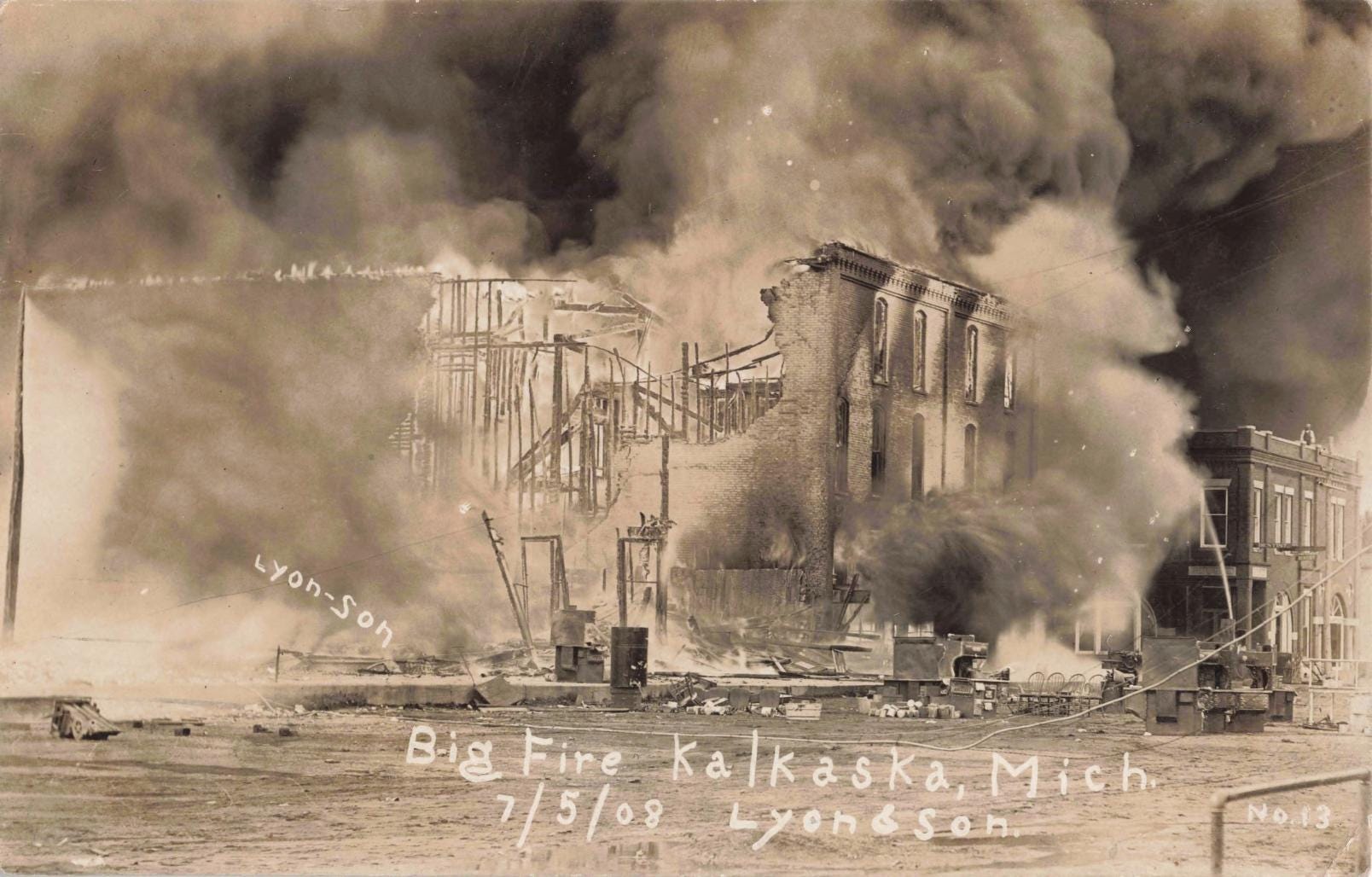
Strong west winds pushed the flames from building to building. The fire consumed the Kalkaska City Bank, Glazier’s dry goods store, Colson’s drugstore, Stover’s pharmacy, and the two-story Opera House block. The town’s fire brigade did what it could, but they were quickly outmatched. Water pressure failed. Sparks leapt onto nearby barns and houses. Dozens of spot fires erupted across town.
By evening, most of the business district was gone.
Losses Mount
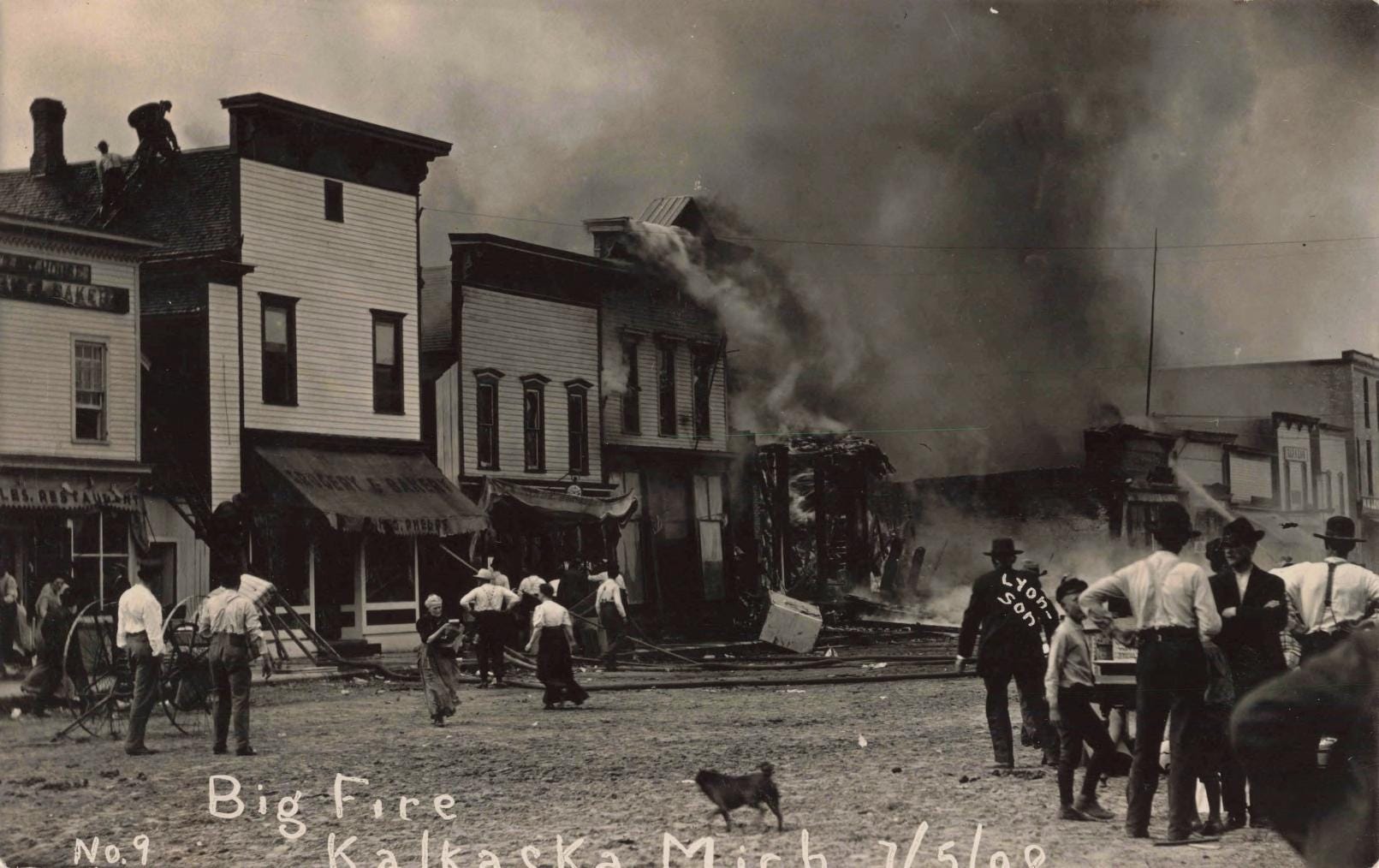
Estimates put the damage between $150,000 and $250,000. Merchants saved what they could—safes, typewriters, and furniture were dragged into the streets. One man nearly died trying to put out a roof fire on his house. But despite the losses, there was no pause.
A Fast Rebuild
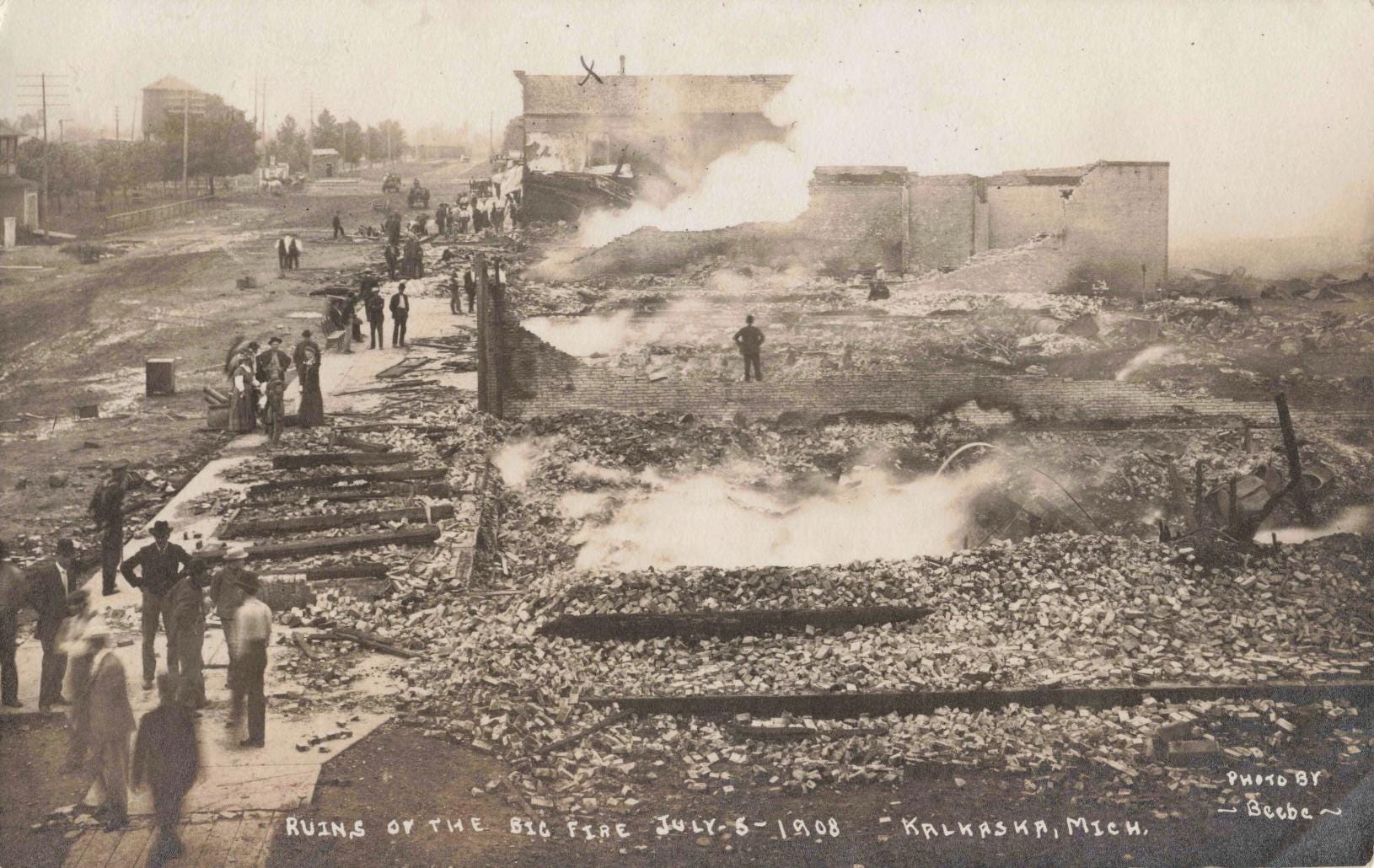
The story of the 1908 fire isn’t just about destruction. It’s about what happened next. Kalkaska’s business owners didn’t wait. Within 24 hours, insurance agents were in town. By the end of the week, blueprints for new buildings were being drawn up.
Temporary shops were set up in barns and spare rooms. Newspaper presses resumed. Bricklayers were on site by mid-July.
What Survived
Some stock was salvaged. The town’s musical instruments from the band hall were carried out just before the building collapsed. Business ledgers were saved. Photographers like E.L. Beebe captured the damage and sold postcards—helping document the event while also earning money for families affected by the fire.
A Changed Main Street
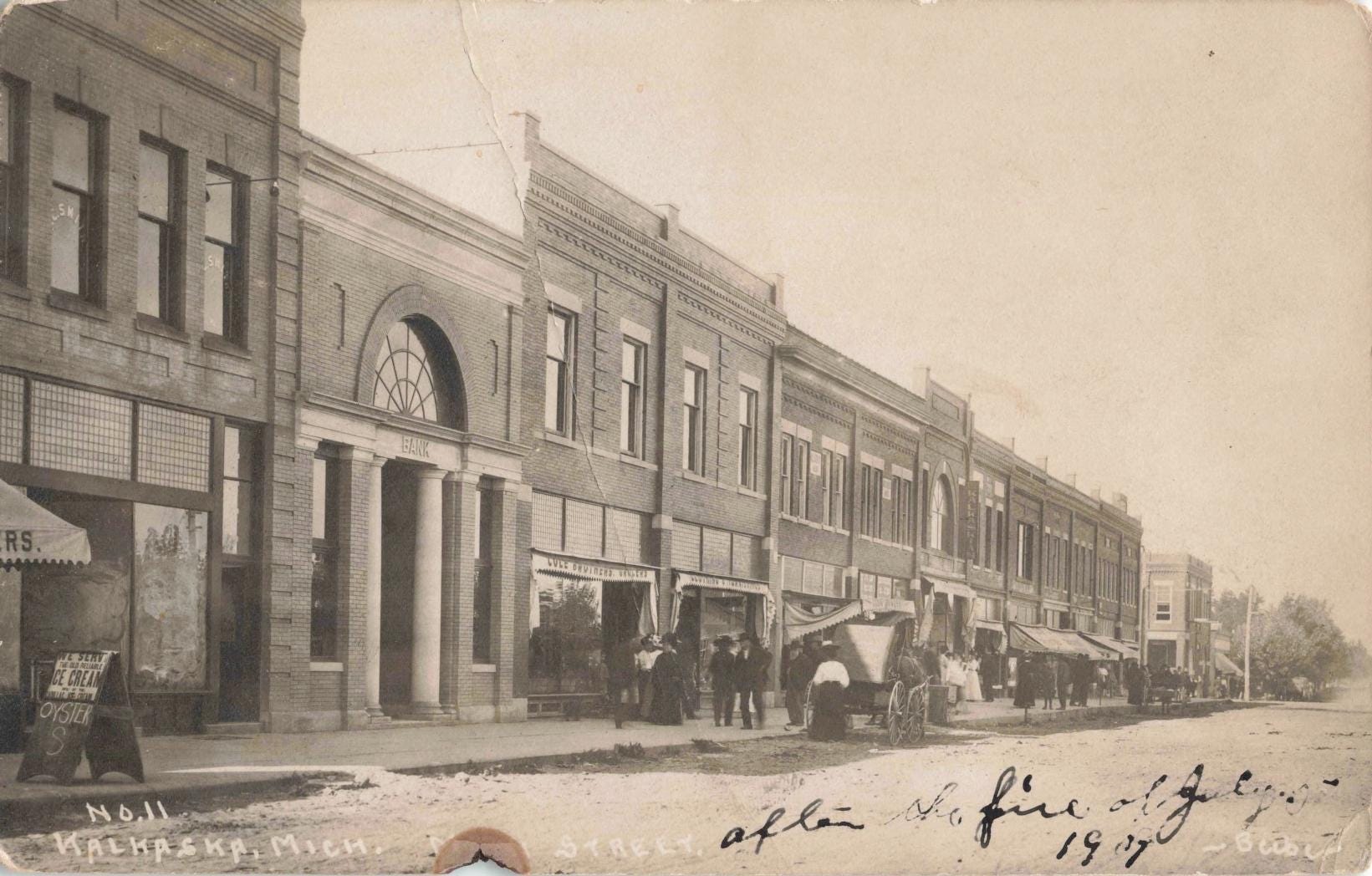
Walk through Cedar Street in Kalkaska today and you’ll see buildings marked with “1908.” These are the structures that replaced the wooden ones. Made of brick, they reflected a shift in how the town saw itself. Stronger. More modern.
The fire was a turning point. It revealed the weakness of wood construction and the power of organized local response. The speed of rebuilding remains one of the most striking parts of the history of Kalkaska, Michigan.
The 1908 fire devastated Kalkaska’s downtown. But in the aftermath, it also sparked a transformation. Brick buildings, permanent storefronts, and a renewed sense of stability followed.
The history of Kalkaska, Michigan includes that fire not just because of what was lost—but because of what rose from the ashes.


