


This edition of Michigan Moments examines the history of Alba, Michigan, from its Indigenous roots through the lumber era, the 1893 fire, and the town’s rebuilding in the early 20th century. The account relies on historic photographs, regional records, and documented timelines. Where the historical record is incomplete, that uncertainty is noted rather than filled with an assumption. The goal is not nostalgia for its own sake, but a clear look at how a small Michigan town formed, adapted, and endured.
Fire, Timber, and a Railroad Town
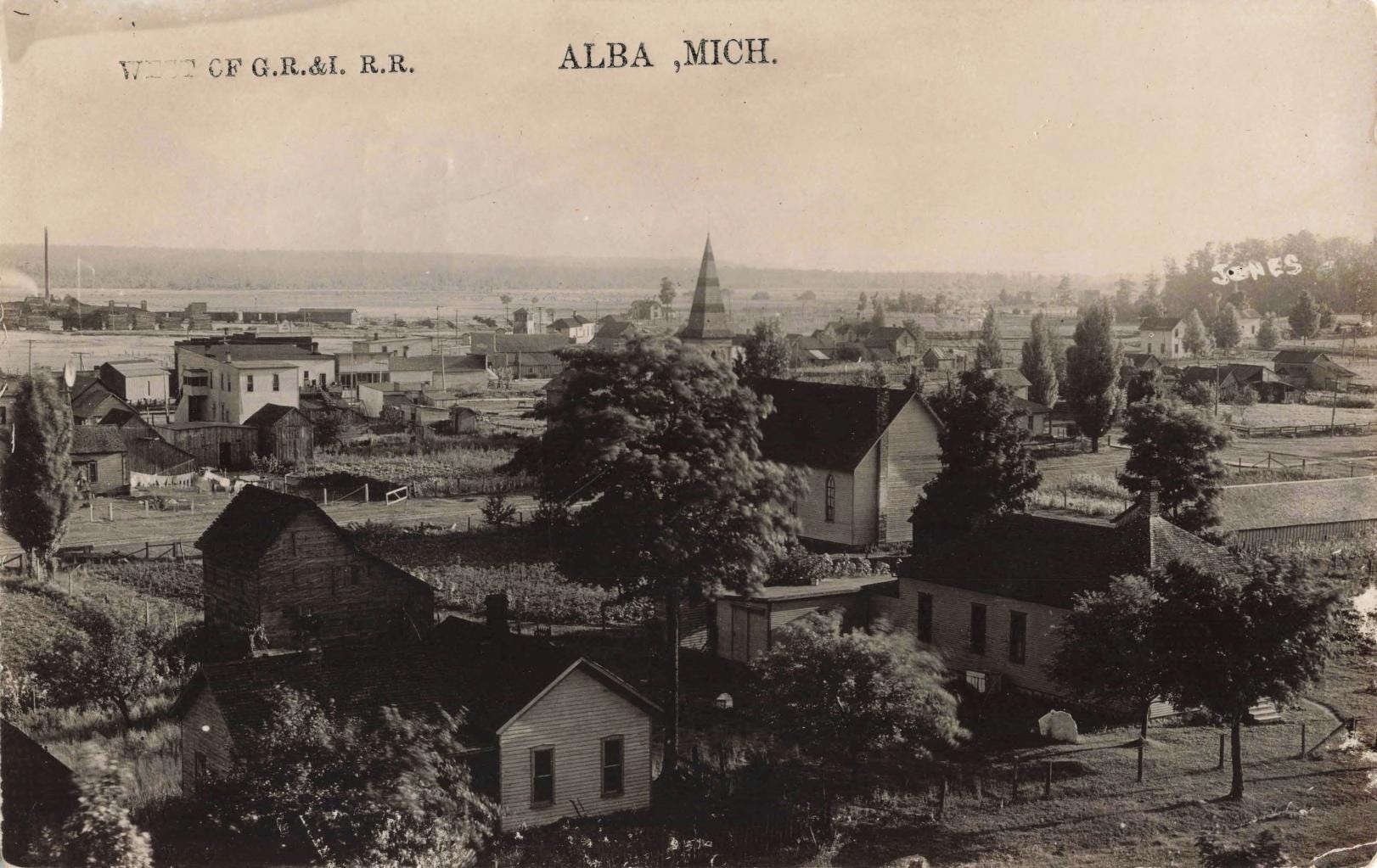
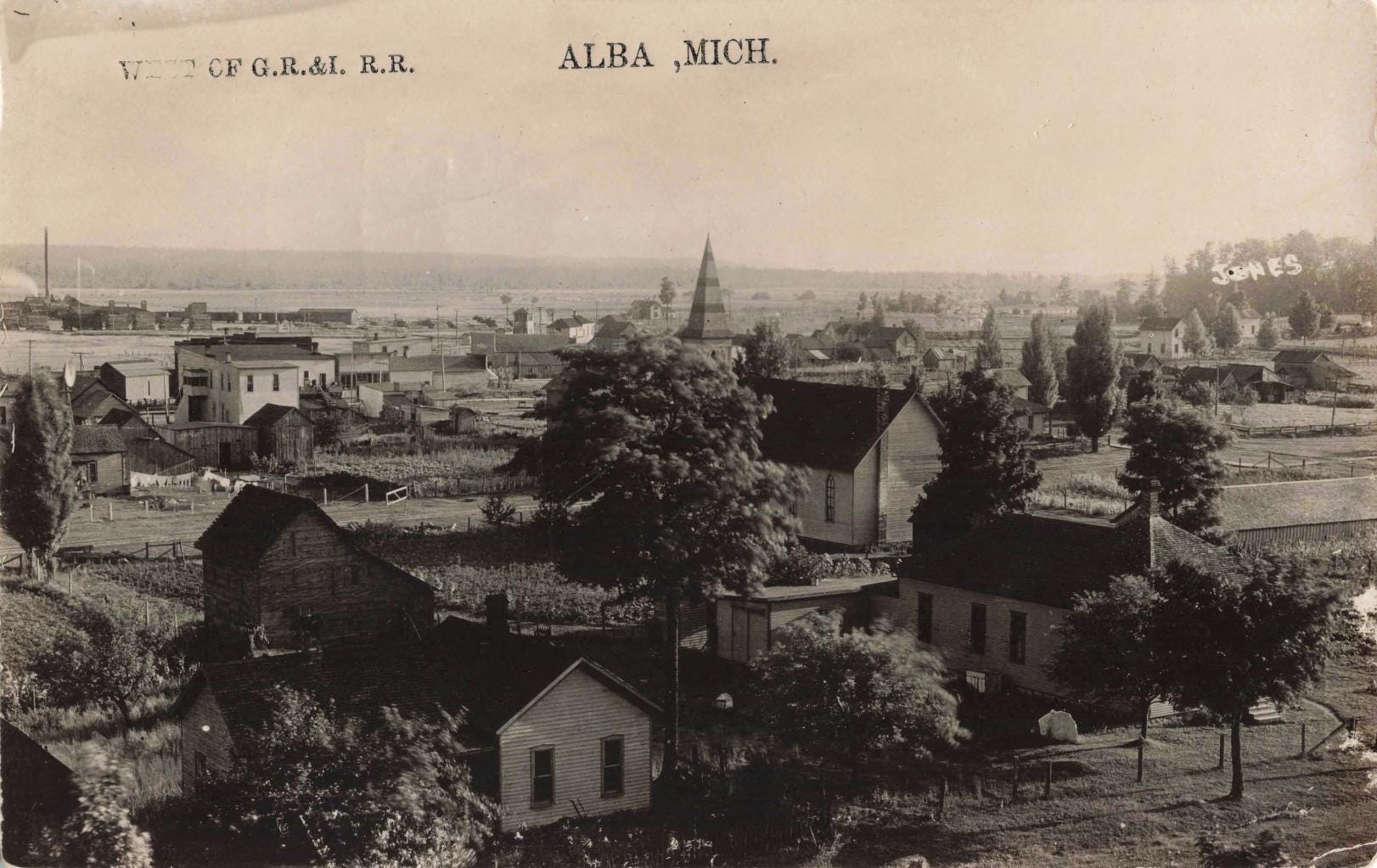
Alba, Michigan did not ease into existence.
It arrived quickly, built by timber, pulled forward by railroad tracks, and shaped by forces far larger than the town itself. Like many northern Michigan communities, Alba’s early years were intense, productive, and fragile.
Its story is not about spectacle. It is about work, loss, rebuilding, and staying put when the boom years ended.
Become a Member
Before Alba Had a Name
Long before a town stood here, the land around present-day Alba lay within the seasonal homelands of the Odawa (Ottawa) and Ojibwe (Chippewa) peoples.
These Anishinaabe nations traveled through the region for hunting, fishing, and trade. Rivers, forests, and portage routes mattered more than fixed boundaries. While no permanent Indigenous village has been documented at the exact site of Alba, the area was well known and regularly used long before treaties opened the land to settlement.
That history faded from view as railroads pushed north.


