


At the far end of the Keweenaw Peninsula sits Copper Harbor, a place often labeled as remote. The photographs from the early 20th century tell a different story. From 1890 through the 1930s, Copper Harbor was not cut off. It was connected—by water, by road, and, at times, by ice.
What changed was not the town’s location, but its purpose.
From Copper Shipping Point to Working Harbor
Copper Harbor began as a practical place. Copper ore moved through its docks. Fishing boats worked the shoreline. When large-scale mining declined, the town did not collapse. It adjusted.
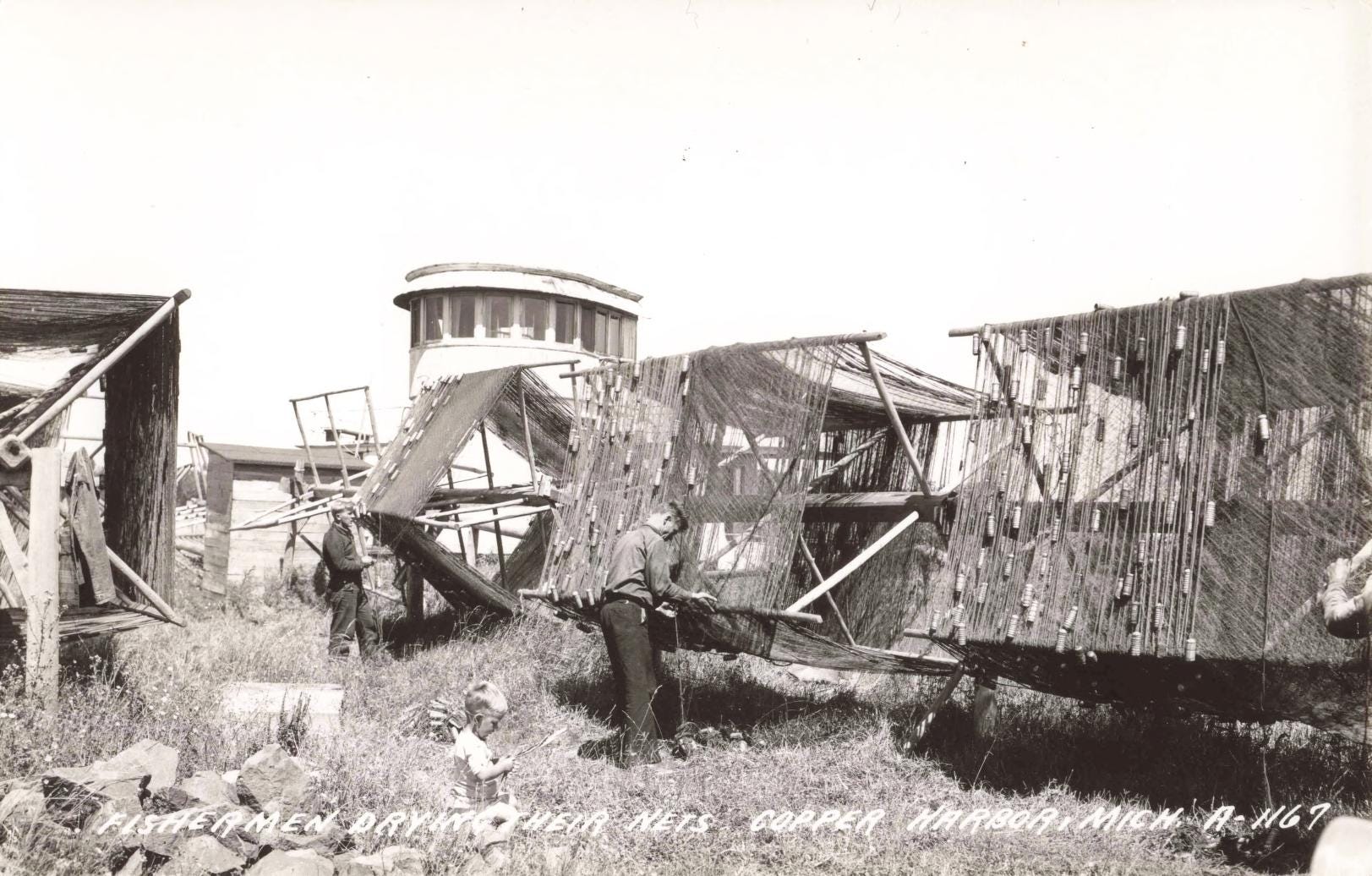
Fishing remained steady. The harbor stayed active. Families continued to work the water even as fewer ships carried ore. The images show nets spread out to dry along the shore—evidence of a working town, not a museum piece.
This was not a reinvention. It was continuity.
When Tourists Arrived, Work Did Not Leave
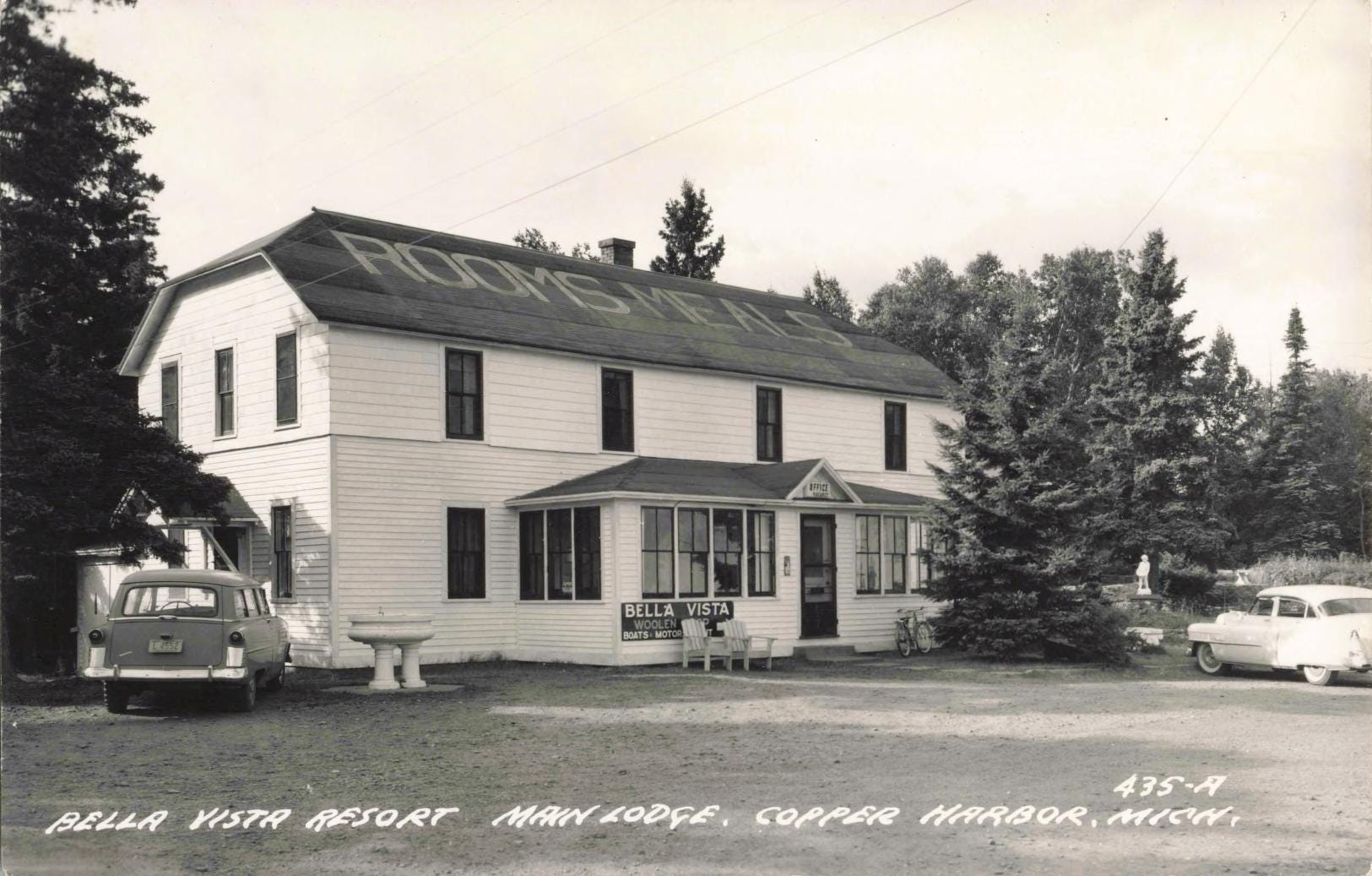
As mining faded, visitors arrived. Steamships brought summer travelers. Later, automobiles followed rough roads north. Resorts appeared, but they did not overwhelm the town.
Hotels and cabins rose close to the harbor, not away from it. Visitors slept uphill while fishermen worked below. Tourism and labor shared the same space.
That balance mattered. Copper Harbor did not become a resort town in name only. It remained useful.


