

A Bold Idea in 1918
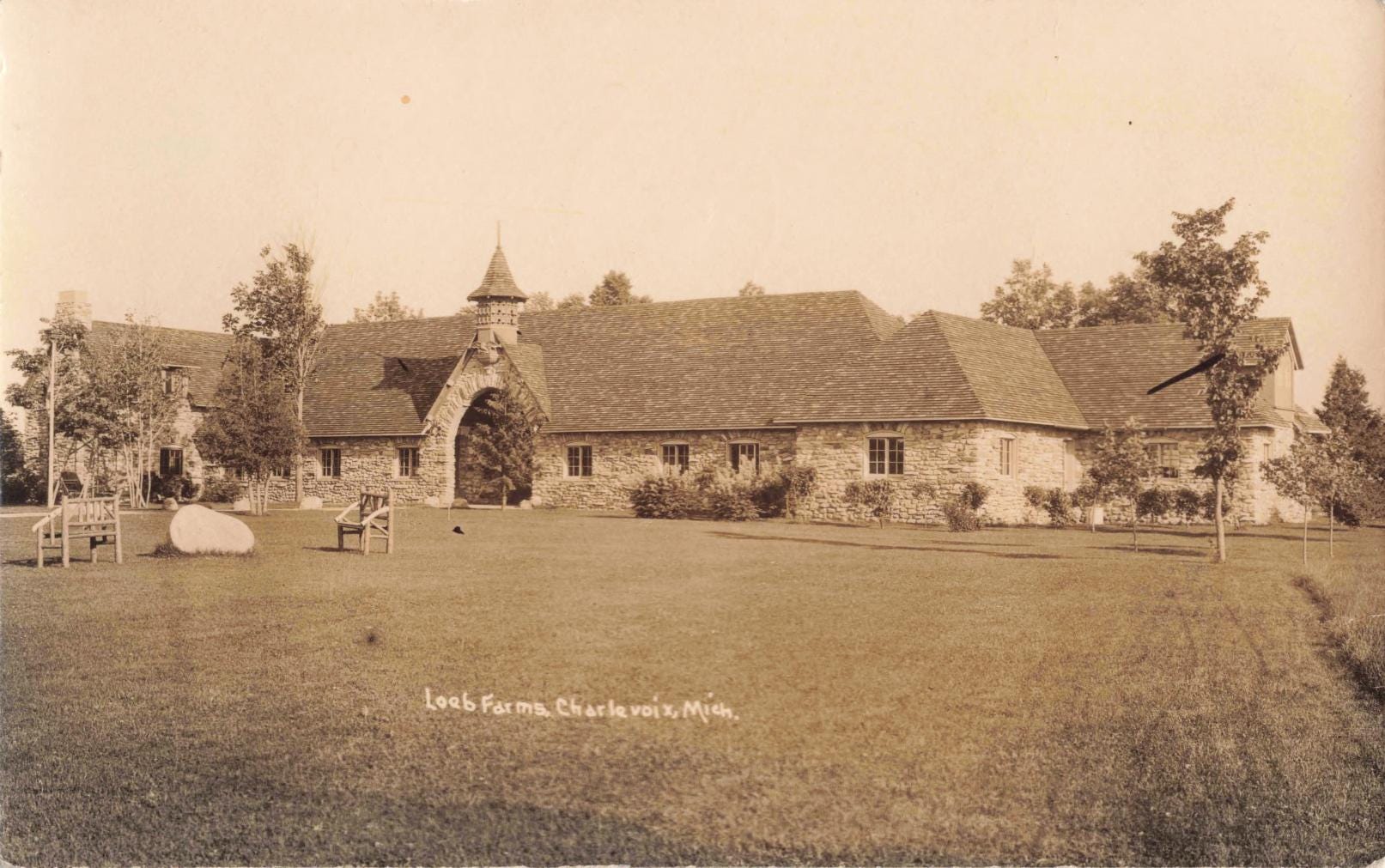
In 1918, a stretch of land near Charlevoix, Michigan, became the site of an ambitious experiment in agriculture and design. Albert Loeb, acting president of Sears, Roebuck and Co., established what he called Loeb Farms. His goal was not simply to operate a farm, but to build a model—one that could test modern equipment and demonstrate how efficient, large-scale farming might work in the early 20th century.
A Farm Designed to Be Seen
Loeb Farms stood out immediately, not just for its purpose but for its appearance. Instead of traditional Midwestern barns, the buildings were designed in the style of Normandy, France. Constructed from stone, they featured arched passageways, towers, and thick walls suited to Michigan’s climate. The design blended durability with a clear sense of presentation. This was a working farm, but it was also meant to be seen.


