

In the early 1900s, Romeo wasn’t an isolated farm country. It sat inside a fast-moving web of electric rail lines that tied small towns to Detroit-area jobs, shopping, and freight connections. For a few decades, the interurban helped Romeo’s economy run on time schedules, not just weather and harvest cycles.
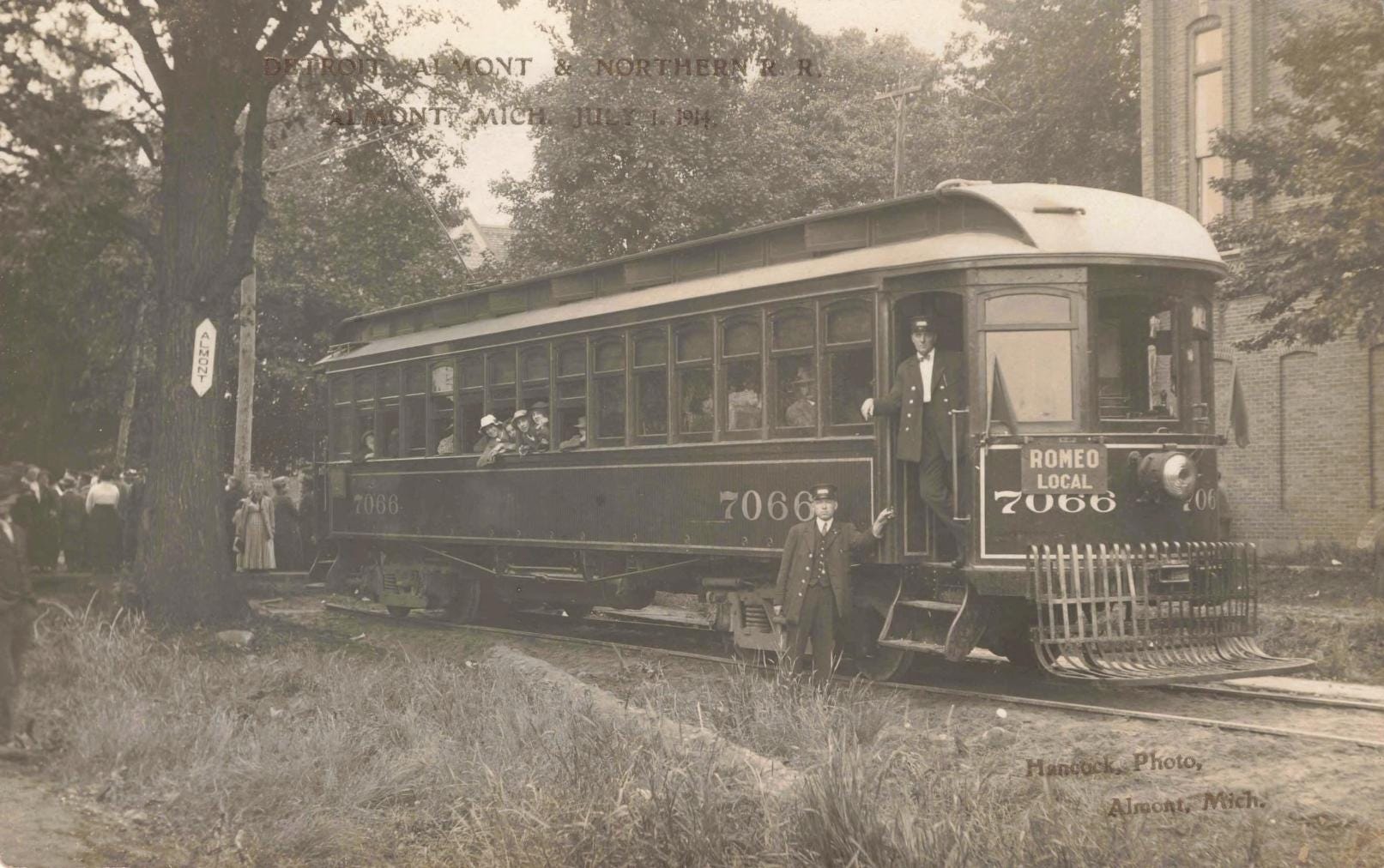
What the interurban was — and why it showed up in towns like Romeo
Interurbans were electric railways that ran farther than city streetcars. They were built to move people quickly between Detroit and outlying towns, often on dedicated right-of-way, but sometimes right down main streets.
A key operator in southeast Michigan was the Detroit United Railway, created through the consolidation of smaller lines in the early 1900s.
Romeo’s interurban window: connected, then cut off
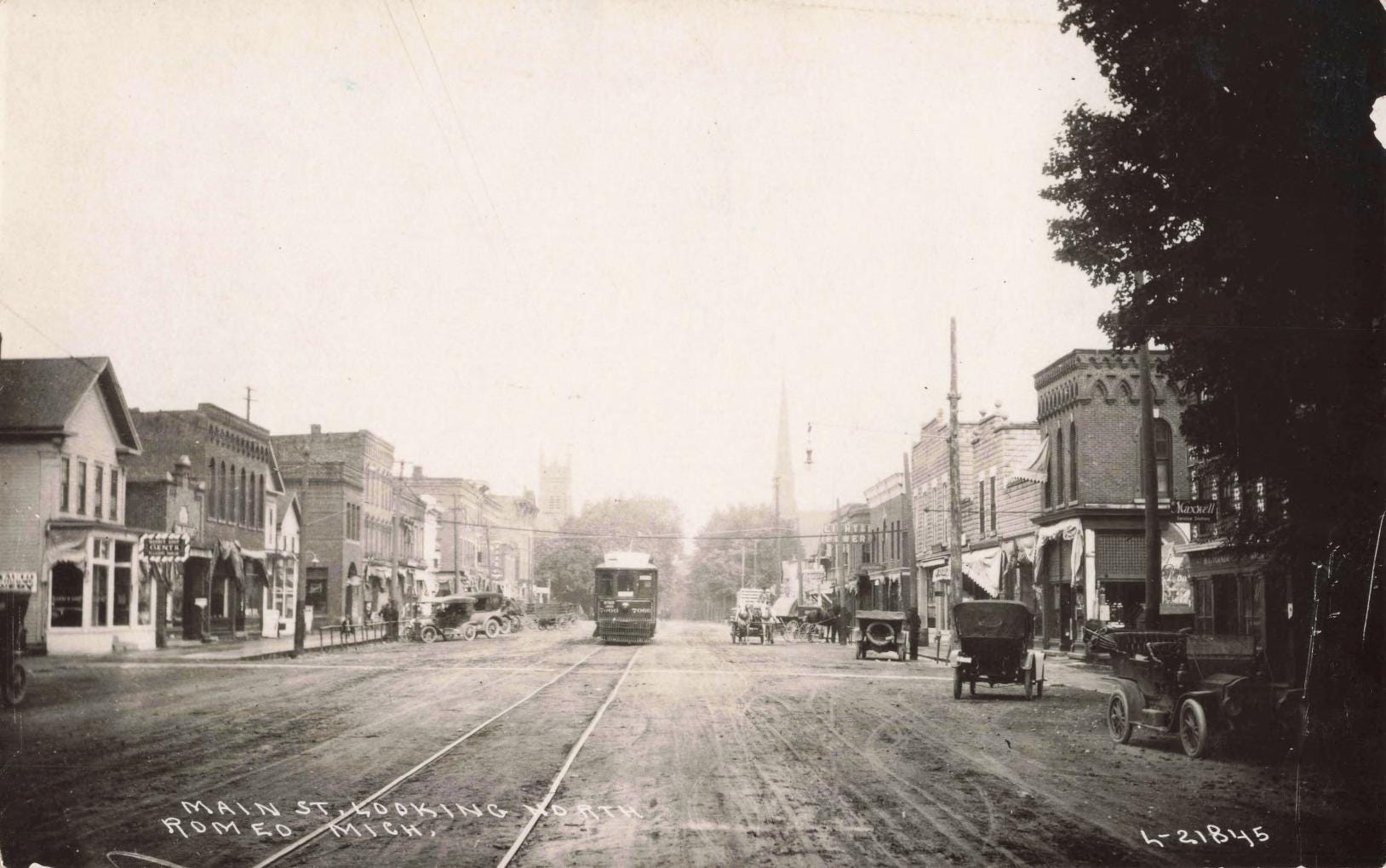
Local histories commonly describe interurban service through Romeo during the 1898–1934 era, with the line running through town streets as part of daily life.
The nearby interurban line pushed north from Rochester is also well documented: service began in 1899 under an early company name and later became part of the DUR system.
Additional sources note a Romeo branch diverging north of Rochester and later reaching Imlay City by the mid-1910s.
When the interurban era ended—through abandonment and system contraction in the 1920s–1930s—Romeo lost a form of public transportation that had been routine.
Daily life: mobility without owning a car
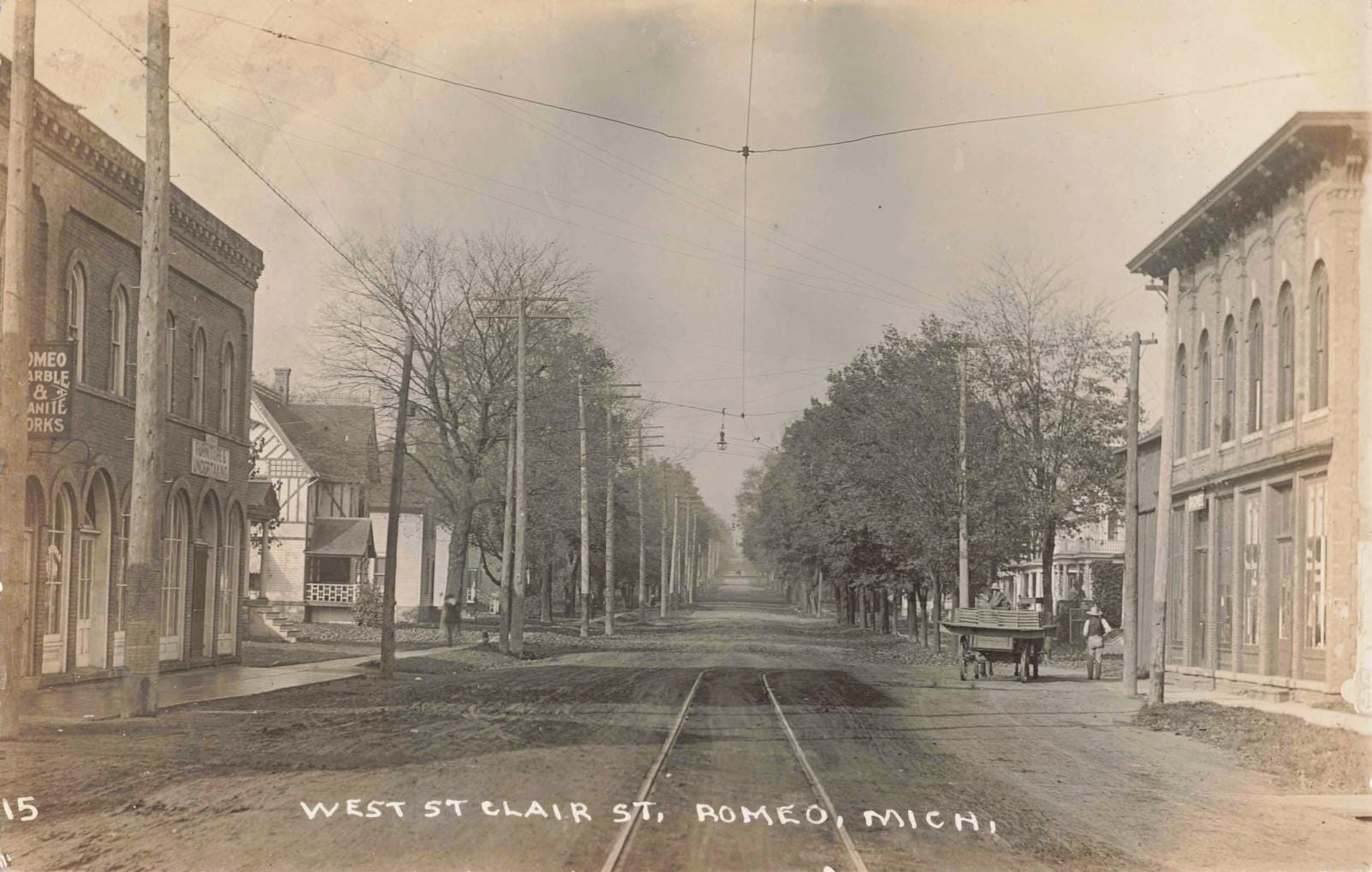
For residents, the interurban changed what “going to town” meant.
It made these trips easier and more frequent:
Work trips toward Detroit and other job centers, without needing a personal vehicle.
Shopping runs with predictable departure times and returns the same day.
Family and social travel that no longer required an overnight stay or a full day of road travel.
Counterintuitive insight: for a window in the early 1900s, a Romeo resident could have had more practical public travel options than a resident decades later, after interurbans vanished and car dependence became the default.
The local economy: foot traffic, cash flow, and real estate
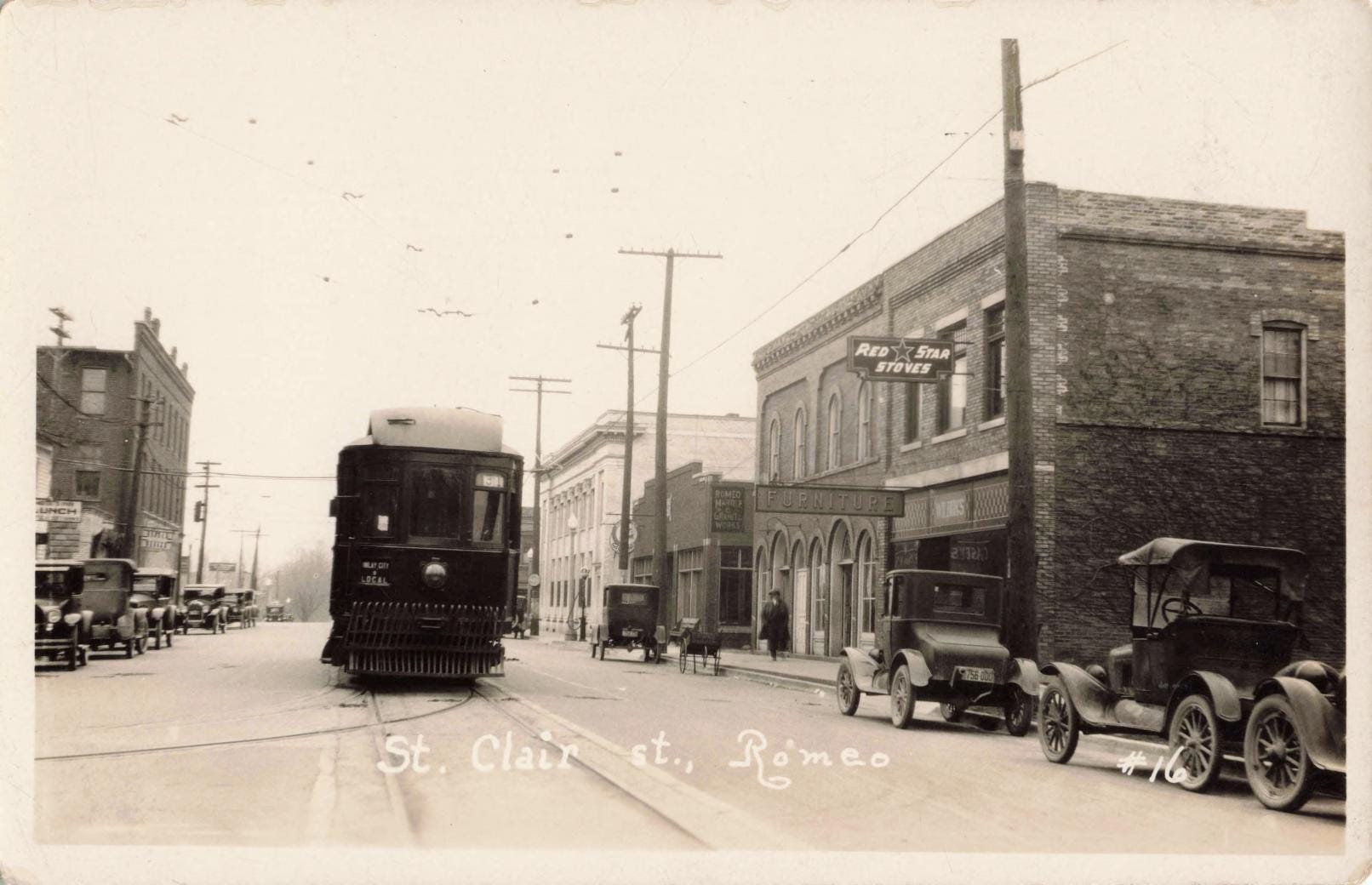
Interurban service helped small-town commerce in ways that show up indirectly in old downtown photos: more pedestrians, more shoppers arriving in groups, and more “quick trip” spending.
Economic effects likely included:
Downtown spending: passengers arriving near business blocks bought meals, groceries, hardware, and services while waiting for the next car. (This pattern is described in interurban-era summaries that emphasize frequent runs and quick access to larger markets.)
Market access for farm communities: interurbans helped connect rural producers with market activity, including trips timed to sell or buy supplies.
Development pressure: better passenger access tends to raise interest in nearby property and encourages more building around stops and stations. (Regional interurban maps and histories show how lines were marketed as connectors between town centers and the city.)
Why it ended, and what replaced it
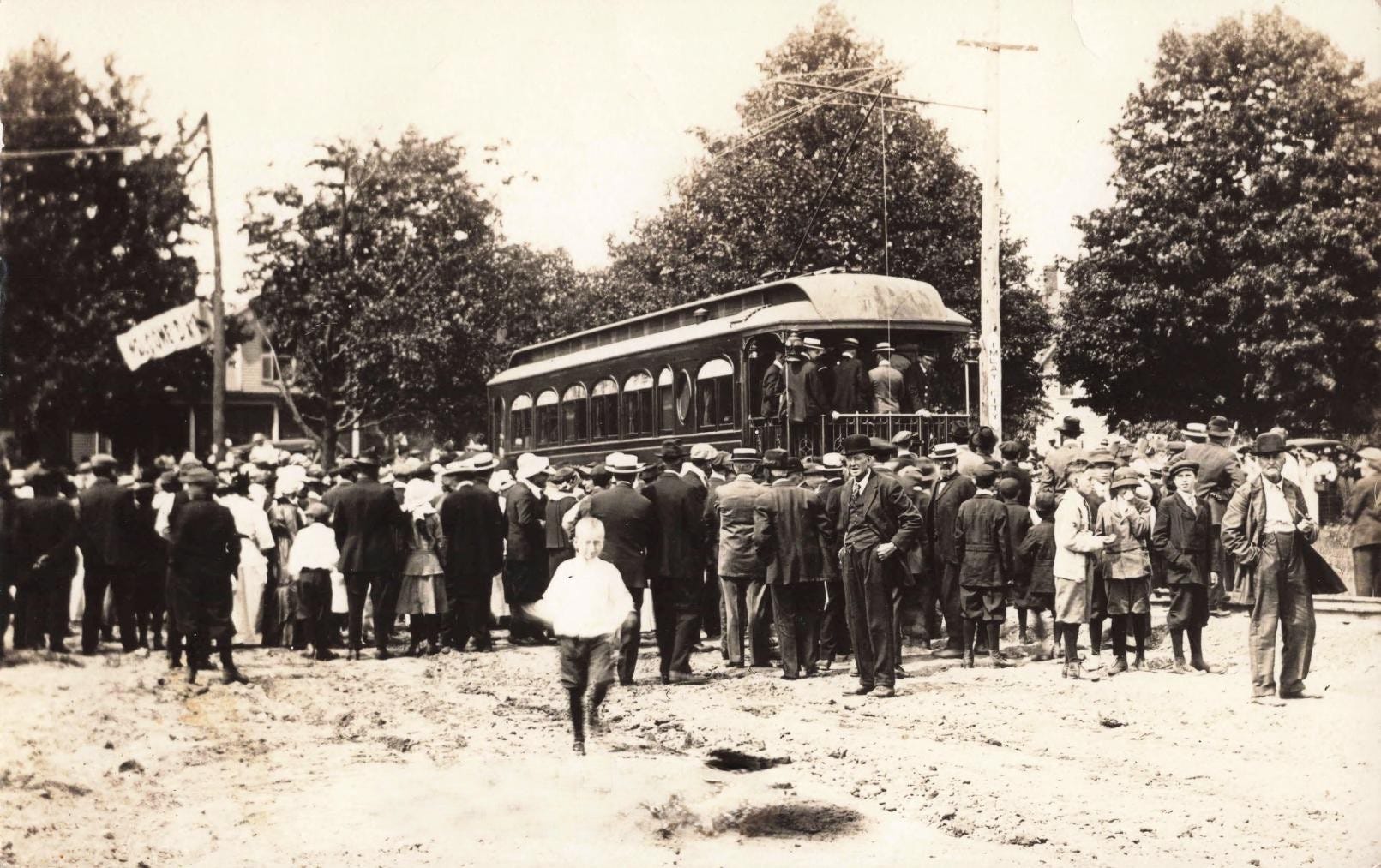
By the 1920s, interurbans faced rising competition from paved roads, buses, and private cars. Histories of the DUR system describe widespread selloffs and abandonments through the 1920s into 1934.
For Romeo, that meant a shift: travel became more private, more flexible, and often more expensive—especially for residents who could not afford a car.
Sources
Detroit Historical Society, encyclopedia entry on Detroit United Railway.
Michigan Railroads, overview of Detroit United Railway Company operations and end dates.
City of Rochester Hills museum/local history PDF on the Detroit United Railway and how interurbans served workers, shoppers, and farmers.
Walk Down Memory Lane, Romeo downtown history noting DUR service through Romeo and the stated service window.
Historical Marker Database entry on electric streetcars in Romeo and routing through town streets.
Rochester Media, history of the 1899 interurban line and DUR consolidation.
Detroitography, 1915 map context for Detroit-area interurban networks and their regional role.
David Rumsey Map Collection, Detroit United Railway interurban lines map (c. 1920).