

The Lost Summer Resort Towns of Lake Michigan
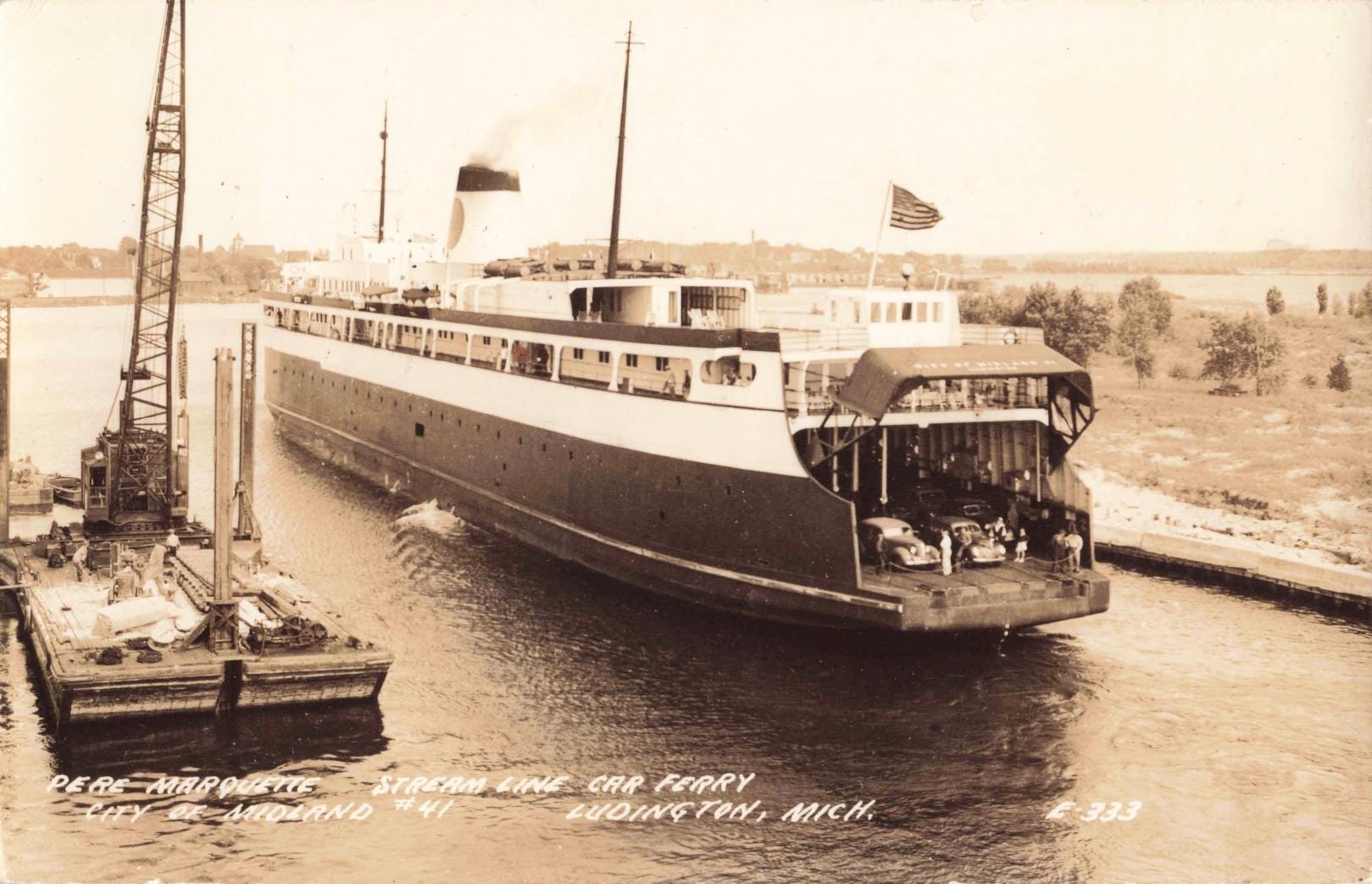
There was a time when the beaches of western Michigan rivaled almost any vacation destination in America.
Long before cheap airfare and interstate highways changed travel forever, families from Chicago, Detroit, Indiana, and Ohio packed trains, ferries, and early automobiles to spend their summers along Lake Michigan.
For generations of Midwesterners, places like Ludington, Grand Haven, St. Joseph, South Haven, and Saugatuck became part of family tradition. Parents returned year after year. Children grew up on the beaches. Boarding houses filled with tourists escaping hot factory cities inland.
And every summer, the shoreline came alive.
Video - Michigans Summer Towns - Lake Michigan Resort Era
The Great Summer Migration
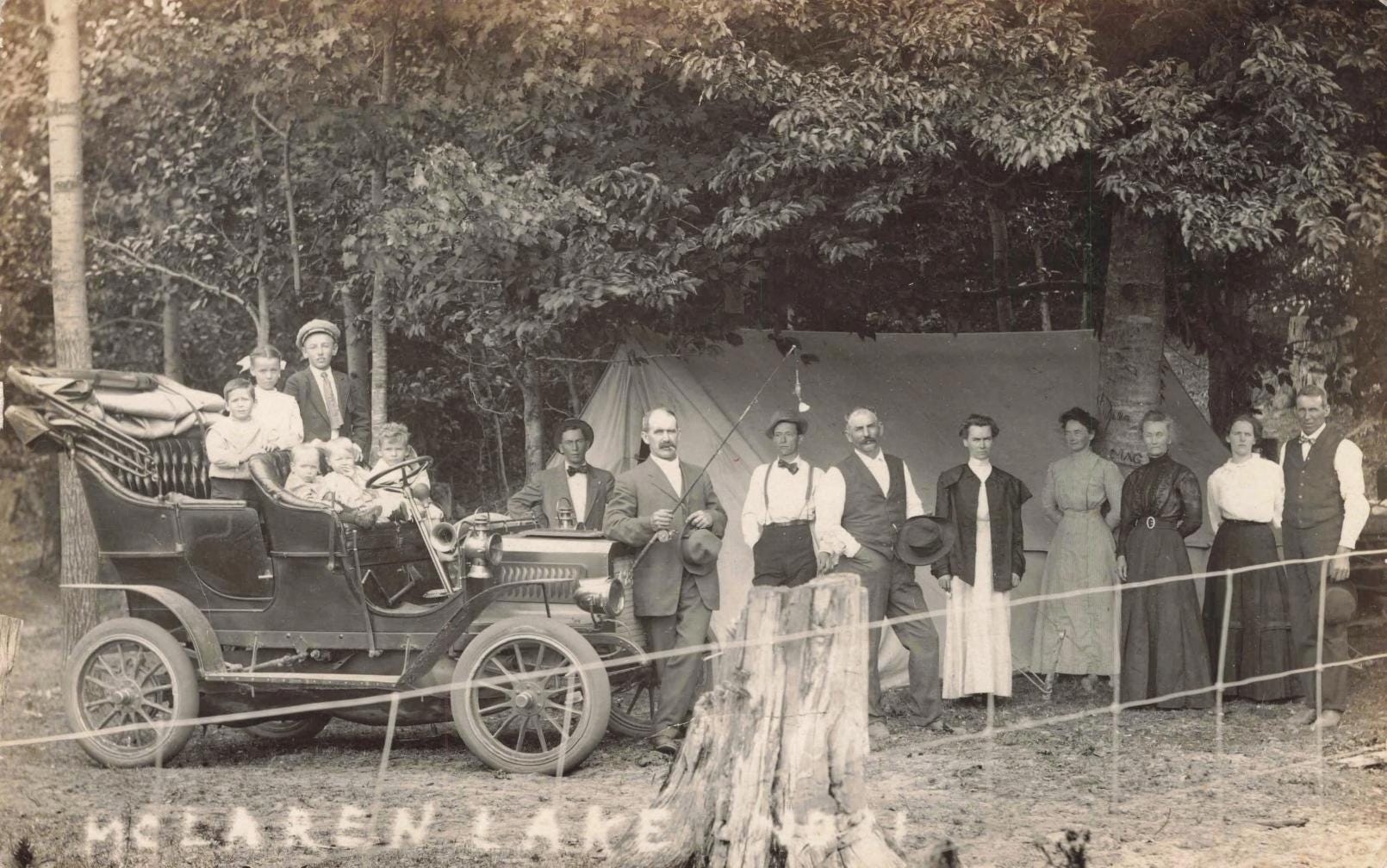
By the early 1900s, western Michigan had become the Midwest’s summer playground.
Steamships crossed Lake Michigan carrying tourists directly from Chicago. Railroads delivered visitors to resort hotels and lakeshore cottages. Later, the automobile opened the shoreline to an even larger wave of travelers.
The appeal was simple.
Cool lake air. Endless beaches. Dance halls. Excursion boats. Sunsets over the water.
At a time when many industrial cities struggled with smoke, congestion, and summer heat, Michigan’s shoreline felt almost untouched.
For countless families, reaching the lake meant freedom.
Ludington and the Ferry Era
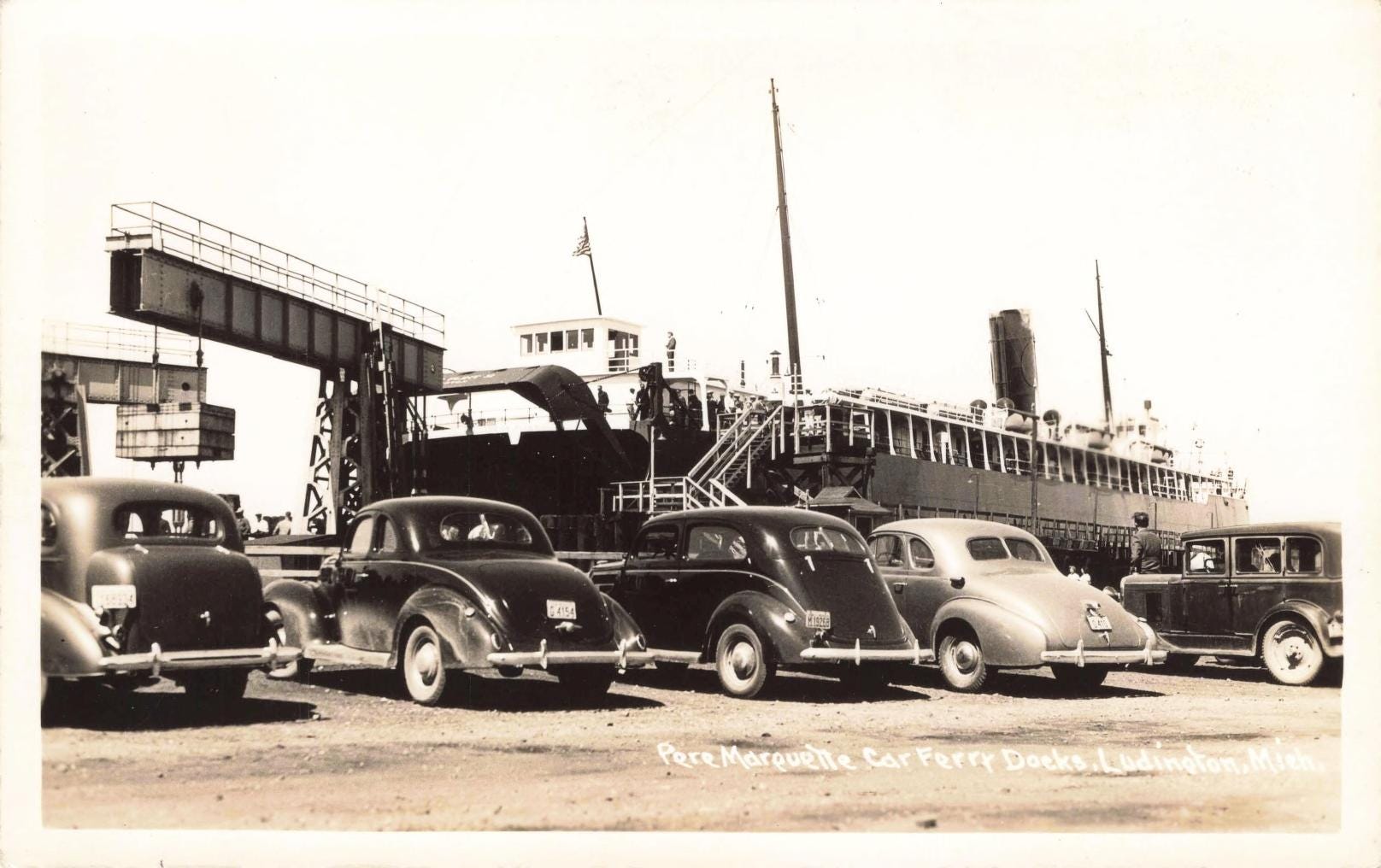
Among the busiest resort towns was Ludington.
Its harbor became famous for the massive Pere Marquette car ferries that crossed Lake Michigan carrying automobiles and passengers to Wisconsin. During peak summer weekends, the docks filled with cars waiting to board the giant steam ferries.
Vacationers crowded nearby beaches while dance halls and waterfront attractions stayed active late into the evening.
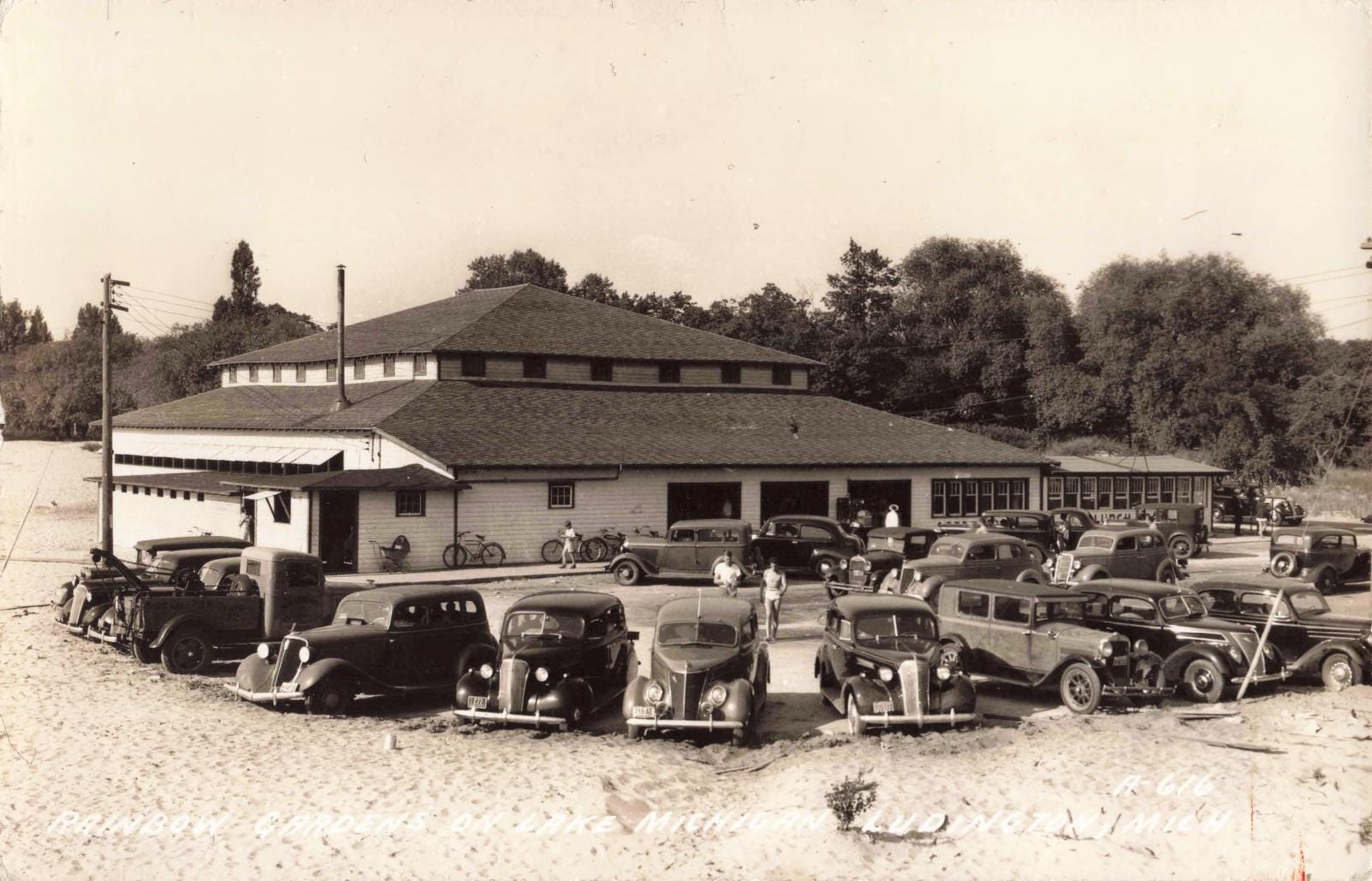
Rainbow Gardens became one of the city’s best-known entertainment spots during the resort era. Families walked the shoreline while excursion boats moved through the harbor and the Coast Guard station watched over one of the busiest ports on the lake.
For travelers arriving from Chicago or Milwaukee, Ludington often became their first stop in Michigan.
Grand Haven’s Crowded Beaches
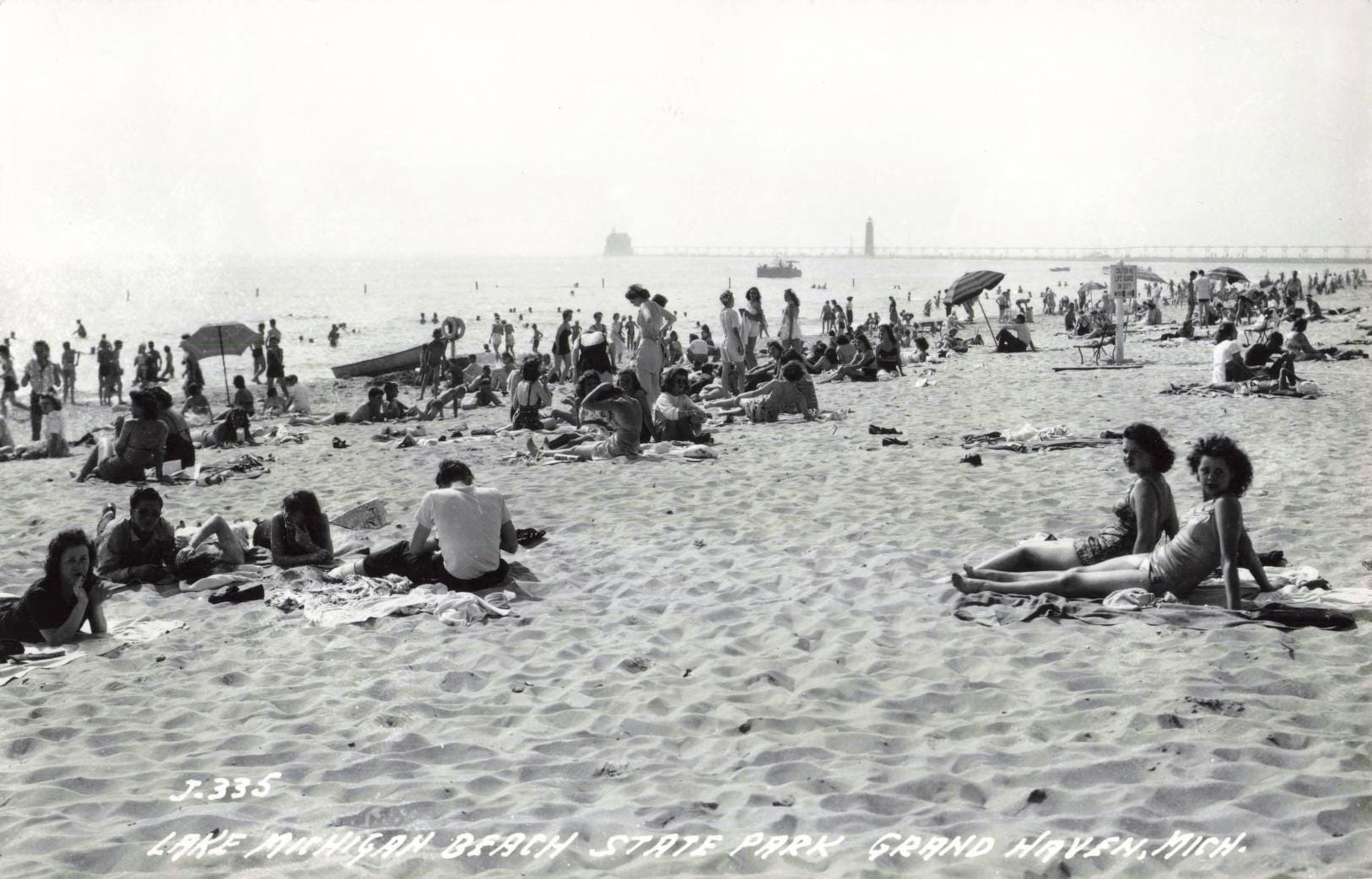
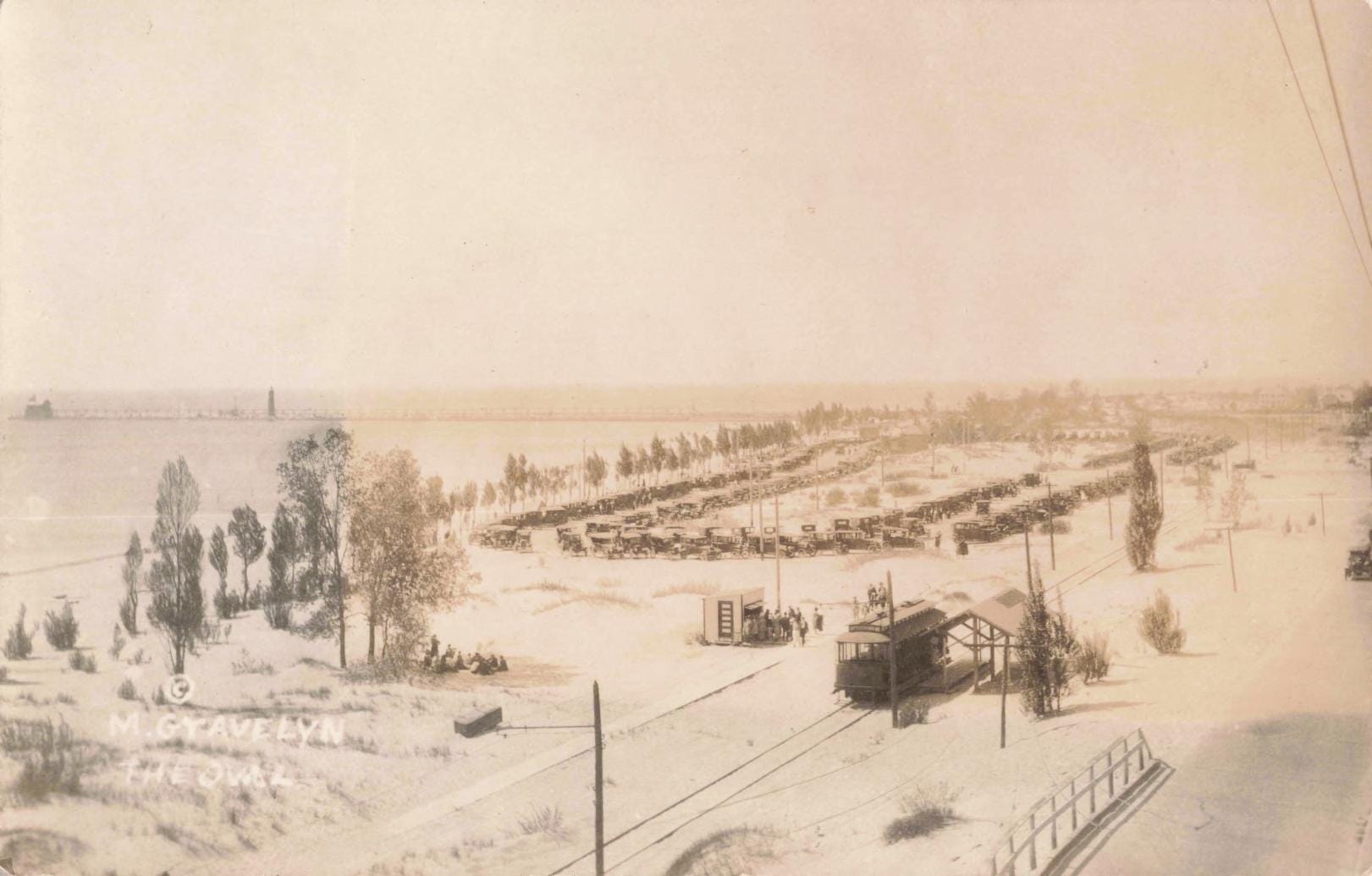
Further south, Grand Haven transformed into one of the Midwest’s great beach destinations.
Old photographs show automobiles lined along the dunes while thousands of bathers spread across the sand near the lighthouse. On hot summer weekends, the shoreline became so crowded that it resembled Atlantic coast resort towns.
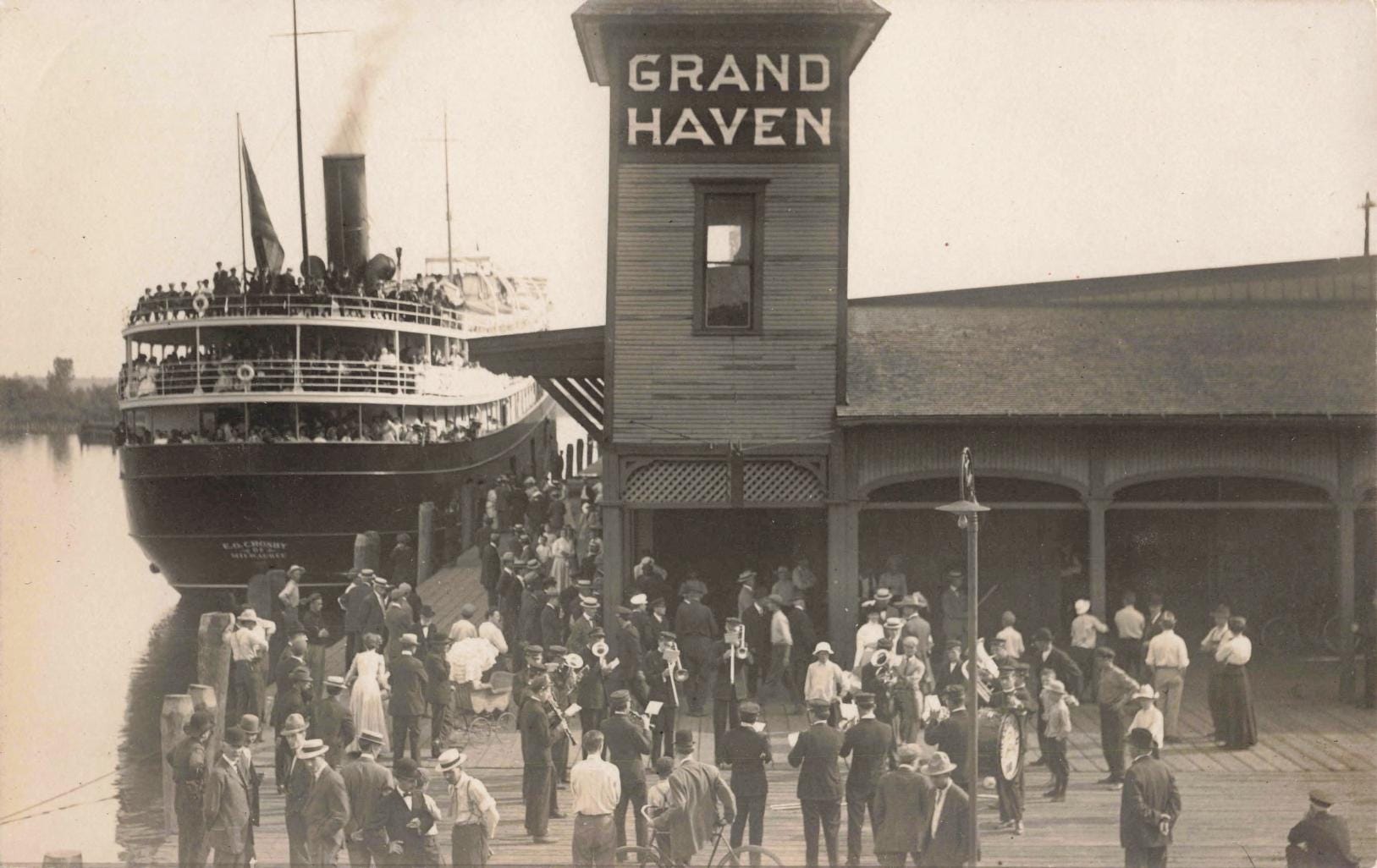
Excursion steamers regularly visited the harbor while visitors gathered near waterfront attractions after sunset.
The beach culture itself became part of the attraction.
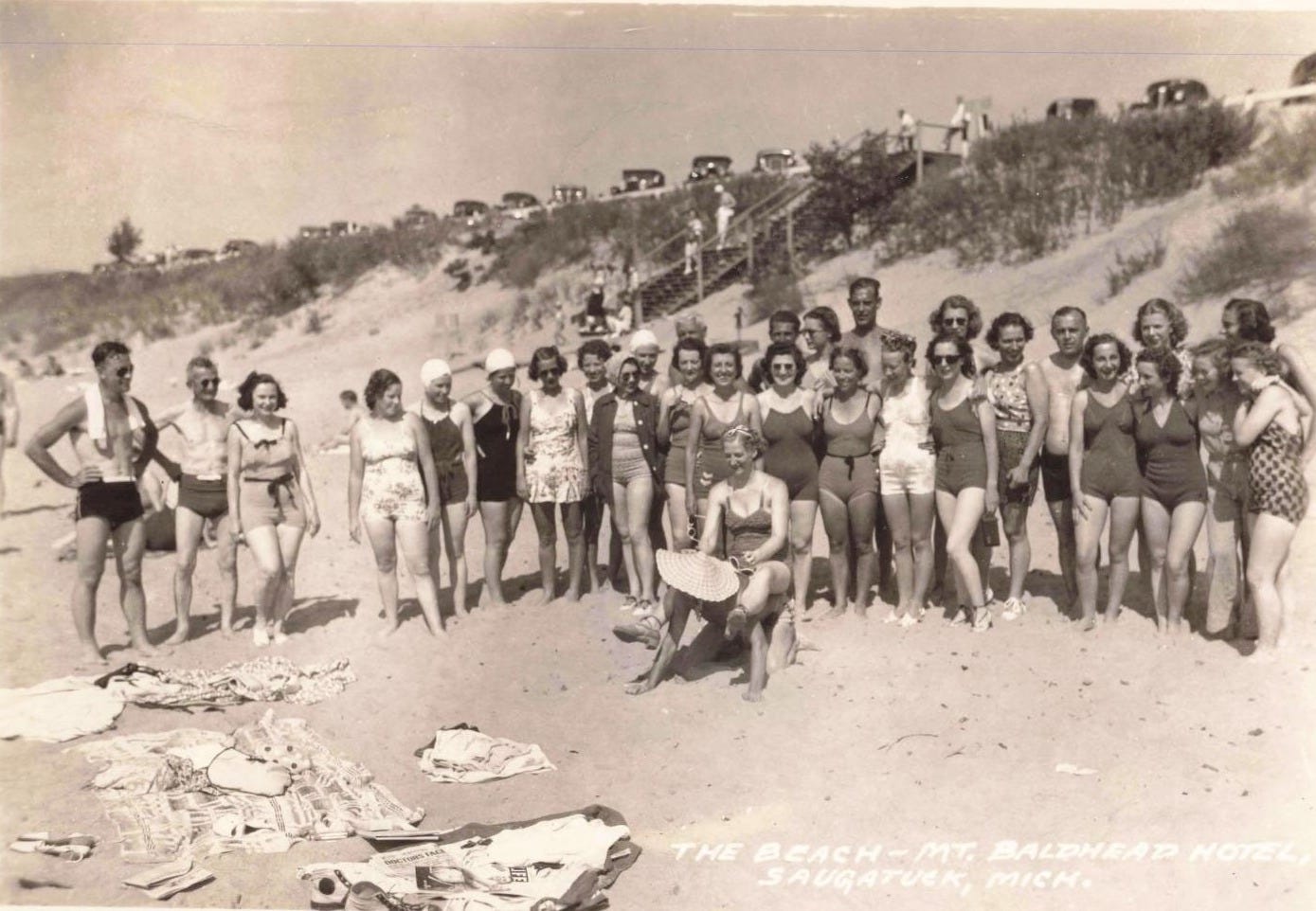
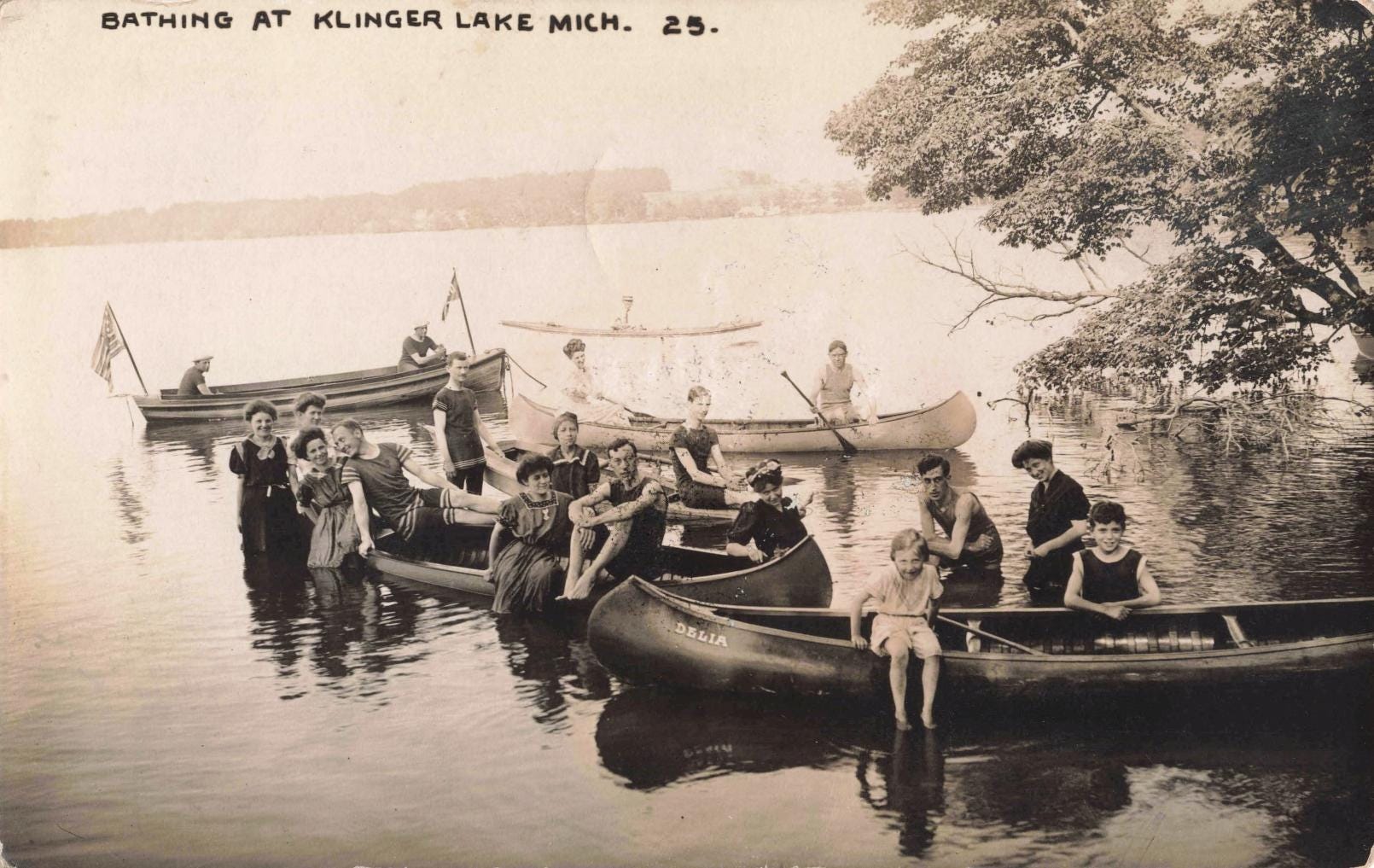
Families posed for photographs in wool bathing suits. Children played in the surf while vendors sold refreshments along the shoreline. For many Midwestern families, a yearly trip to Grand Haven became a tradition passed down through generations.
St. Joseph and the Riviera of the Midwest
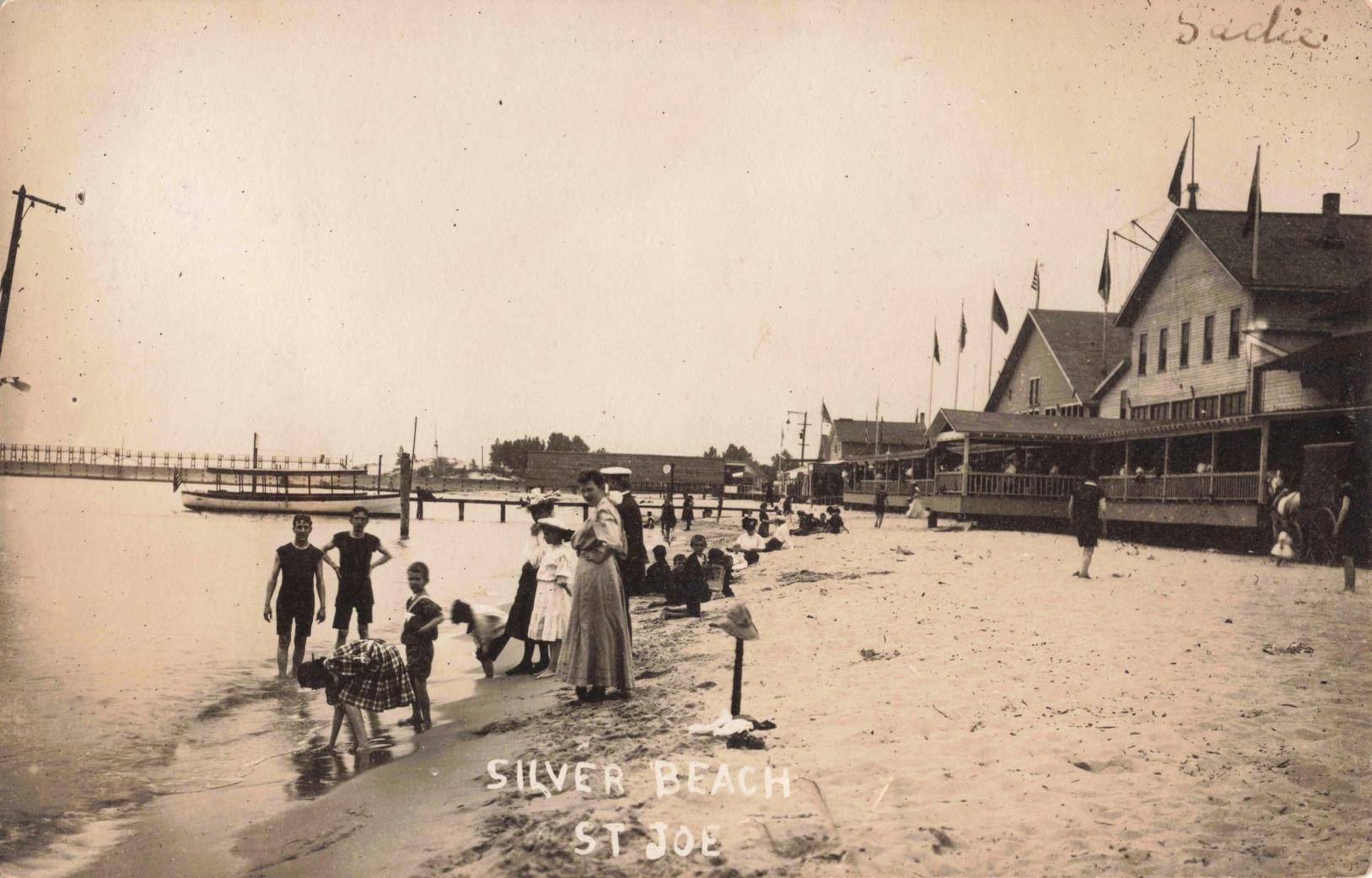
St. Joseph promoted itself as the “Riviera of the Midwest.”
At its peak, Silver Beach drew enormous crowds from Chicago and surrounding states. Steamships regularly crossed Lake Michigan carrying tourists directly into the harbor.
The waterfront featured bathhouses, amusement rides, dance halls, and lakeside attractions that helped create a full resort atmosphere.
But St. Joseph also offered quieter experiences.
Visitors walked near the lighthouse, explored the riverfront, and stayed in hotels and boarding houses that catered to summer travelers. Nearby covered bridges and tree-lined roads added to the town’s charm.
For many visitors, St. Joseph felt both exciting and relaxed at the same time.
South Haven’s Family Summers
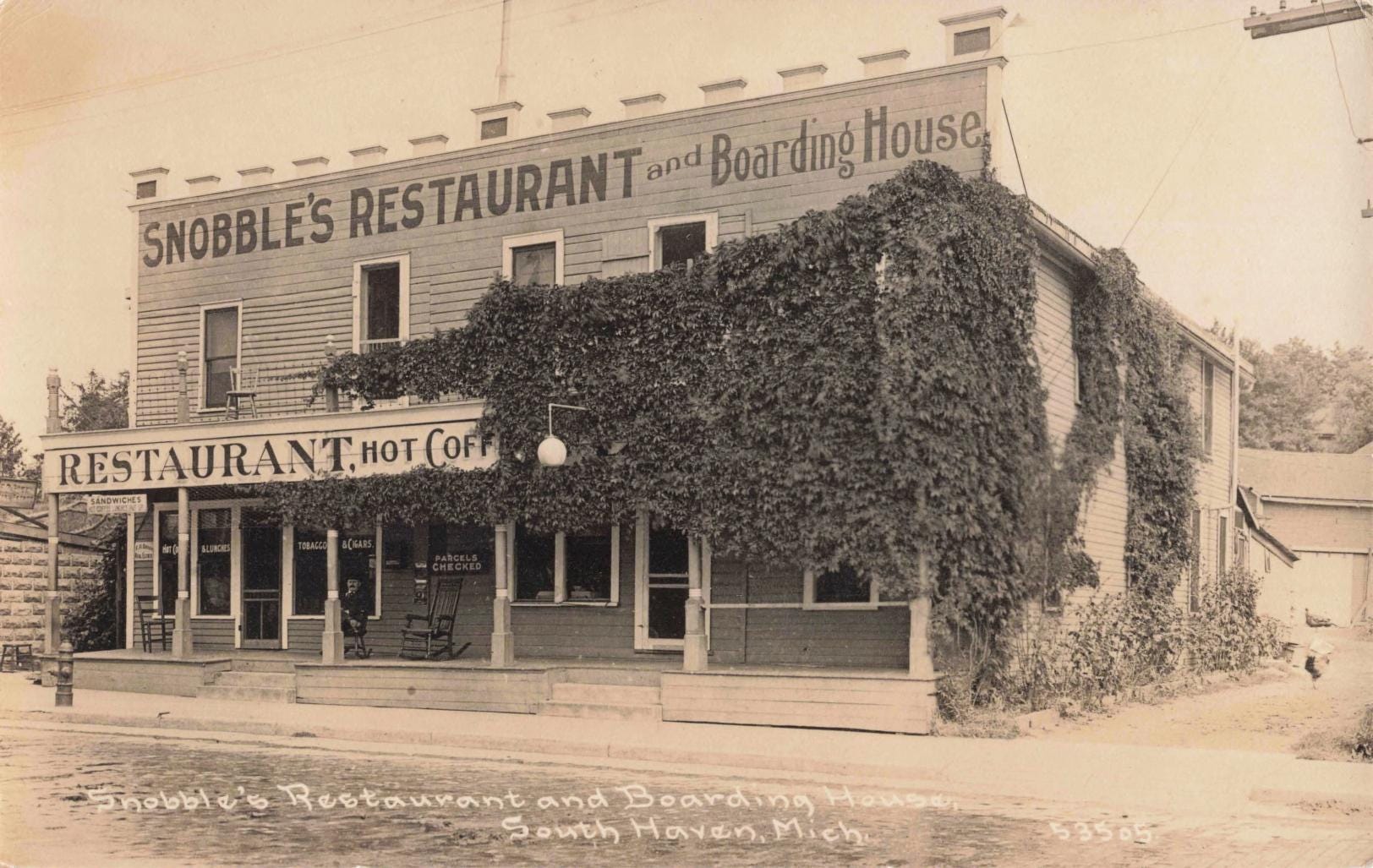
South Haven developed a different reputation.
While it offered busy beaches and resort hotels, it also became known for its family atmosphere.
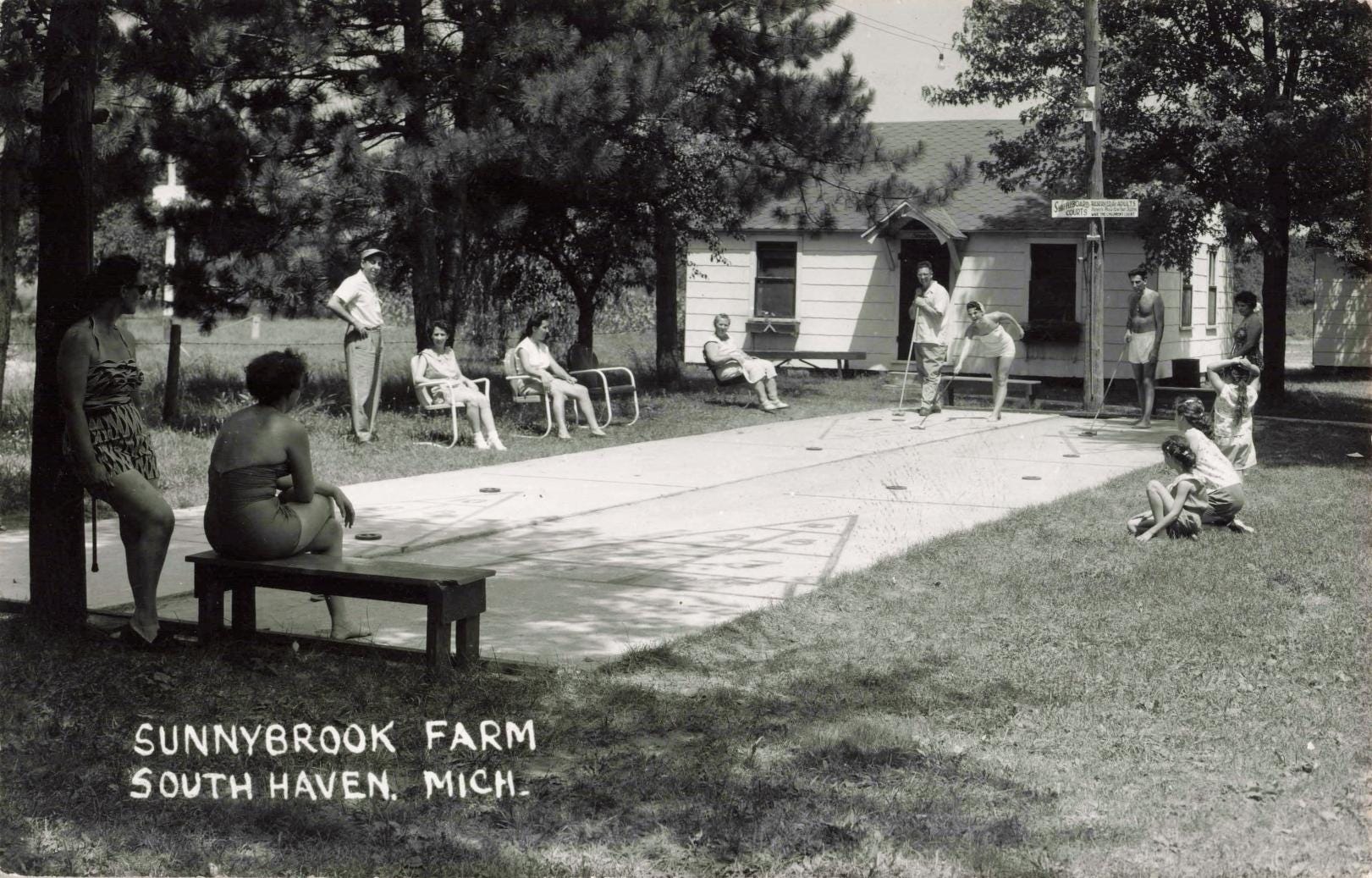
Tourists filled boarding houses and cottages during the summer months while restaurants served generations of returning visitors. At places like Sleepy Hollow Beach, vacationers gathered around large swimming pools surrounded by trees and resort cabins.
Unlike some larger resort cities, South Haven maintained a small-town feel that appealed to families looking for a quieter summer destination.
Many visitors returned every year to the same cottages and beaches.
Children who once played in the sand eventually brought their own children decades later.
For some families, South Haven became less of a vacation spot and more of a summer home.
Saugatuck’s Creative Spirit
Saugatuck stood apart from many other resort towns along Lake Michigan.
The town blended beaches, dunes, art, music, and tourism into something uniquely its own.
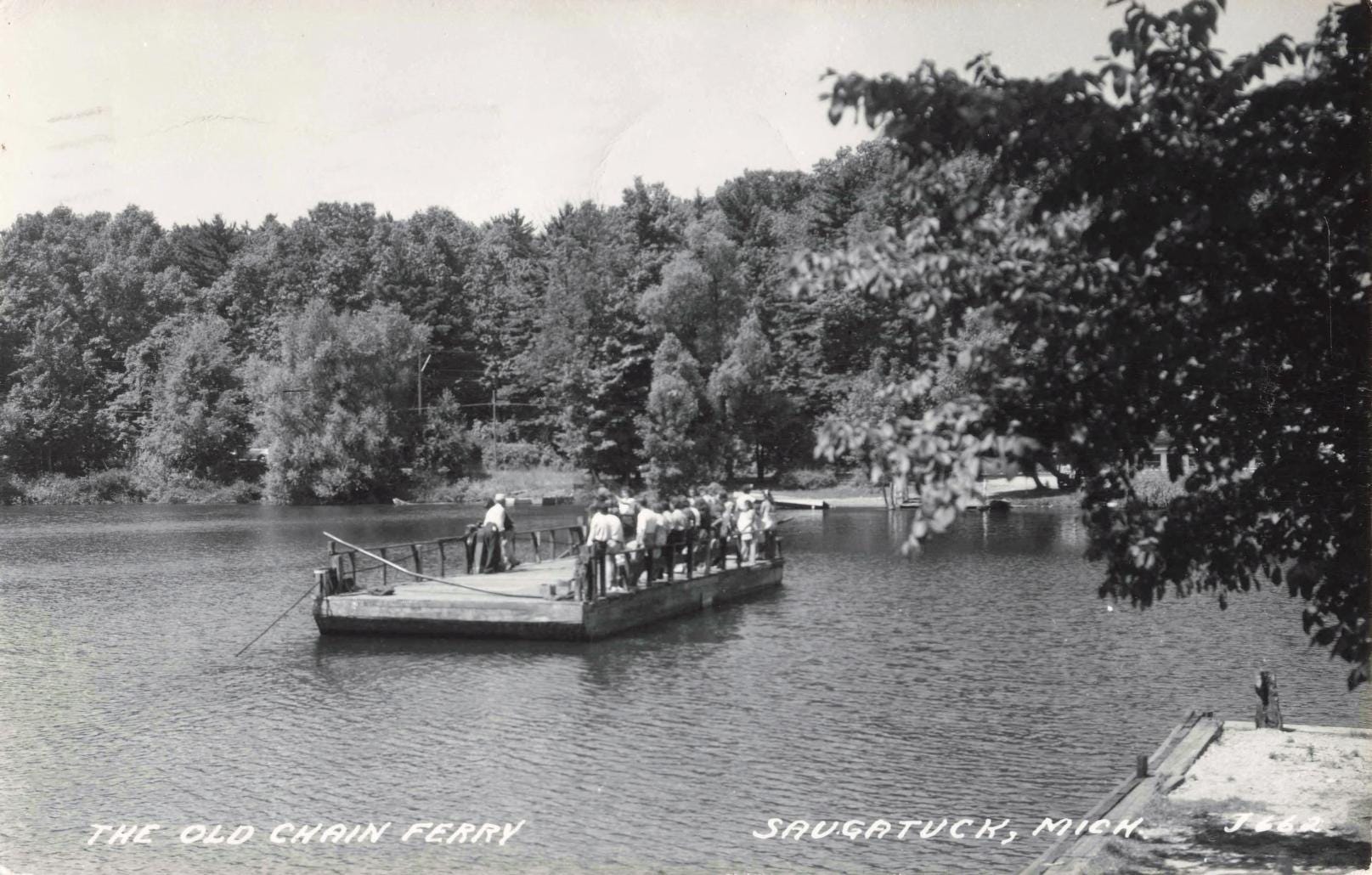
Visitors crossed the river aboard the famous hand-pulled chain ferry while dance music echoed from the large waterfront pavilion overlooking the harbor.
Hotels near Mount Baldhead welcomed tourists escaping city life while artists and writers helped shape the community into a creative retreat.
Even today, traces of that earlier resort culture remain visible.
The chain ferry still operates. The harbor still fills with visitors during the summer. And the town continues to attract people searching for a slower pace near the water.
The End of the Resort Era
By the 1950s and 1960s, the great resort era along Lake Michigan slowly began to change.
Air travel became more affordable. Interstate highways made longer trips easier. Florida and other southern destinations grew rapidly in popularity.
Many of the old dance halls disappeared. Steamship travel declined. Some resorts closed while others were demolished or replaced.
But the shoreline itself never lost its appeal.
Every summer, people still return to these towns searching for many of the same things that drew visitors more than a century ago.
Cold lake water.
Warm sand.
Harbor lights.
And sunsets over Lake Michigan.
A Different Kind of Vacation
Today, it is easy to forget how important these resort towns once were to Midwestern life.
For millions of Americans, this was where summer memories were made.
Not at giant theme parks or luxury resorts.
But on crowded beaches, ferry docks, wooden boardwalks, and small-town streets along the Lake Michigan shoreline.
And in many ways, that simpler version of summer vacation still feels surprisingly close.