

For most readers today, the name James Oliver Curwood barely registers. A century ago, the Owosso native was one of America’s best-known adventure writers, his wilderness novels selling in the millions and feeding a long list of Hollywood films. At the height of his career in the 1920s, accounts claimed he was the highest-paid author in the world on a per-word basis.
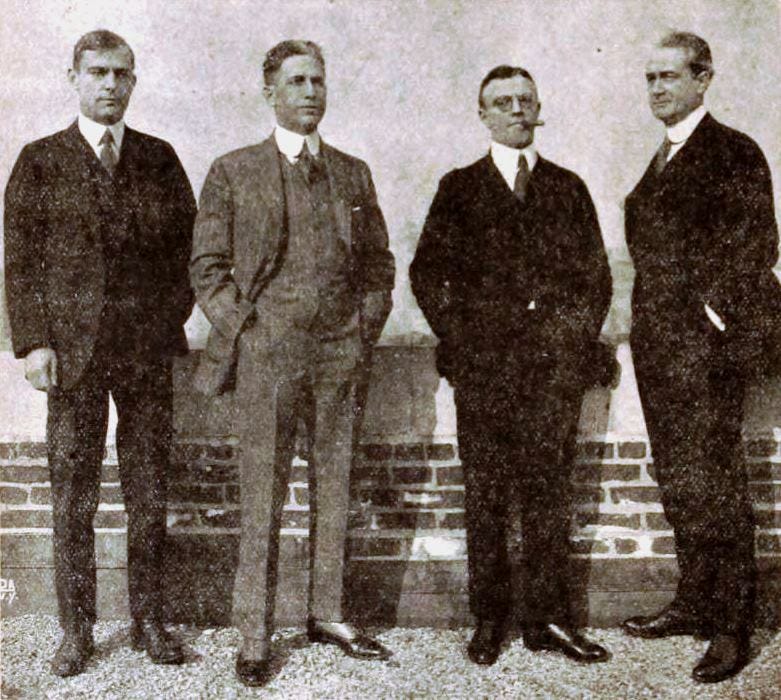
Curwood’s story starts in modest rooms behind a cobbler’s shop at Main and Lansing streets in Owosso, where he was born on June 12, 1878. His parents moved the family to a farm in Ohio, but Michigan remained his reference point. As a boy, he spent long hours outside, hunting and roaming the woods, habits that later gave his fiction its focus on wild country and rough weather.
School never held him for long. Curwood attended Owosso Central High School but was expelled in the 10th grade. He still managed to pass the University of Michigan entrance exam and studied journalism in Ann Arbor for about two years before leaving to work as a reporter in Detroit. In 1898, he sold his first story, an early sign that his future might be in fiction rather than daily news.
Curwood’s break came in the first decade of the new century. He began taking long trips to northern Canada and Alaska, often staying for months at a time. In 1907, the Canadian government hired him to travel and write promotional stories, using his reports to attract visitors and settlers to the region. That work fed a string of novels set in the Hudson Bay region and the Yukon, but his base of operations shifted back to Michigan.
In 1907, Curwood returned to Owosso to focus on fiction full-time. His first novel, The Courage of Captain Plum (1908), set on Beaver Island in Lake Michigan, launched a schedule of one or two books a year. Through the 1910s and early 1920s, he turned out a steady run of wilderness adventures with Mounties, trappers, and animals at their center.
Curwood’s Life in Owosso Michigan
Success funded a more comfortable life in his hometown. Curwood built a substantial family house around 1909 at 508 West Williams Street, with space that could be rented if his writing career collapsed. It did not. By the early 1920,s his novels were said to have reached roughly seven million readers, and film studios repeatedly bought the screen rights.
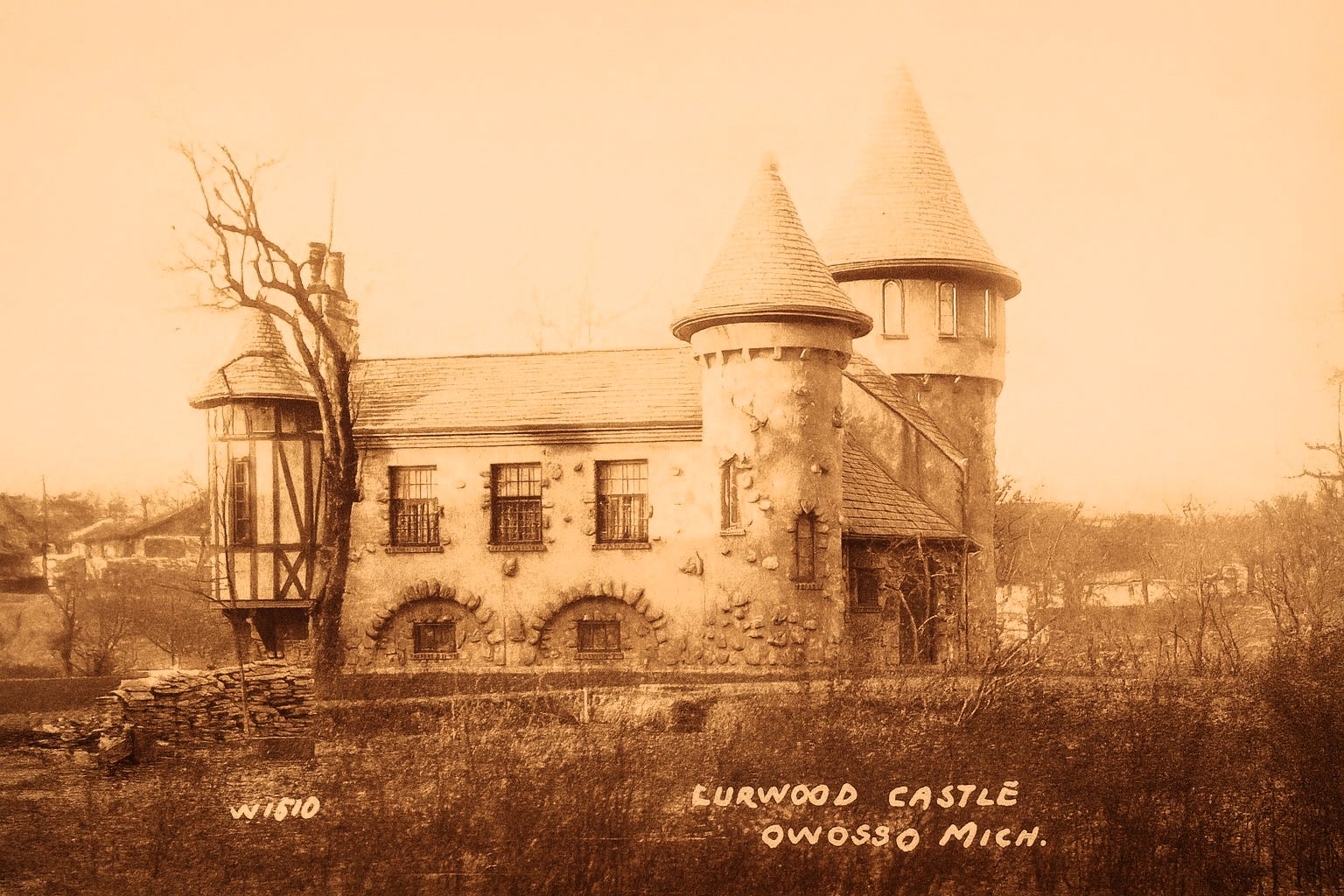
In 1922–23, he added a more dramatic landmark: Curwood Castle, his stone-and-stucco writing studio on the bank of the Shiawassee River near downtown Owosso. The small “castle,” designed to mimic a Norman chateau, held his office in one turret and a large great room for guests and Hollywood visitors. From that perc,h he could walk home across the river when the day’s pages were finished.
Late in life, Curwood’s focus shifted from hunting to conservation. He became a vocal critic of what he saw as weak wildlife policy and joined groups such as the Izaak Walton League. In the mid-1920s, he was appointed to the Michigan Conservation Commission, a sign that his campaign for stricter game laws was being taken seriously in Lansing, even if officials did not always welcome his pressure.
The end came quickly. During a 1927 trip to Florida, Curwood was apparently bitten or stung through his waders. An infection followed, and he died that August in Owosso at age 49. He was buried in Oak Hill Cemetery, a short walk from the neighborhoods where he grew up.
Michigan kept his memory even as his books slipped from the bestseller lists. The city of Owosso inherited Curwood Castle, which now operates as a museum in Curwood Castle Park along the Shiawassee. Since 1978, the Curwood Festival has filled downtown each June with parades and events tied to his life and to local history. Far to the north, a peak in Baraga County bears the name Mount Curwood, linking his legacy to the Upper Peninsula’s high country.
For a writer who built his career on stories of Canada and Alaska, Curwood’s life remained rooted in Michigan. From the cobbler’s shop in West Town to the stone towers on the Shiawassee River, the state shaped the boy, the author, and the conservationist he became.