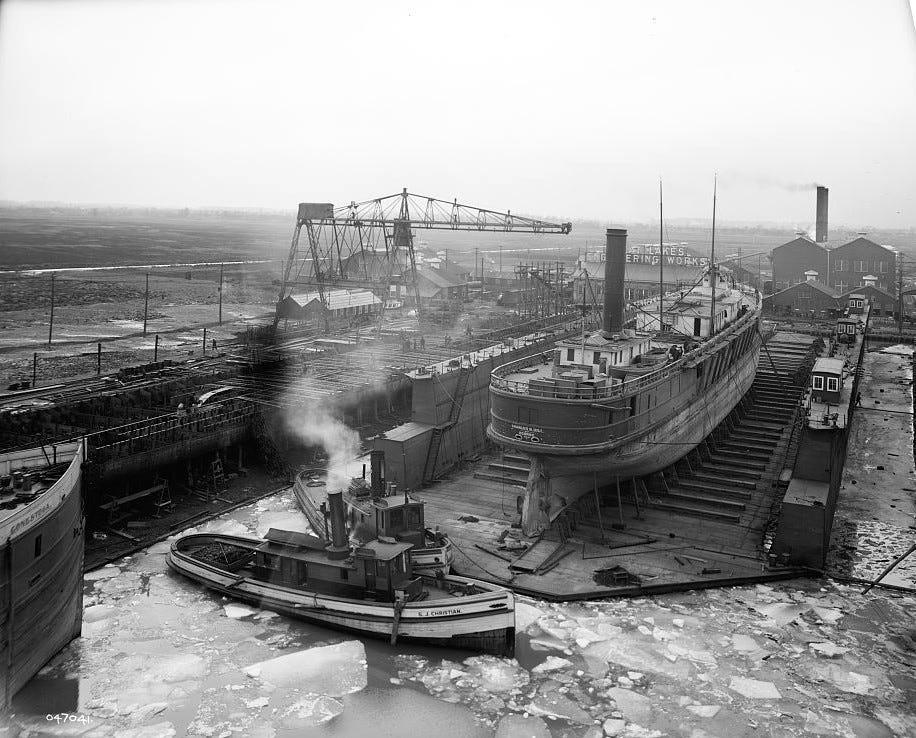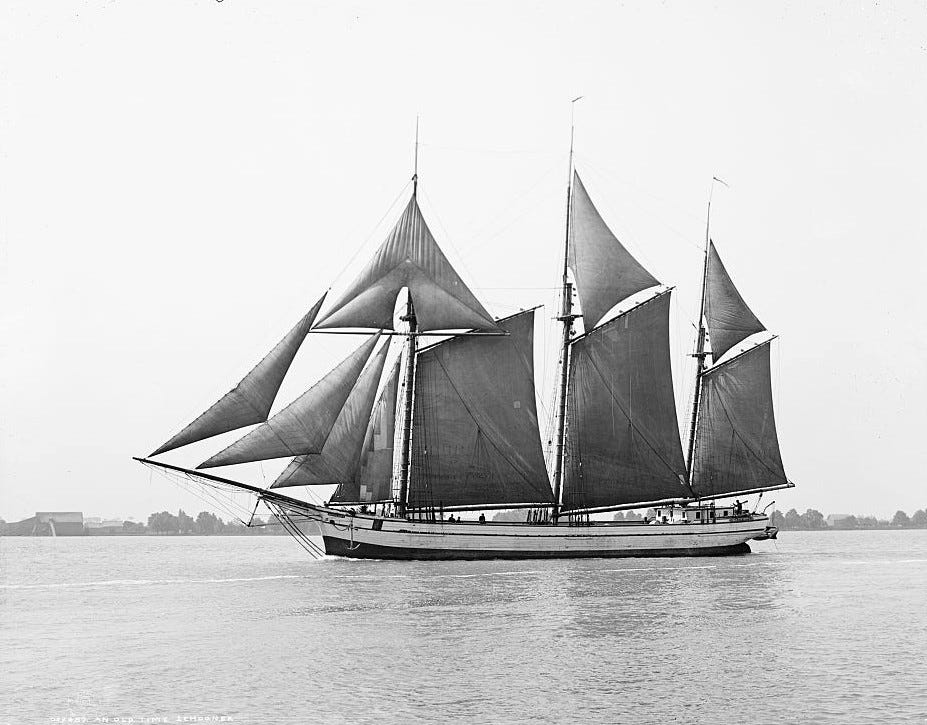
From 1850 to 1900, the Great Lakes served as the Midwest’s main freight route. Before trucks and interstates, water moved the heavy stuff: lumber, salt, coal, grain and, later, iron ore. The system worked because ships could carry far more weight per trip than wagons or early railroads, and because ports across Michigan, Ohio, New York, Pennsylvania and Wisconsin were tied to fast-growing cities and factories.
One hot spot was Saginaw Bay. With the Saginaw River feeding it—and mills packed along the river—this bay functioned like a high-volume shipping corridor during Michigan’s lumber era. Michigan’s own geography helped make it happen: multiple rivers converged into the Saginaw system, letting logs and finished lumber flow from the interior to mills and then out to lake markets.
Why the lakes were the best freight deal in 1850